
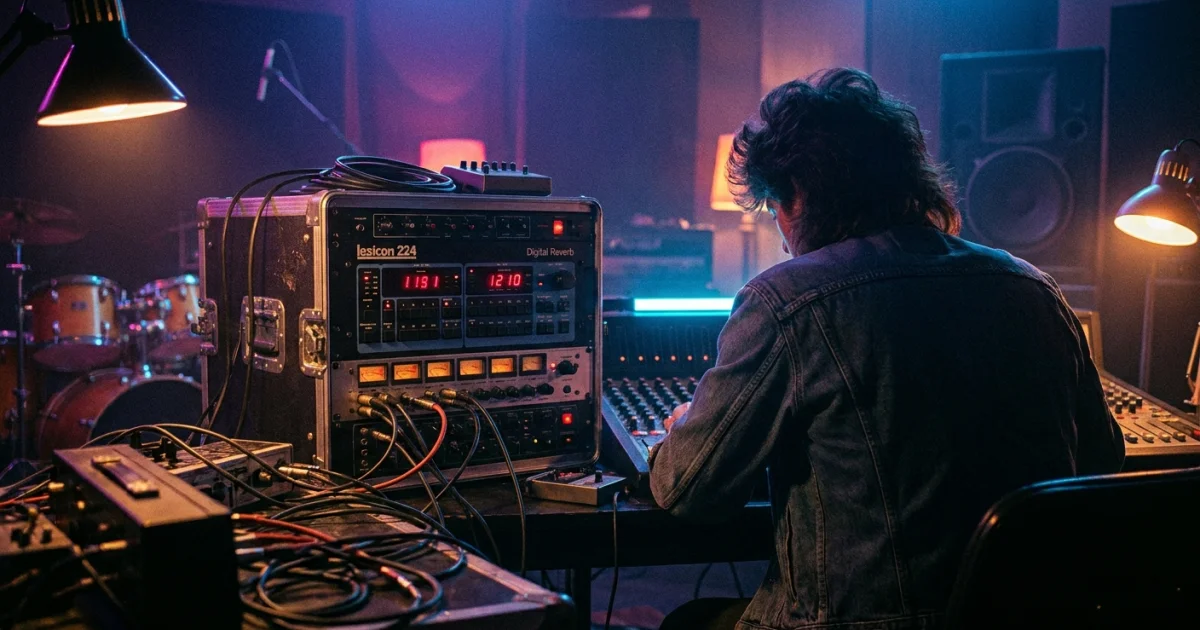
Close your eyes and listen to any classic Italo Disco track. Pay attention to how the vocal sounds. It isn't "flat," isn't dry - around the voice is a distinctive space, volume, "air." That effect isn't accidental. It was built by specific devices - Lexicon reverb processors that became an inseparable part of the '80s sound. Here's the magic they brought to music.
What Reverb Is
For those not in the know - a quick explanation. Reverberation (or "reverb") is an effect imitating the natural reflection of sound in a space. When you sing in a bathroom, the sound reflects off the walls and creates a distinctive "echo." That's natural reverb.
In the studio, a direct vocal or instrument is recorded "dry" - without reverb. Then during mixing, artificial reverb is added to create a sense of space - as if the singer were in a concert hall, a small room, or a cathedral. It's an important creative tool in the producer's hands.
Lexicon 224 and 224X
In 1978, American company Lexicon released the 224 - a digital reverb processor that was revolutionary for its era. It offered reverb quality that cheaper alternatives couldn't touch. The Lexicon 224X, which appeared later, expanded the capabilities further.
These units weren't cheap. The early-'80s price ran into several thousand dollars, a serious investment for any studio. But they gave sound quality that justified the outlay - especially for commercial studios working with hits.
A Signature Sound
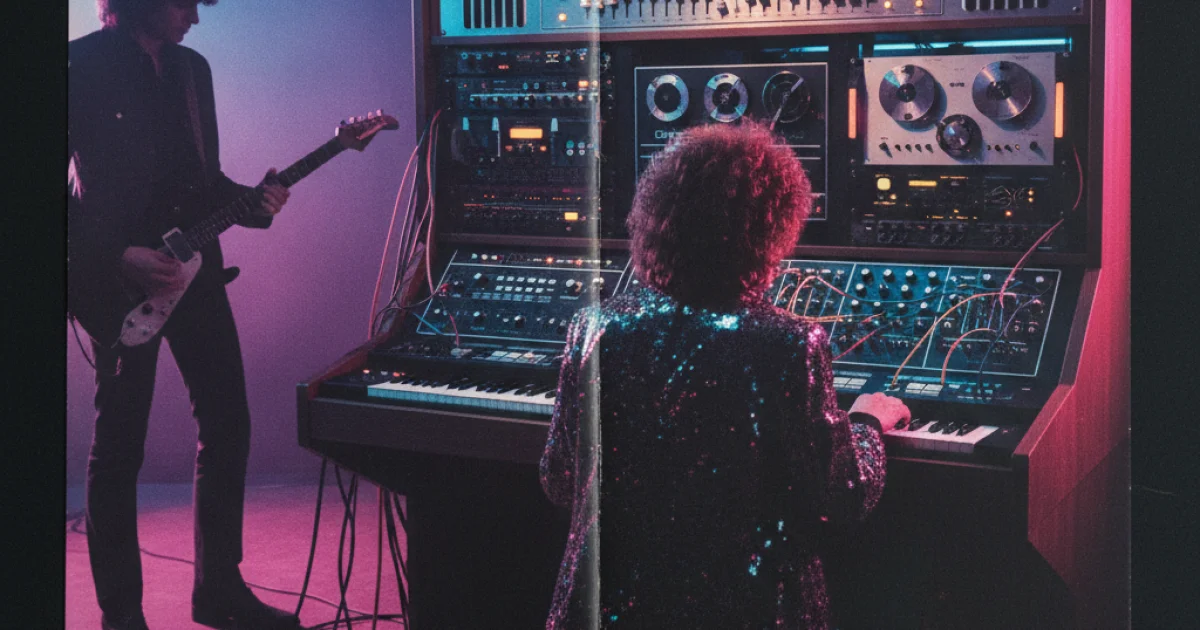
Lexicon reverb has a recognizable character. Dense, rich, with a signature "airiness" in the high frequencies. It isn't a literal imitation of a real space but a kind of idealized version - more beautiful, more musical than natural reverb.
That character became an inseparable part of the '80s sound. Any classic track of the era, whether Italo Disco, rock, pop ballad or electronics, most likely used Lexicon reverb. It was such a standard element that it can be called one of the decade's defining sounds.
Lexicon 480L: the New Standard
In 1986 the 480L appeared - an even more advanced unit. It expanded reverb capabilities, added many new algorithms, improved quality. The 480L became the benchmark for professional studios in the mid- and late '80s.
Many classic Italo Disco tracks from the second half of the decade were recorded with the 480L. You can hear it in work from Memory Records, Discomagic, and other major Italian studios. The signature volume in vocals, cinematic space in arrangements - all of it is often the 480L's result.
Other Models
Beyond the 224 and 480L, Lexicon released other models - the PCM 60, PCM 70, LXP-1. They were more affordable and let many small studios get quality reverb. That spread the use of the "Lexicon" sound beyond the top studios.
The PCM 70 in particular became popular among producers who couldn't afford a 480L but wanted professional reverb. It shows up in the work of many mid-level Italo Disco artists.
Competitors
Lexicon wasn't the only reverb maker in the '80s. AMS (a British company), Yamaha, EMT, TC Electronic - all of them offered their own units. Each had its own sonic character, and producers picked tools to fit specific projects.
In Italy and Europe, Lexicon was especially popular. Its American origin was associated with a prestigious industry, and the quality was unarguable. Many Italian studios invested specifically in Lexicon, which partly explains the general character of the Italo Disco sound.
Use on Vocals
Lexicon's main application was processing vocals. In Italo Disco this was especially important. The signature "melancholy" vocals of artists like Savage or Gazebo got their "ghostly," "distant" character precisely thanks to reverb.
The typical scheme - the vocal was recorded dry, then during mixing Lexicon reverb with specific parameters was added. It could be a long "hall" reverb to create drama or a short "room" reverb for more intimate sound. Each type gave its own effect.
Use on Instruments
Reverb was applied to instruments too. Synth parts, drum machines, sampled sounds - all of it was processed. Especially signature sound came from clap hits (snap/clap) on the Roland TR-808 - they often went through a Lexicon with long reverb, creating the signature "big" clap sound.
If you listen to a classic Italo Disco track and pay attention to the claps or snares, you can hear the signature "air" around them. That's the reverb's work. Without it the sound would be much flatter and less impressive.
The Digital Era and Emulations
With the development of digital music, software emulations of Lexicon appeared. Native Instruments, Audio Ease, Waves - many makers built plugins reproducing the sound of the legendary reverbs. The quality of emulations is gradually getting better.
Today producers can use these plugins to build retro sound. If you need an authentic Italo Disco feel, going through a Lexicon emulation is an almost mandatory step. It's one of the most signature elements of the era's sound.
A Cultural Phenomenon
Lexicon reverb became a cultural phenomenon that goes beyond being just a technical tool. It's part of the "'80s sound" that creates emotional associations for listeners. Hear the signature reverb - and your thoughts travel to that era.
Current producers working in retro style - synthwave, retrowave, modern Italo - specifically chase this sound. Without Lexicon reverb a retro track sounds "wrong." Signature airiness is one of the main markers of authentic retro sound.
Originals and Their Cost
Original Lexicon 224 and 480L units in working condition today cost a lot. Collectors and serious producers pay thousands of dollars for these units. For some studios, having an original Lexicon is a matter of prestige and creative differentiation.
The reason is simple - despite the quality of emulations, many producers and engineers believe original hardware sounds better. The analog components, specific electronics, particularities of the digital algorithms of the time create nuances hard to fully reproduce in digital emulation.
Lexicon's story shows how important details in music production are: a single unit, properly used, can define the sound of an entire era. For current producers interested in the '80s, getting to know Lexicon is a required step: understanding how the unit was applied, what parameters the era's best engineers used, how reverb affected the overall perception of the music - this knowledge helps build authentic retro sound.
In 2013, Universal Audio bought from Lexicon the license to the exact algorithms of the 224 and 480L and released a plugin emulation, the UAD Lexicon 224. The price - about 300 dollars; the emulation with a separate digital signal processor. For comparison: an original 480L in working shape on eBay today costs 8,000-15,000 dollars. The market itself defined the price of access to this sound - and demand has stayed steady from the '80s to today, regardless of format (hardware or plugin).