
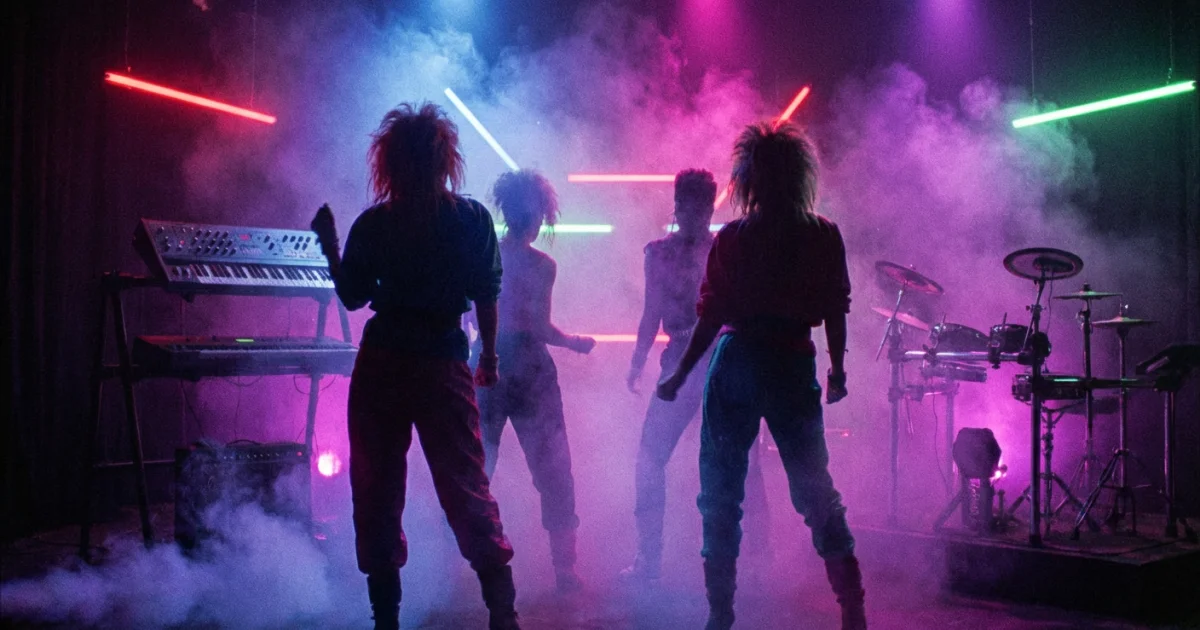
If Italo Disco music is the songs, then the genre's visuals are a separate aesthetic phenomenon. '80s videos look ridiculous and beautiful at the same time. They're low-budget but ambitious, naïve but stylish. Forty years on, they get rewatched with pleasure - and not always ironically. Here's what made these videos so special.
Budget: Smaller Than You Think
The main fact to understand about Italo Disco videos: they were shot for peanuts. Unlike American videos of the same period, where Madonna or Michael Jackson clips could cost millions of dollars, Italian productions ran on budgets of a few thousand. Sometimes less.
That dictated every creative decision. You couldn't afford complex sets, so you shot in studios or outdoors. You couldn't hire expensive cinematographers, so you worked with local pros. You couldn't put together crowd scenes, so you made do with a handful of dancers or models.
The Standard Toolkit
Over the years, a canonical visual language for Italo Disco videos crystallized:
- Smoke machine - mandatory, no exceptions.
- Lasers or colored lighting - red, blue, green.
- Mirrors and reflective surfaces - for a sense of space.
- Models - usually women in shimmering outfits.
- The artist in a dramatic pose in the foreground.
These elements combined in different proportions, but usually all five were present. Pull up any random Italo Disco clip from 1985 - chances are, you'll see all five components from various angles.
Futurism on a Budget
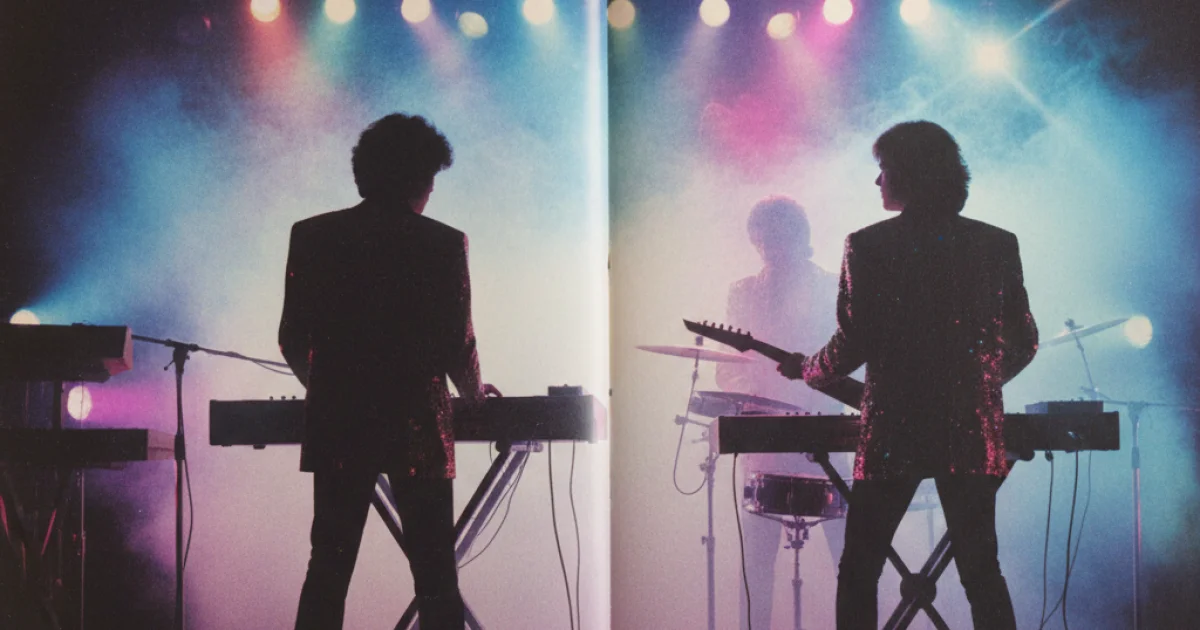
Many videos tried to convey a sense of the future on the budget of a regular Italian bar. The result was interesting - futurism-on-a-budget. Plastic sets standing in for "spaceships." Neon tubes symbolizing "high tech." Costumes made of shimmering synthetic fabric, meant to represent "the fashion of the year 2100."
Today all of this looks like a charming artifact of its era. But there's a particular sweetness in that naïve faith in the future. Directors and designers sincerely tried to show something impressive, knowing they had minimal resources. The result is a strange hybrid of ambition and means.
The Artist's Face, Close Up
Italo Disco videos use a lot of close-ups. A few reasons. First, the artist's face is the main thing the audience wants to see. Second, close-ups are cheaper to shoot than wide shots with elaborate crowds. Third, dramatic facial expressions carry the song's emotion well.
A typical artist in an Italo Disco video looks into the camera with an expression of pensive melancholy. Eyebrow slightly raised, gaze fixed somewhere in the distance, posture conveying deep feeling. You can spot this canonical expression on dozens of singers across different tracks.
Dancers and Their Moves
Dance scenes in Italo Disco videos are a topic of their own. Unlike the elaborate choreography in American videos of the same time, here the dances are usually simple. A handful of dancers perform similar moves - synchronized if well-rehearsed, not so synchronized if there wasn't enough rehearsal time.
Often dance scenes were shot in dim light, which helped hide the rough edges of the choreography. Silhouettes of people moving through smoke-machine haze looked atmospheric, even when the actual dancing was modest.
Beach, Yacht, Pool
"Summer" Italo Disco videos had their own visual canon. Everything associated with la dolce vita - beaches, yachts, pools, cocktails, tanned bodies. Sandy Marton and his peers on the "summer" branch of the genre built their visual stories on precisely these images.
Interestingly, many of those videos weren't shot at exotic resorts, as it might seem, but on accessible Italian beaches. Rimini, Liguria, Sardinia doubled as "tropical paradise" - and it worked, as long as the cinematographers knew how to light it right.
Plots: What They Looked Like
Most Italo Disco videos didn't have a plot in the literal sense. They were visual collages - artist sings, dancers dance, models walk across the stage, angles change, effects add atmosphere.
Occasionally you'd see videos with a primitive storyline - a meeting, a parting, a memory. But more often the mood was the point, not the narrative. Economically that made sense - a simple collage shot faster and cheaper than a narrative film.
There were exceptions - some videos used metaphorical imagery and symbolic scenes. The "I Like Chopin" video by Gazebo, for instance, contains visual references to classical music and nostalgia motifs.
Costumes of the Era
'80s fashion shows up in full force in Italo Disco videos. Shiny blazers with shoulder pads. High-waisted jeans. Bold makeup on the women (heavy eyeshadow, lined eyes). Teased hair. Accessories - thick chains, oversized earrings, sunglasses even indoors.
Today all of this looks ridiculous and charming at the same time. It's fashion that was completely serious at the time but from a forty-year distance looks almost like caricature. And yet many elements of that aesthetic are back - the retro wave has brought back some silhouettes and makeup approaches.
Influence on the Present
Today the visual aesthetic of Italo Disco videos is actively borrowed in synthwave and the retro wave. Modern videos by The Weeknd, Dua Lipa, Drake deliberately reference '80s imagery - the same neon, the same smoke machine, the same lasers, the same angles.
The difference is that now it's done with big budgets and modern technology. The result looks cleaner, but sometimes loses the naïve charm of the originals. Italian '80s videos were strange and beautiful precisely because they were made with heart under tight constraints. That energy is hard to reproduce, even with million-dollar budgets.
Go Watch Them
If you've never watched Italo Disco videos on purpose, start with the classics:
- Baltimora - "Tarzan Boy"
- Ryan Paris - "Dolce Vita"
- Valerie Dore - "The Night"
- Sandy Marton - "People From Ibiza"
The YouTube channel Italo Disco Club (one of the biggest retro archives of the genre) has racked up more than 150 million views over ten years of work - and under a 1984 video the comments regularly feature viewers in their twenties who are discovering these clips for the first time. A format conceived as a disposable ad for a record became standalone visual material - and lives on in the YouTube algorithm far longer than it ever did on Italian TV.