

If Discomagic was the heart of Italo Disco inside Italy, ZYX Music was its heart everywhere else in Europe. Founded in Germany in 1971, the label played a key role in spreading the genre - and Italian dance music largely owes its reach to Germany, Scandinavia, and Eastern Europe to this label. The ZYX story is a case study in how the right distribution can matter more than the content itself.
Bernhard Mikulski and His Idea
ZYX Music was founded by German entrepreneur Bernhard Mikulski in the small town of Merzenich near Cologne. At first the label worked with all sorts of music - from disco to schlager. But in the early '80s Mikulski sensed something interesting happening in Italy, and he reoriented the business toward Italian material.
His business model was simple: negotiate licenses with Italian labels for the German and broader European market, reissue the tracks in Germany, and handle promotion and distribution. That let Italian artists reach a wider audience and gave ZYX revenue without having to create its own content.
Expanding the Map
ZYX quickly became the main channel for Italo Disco outside Italy. The label worked with Discomagic, Il Discotto, Memory Records, and other Italian partners. Every significant hit in the genre eventually showed up in the ZYX catalog in a German version - with German covers, local promo materials, and market adaptations.
ZYX's role in Eastern European markets was especially important. When the borders of the former Eastern Bloc opened in the '90s, ZYX was the first on the ground with a finished product - and the label's compilations sold by the millions in Russia, Poland, and Czech Republic.
The Legendary Compilations
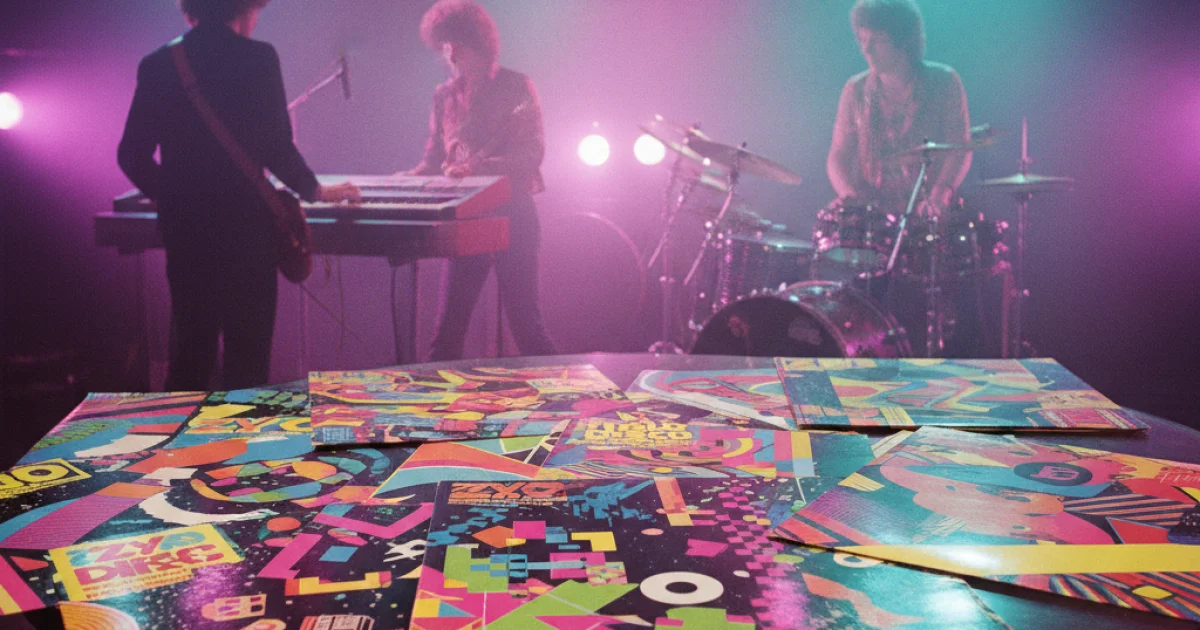
ZYX Music's main product was compilations. These series defined Italo Disco for an entire generation of listeners:
- "Italo Boot Mix" - a series of mix records for club DJs, running from the mid-'80s.
- "The Best of Italo Disco" - more than 20 volumes, the label's flagship anthology.
- "Super Italo Disco" - expanded collections with rare B-sides and long versions.
Most music fans in the '80s and '90s got to know the genre through these collections - not through the original Italian records, but through German reissues.
The compilation approach was particular. Sometimes one record paired undisputed hits with obscure tracks the label was trying to push. Sometimes they did "mixes" - blending several songs into a single long track for discotheques. That practice was debatable in terms of respecting the originals, but it helped sell records.
Their Own Artists
Over time ZYX started working with their own artists - not just licensing Italian material, but releasing original recordings. The label put out work by Fancy, Bad Boys Blue, Silent Circle, and other German projects working in the Italo Disco aesthetic.
That created an interesting hybrid - "German-Italian disco," where producers from Germany copied the Italian formula but with their own intonation. The result was a bit colder, a bit more technological than the original, but built on the same melodic foundation.
Adapting to New Eras
When classic Italo Disco faded, ZYX didn't go with it. The label adapted - it started releasing Eurodance, then 2000s pop and dance music. But the retro catalog remained a big part of the business.
The compilation series kept getting reissued. In the 2000s ZYX moved into digital distribution - now their releases are available on every streaming platform. For many young listeners, the first encounter with Italo Disco happens through playlists built from the ZYX archive.
A Role in Preserving the Legacy
ZYX Music did something important - they preserved and documented Italo Disco in an accessible form. Many Italian labels from the '80s closed long ago, their archives lost or sold off. The ZYX catalog is still active and available to the public.
Many forgotten tracks got a second life specifically through ZYX. If some obscure artist from 1985 is playing on a streaming service today, they most likely got there through the ZYX system.
Today
ZYX Music is still working. The company has gone through several generations of leadership, adapted to the digital era, but the retro catalog remains its key asset - new compilations, anniversary reissues, and special series come out regularly. For Italo Disco collectors, ZYX is more than a label: it's an institution that preserved the genre for future generations. Without their methodical licensing and promotion work, many Italian hits would today be known only to a narrow circle of specialists.
There's an irony here. A genre born in Italy got its worldwide fame largely thanks to German thoroughness and business sense. The Italians made the music, the Germans sold it, Europe danced to the result of that collaboration.
In 2021, to mark its 50th anniversary, ZYX released an 8-disc box set "50 Years of ZYX Music" with a full album of Italo Disco category material. The catalog number on the label's first record was ZYX 1001 in 1973; the last one in the box was ZYX 23895 in 2020. Between those two numbers - nearly half a century of work on a genre that started with a single German businessman falling in love with Italian records.
The links among labels, studios and artists are mapped in the history of Italo Disco in Germany.