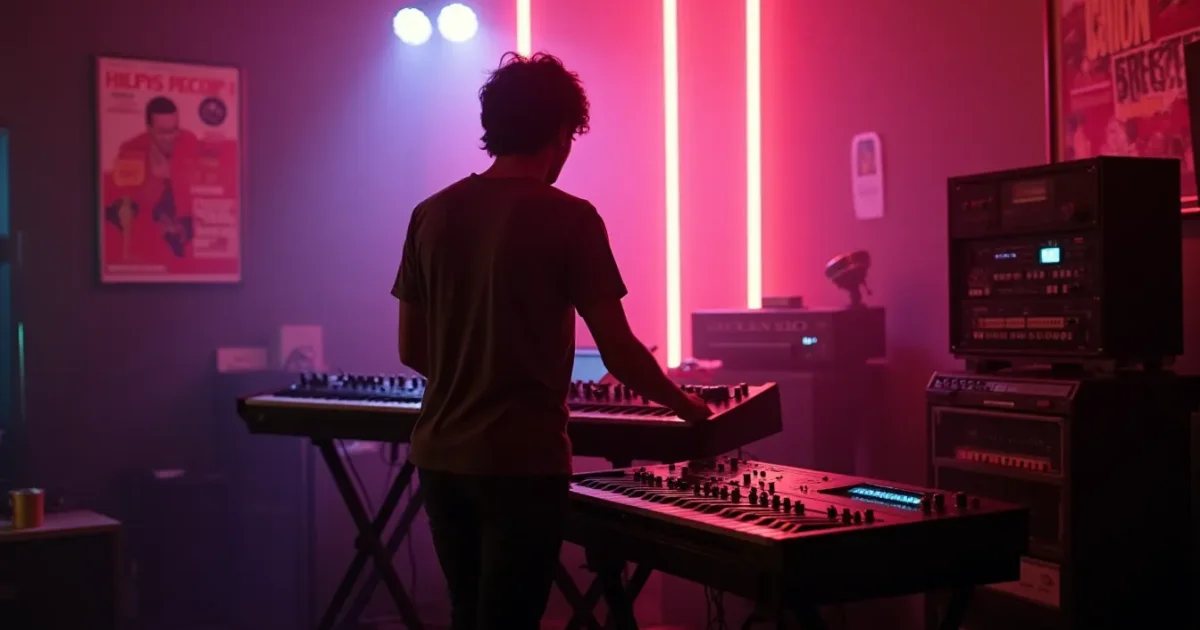
1982. Japanese company Korg released the Poly-61 - a six-voice polyphonic synthesizer with digitally controlled oscillators. It was one of the most affordable poly-synths of its time, and it quickly made its way into studios across Europe. The main keyword is Korg Poly-61, and in this article we break down why this instrument became popular in Italo Disco and which tracks were recorded with its sounds.
The Poly-61 came out at a time when Japanese manufacturers were actively competing for the affordable polyphonic synthesizer market. Before that, poly-synths were a luxury. Korg offered an instrument that sounded decent, cost less than competitors and was simple enough to use. This made it popular in small studios around the world.
How the Poly-61 is built
The Poly-61 is an analog polyphonic synthesizer with DCO (digitally controlled oscillators). This means that the oscillator pitch is set by digital circuitry while the sound itself remains analog. This solution made the instrument stable in tuning and cheap to produce.
The synthesizer has six voices, each of which can use two oscillators. A low-pass filter, two envelope generators, LFO and a simple sequencer. The sound is typical of the early 1980s: bright, slightly plastic, with clear highs and a moderately warm low end.
An important feature is the absence of a modulation wheel and limited real-time control. The Poly-61 was not made for live performance but for studio work. Patch programming was done through buttons and a small display, which was inconvenient but tolerable for someone used to working with digital oscillators.
Controlling one parameter at a time through a shared value regulator is typical of budget synthesizers from the early 1980s. It slowed the creative process but also taught producers to understand exactly which parameter was responsible for what.
Why the Poly-61 entered Italo Disco
In the early 1980s Italian producers looked for affordable polyphonic synthesizers. The Prophet-5 and Jupiter-8 were expensive, the Yamaha CS-80 huge and rare. The Korg Poly-61 offered acceptable quality for much less money. For studios releasing singles on an industrial scale this mattered.
The Poly-61's sound fit well into the Italo Disco mix. It was not as warm as the Prophet, but its clarity and brightness worked in dense arrangements. Pads, string imitations, keyboard plucks and simple lead lines - the Poly-61 did all of this convincingly.
The instrument was also reliable. DCOs did not drift during transport or temperature changes - an important quality for European studios where equipment often changed owners and rooms.
Speed was important in Italo Disco. A producer had to record a verse, chorus and arrangement in a day. The Poly-61 allowed quick patch recall and playing a part. This made it a working tool rather than an object of worship.
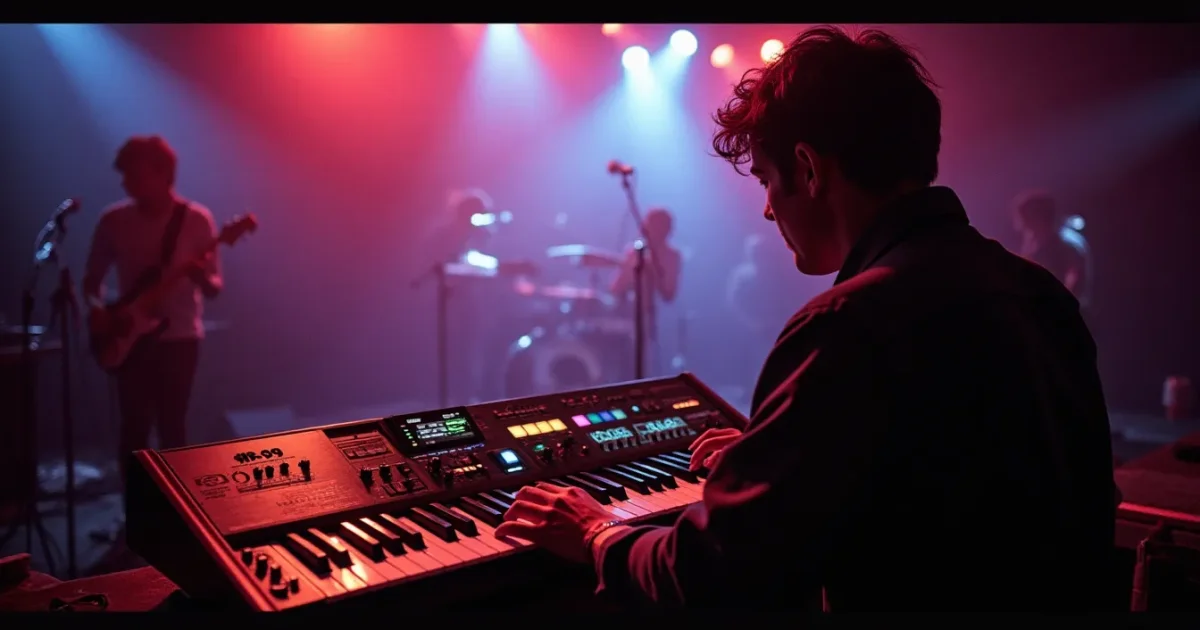
DCO: digital control, analog sound
The idea of DCO is simple: a digital processor sets the pitch while an analog circuit generates the waveform. This combination provided stable tuning without expensive temperature-stabilized analog equipment. At the same time the sound remained analog - with characteristic imperfections that make it alive.
DCOs became popular in the early 1980s precisely because of the balance between price and quality. The Korg Poly-61, Roland Juno-6/60 and JX-3P all used this technology. These synthesizers did not sound as luxurious as top Prophets or Oberheims but were affordable to the mass producer.
For Italo Disco this was ideal. The genre did not demand orchestral richness - it needed clear, melodic, quickly programmable sounds. The Poly-61 handled this task.
The main advantage of DCO is stability. In classic analog synthesizers VCOs could drift with temperature and time. In DCOs pitch is set by a digital counter, so the instrument stayed in tune. This was important for studios where equipment ran for many hours at a time.
Programming and MIDI modification
The original Poly-61 had no MIDI. Control was through buttons and one parameter at a time. This slowed work but did not stop producers. In the late 1980s third-party MIDI modifications appeared, allowing the instrument to be integrated into a MIDI studio.
Patch programming included selecting oscillator waveforms, setting the filter, envelopes and LFO. The polyphonic sequencer allowed simple parts to be recorded directly into the synthesizer. This was useful for quick sketches, although serious arrangements were done on external sequencers.
Today the original Poly-61 is valued by collectors, while emulations and plugins reproduce its sound for modern producers. The characteristic DCO sound remains recognizable.
Third-party MIDI modifications made the Poly-61 more convenient: it could now be controlled from an external sequencer, switch patches and record automation. For Italo production in the mid-1980s this was already the standard.
Where the Poly-61 is heard in Italo Disco
Naming all tracks is difficult because studio reports were rarely published. But the character of the Poly-61's sound can be heard in records from late 1982-1986, when the instrument was widely available. Typical uses:
- string pads and plucks in arrangements
- lead lines with a light bright timbre
- bass parts combined with a separate bass synthesizer
- effectful fills and transitions
The Poly-61 was often used alongside the Roland Juno-6/60, Yamaha DX7 and TR-808. In this combination it added polyphonic texture that single-voice lead synthesizers could not provide.
Specific Italian projects that may have used the Poly-61 include the numerous studio teams of Memory Records, Discomagic and other labels. They did not advertise their equipment, but the character of the sound speaks for itself: bright, slightly cold pads and light lead lines.
Comparison with competitors
The Poly-61's competitors in the affordable poly-synth niche were the Roland Juno-6/60 and Yamaha DX7. The Juno sounded warmer and wider, the DX7 offered digital FM sound with new textures. The Poly-61 occupied an intermediate position: analog but clearer and more disciplined than the Juno.
If the Juno suited pads and atmosphere, the Poly-61 was more often used for rhythmic and melodic parts. Its sound cut better through a dense mix with drum machine and bass.
The Yamaha DX7, released in 1983, partly displaced the Poly-61 in the upper market segment. But the Poly-61 remained a workhorse for budget studios for several more years.
Modern use
Today the Korg Poly-61 is a vintage instrument. Originals in good condition cost noticeably more than in the 1980s but are still more affordable than top Prophets and Jupiters. Many modern Italo-style producers use plugins or emulations to get the DCO sound without maintaining old hardware.
For the beginning producer the Poly-61 is a good example that Italo Disco was built not only on legendary expensive synthesizers. Budget instruments also shaped the genre because they were available to those who recorded most releases.
Modern plugins such as U-he Diva, Arturia Jup-8 or Korg Collection allow a similar sound. But many prefer the original for its unpredictability and characteristic envelopes.
Why the Poly-61 matters for Italo Disco
The Korg Poly-61 is a symbol of the democratization of synthesizer sound. It proved that a polyphonic analog synthesizer could be affordable. For Italo Disco this meant more studios could create professionally sounding arrangements.
Its sound is part of the genre's palette. Not the most glamorous, not the warmest, but working and recognizable. If you listen to Italo Disco from 1983-1985, there is a high probability that the mix contains a Poly-61 or its closest relatives.
Understanding the role of such budget instruments helps listen to Italo Disco more realistically. The genre was not created on rare mythical synthesizers. It was created on affordable machines that worked day after day in Italian studios.