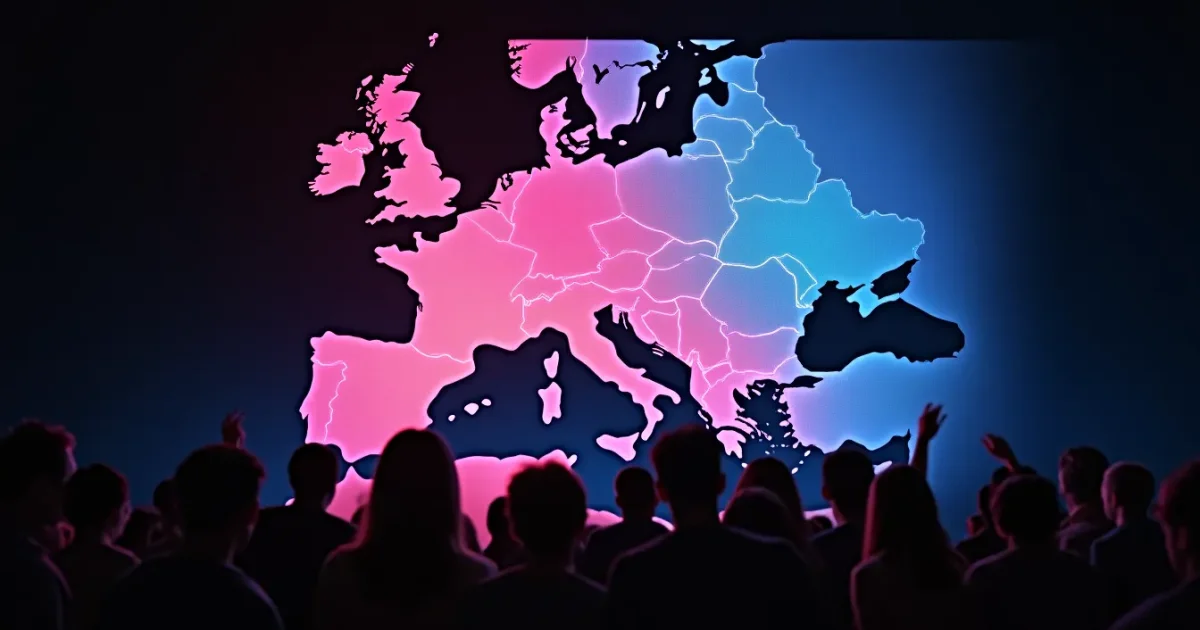
1970s-1980s, Europe. Two terms often appear side by side: Italo Disco and Eurodisco. They are confused, mixed and sometimes used as synonyms. But they are different phenomena. The main keyword is Italo Disco and Eurodisco differences, and this article gives a clear distinction: geography, time, sound, market and cultural context.
What is Eurodisco?
Eurodisco is a broad term for European dance music that grew out of American disco in the 1970s. It includes German, French, Swedish, Dutch and Italian projects. Key names: Boney M., ABBA, Ottawan, Gilla, Silver Convention, Amanda Lear. This is music with live or partially live instruments, a clear disco beat and song form.
Eurodisco emerged in the mid-1970s and peaked at the end of the decade. It was aimed at the international market, often recorded in English and sold across Europe and the USA. Producers such as Frank Farian and Giorgio Moroder created hits that sounded the same in Munich, Paris and New York.
Moroder, though Italian by origin, worked in Germany and the USA. His production for Donna Summer and his own hits like "From Here to Eternity" became a bridge between American disco and European electronics. His work showed how disco could move toward a synthesizer sound, though not yet Italo Disco.
Important: Eurodisco is not a national genre. It is a general name for the European variety of disco. It could include very different styles, from pop-disco to hi-NRG. Therefore trying to give Eurodisco strict musical criteria is pointless - it is more of a geographic and temporal label.
What is Italo Disco?
Italo Disco is already a specific genre born in Italy in the early 1980s. Its distinguishing features:
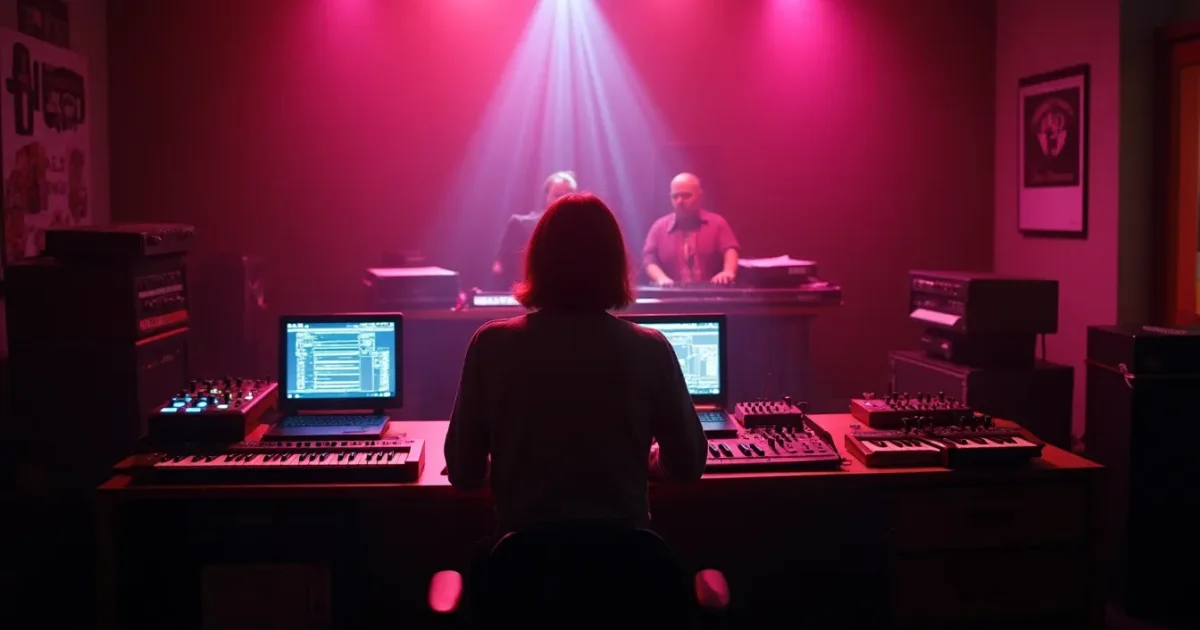
- synthesizers and drum machines instead of a live rhythm section
- English vocals with an Italian accent
- BPM around 120, later accelerating to 130-140
- formula "verse-chorus with a repeating hook"
- melancholic or nocturnal atmosphere
- studio projects instead of bands of people
Italo Disco is not just an "Italian variety of disco." It is a separate style that used certain instruments and followed certain rules. It includes Ken Laszlo, Koto, Savage, Radiorama, Fancy, Baby's Gang and hundreds of other projects.
The genre arose not in one specific city but in several Italian studio centers: Milan, Rome, Bologna, Turin. Producers often worked on several projects at once, changing vocalists and aliases. This made Italo Disco resemble a factory: stable quality, recognizable sound, fast release of singles.
A separate feature of Italo Disco was economy. Projects were cheap to produce: there was no need to maintain a band, rent a large studio for live recordings, or pay for tours. A composer, vocalist and synthesizers were enough. This allowed a huge number of releases.
Three main differences
1. Geography and time. Eurodisco is a pan-European movement of the mid-1970s. Italo Disco is an Italian genre of the early 1980s. Although Italo Disco descended from Eurodisco, it formed later and became localized. If Eurodisco is all of Europe, Italo Disco is specifically Italy plus export.
2. Instruments. Eurodisco more often used live instruments: strings, brass, real drums, bass guitar. Italo Disco took a course toward electronics: synthesizers, drum machines, vocoder, samplers. This changes not only the sound but the feeling of the music: Eurodisco is "orchestral," Italo is "machine-like."
3. Market and format. Eurodisco was a mass radio product for the whole world. Italo Disco began as a niche club product that later entered the international market through licenses. Therefore Italo Disco remained more "underground" than Eurodisco for a long time.
There is a fourth difference - vocals. In Eurodisco professional vocalists sang with clear diction. In Italo Disco amateurs or studio singers were often used, singing in English with a strong accent. This accent became one of the genre's features.
Why the terms are confused
Confusion arises for several reasons. First, Italo Disco is a subspecies of Eurodisco, so boundaries are blurred. Second, many Italian artists worked in both styles. Third, outside Italy the term "Italo Disco" took hold only in the 1990s; before that Italian dance music was also called Eurodisco.
In addition, in America and Germany "Eurodisco" was used as a label for any European dance music. ABBA and Boney M. fell under this term but had nothing to do with Italo Disco. Only with the development of internet communities did the terms diverge.
Finally, there is also the term "Eurodance," which appeared later and is sometimes mixed with Eurodisco. This adds another layer of confusion. Remember: Eurodisco - 1970s, Italo Disco - 1980s, Eurodance - 1990s.
Examples for comparison
Eurodisco: Boney M. "Rasputin" - live drums, choir, guitar, theatrical delivery. ABBA "Gimme! Gimme! (A Man After Midnight)" - pop disco with a live rhythm section. Ottawan "D.I.S.C.O." - French disco with a funk bass.
Italo Disco: Koto "Visitors" - synthesizers, vocoder, space theme. Ken Laszlo "Tonight" - electronic arrangement, melodic vocal, nocturnal atmosphere. Savage "Don't Cry Tonight" - a typical Italo ballad track with a synthetic sound.
If you put these tracks side by side, the difference is heard immediately: Eurodisco sounds "livelier" and "poppier," Italo Disco "colder" and "more synthetic."
How the genres connect chronologically
In the mid-1970s American disco came to Europe and spawned Eurodisco. By the late 1970s Italian producers began experimenting with synthesizers, creating precursors of Italo Disco. In 1983-1984 Italo Disco formed as an independent genre. By the late 1980s it accelerated and began turning into Eurobeat.
Thus Italo Disco is not a competitor of Eurodisco but its late electronic branch. It took song form and dance energy from Eurodisco but replaced live instruments with machines.
Modern use of the terms
Today "Eurodisco" is used less often than in the 1970s. People more often say "disco," "hi-NRG" or "Eurodance." "Italo Disco" remains a stable term for the specific Italian genre of the 1980s. Collectors and DJs distinguish these styles by instruments and year of release.
For the new listener the main thing is not to confuse general European disco with the specific Italian synthesizer style. If you hear live strings and a choir, it is probably Eurodisco. If synthesizers, vocoder and an Italian accent, it is Italo Disco.
In streaming services and retro compilations the terms are often mixed. Therefore it is useful to check the year of release and instrumentation, not only the playlist name.
Conclusion
Italo Disco and Eurodisco are relatives, not twins. Eurodisco is broader in geography and time, Italo Disco is narrower and more specific. Understanding the difference helps navigate the history of European dance music and not call ABBA or Boney M. Italo Disco.
For the Disco Magic website this distinction is important because the project is dedicated specifically to Italo Disco and its continuators. Eurodisco is the context from which the genre grew, but not the genre itself. Italo Disco is already a separate chapter with its own stars, labels and sound rules.
In short: Eurodisco is the European disco wave of the 1970s, Italo Disco is the Italian synthesizer scene of the 1980s. There is a connection between them, but they should be listened to differently.