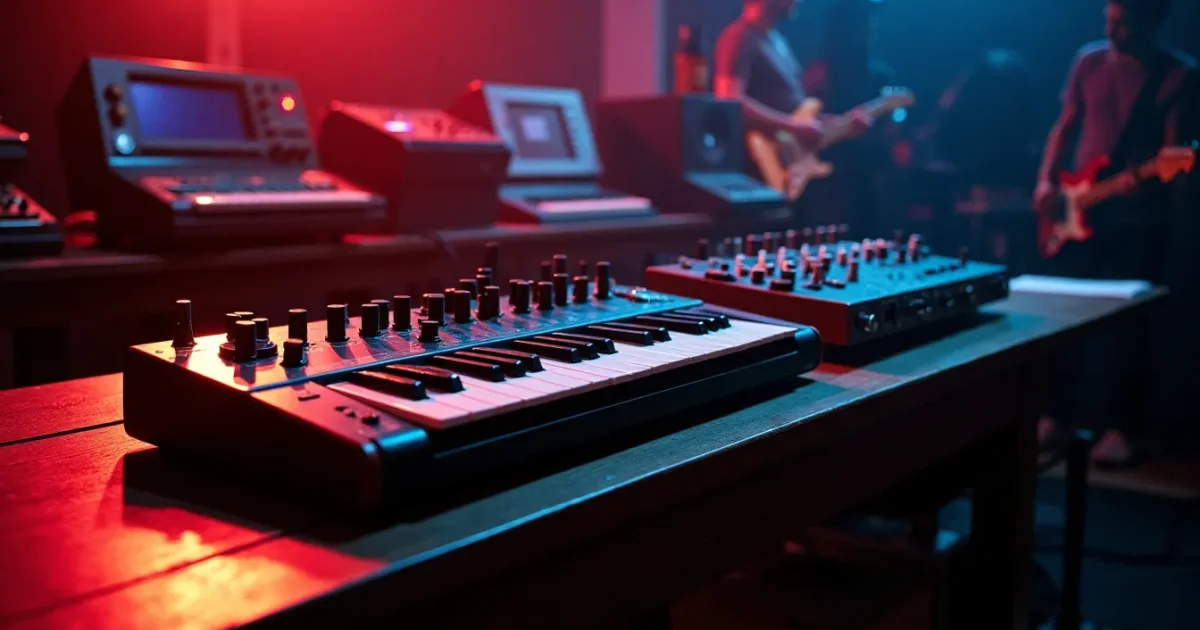
1960-1985. Before drum machines, rhythm in pop music was created by live drummers. Then the first rhythm boxes appeared - bulky boxes with a fixed set of patterns. By the late 1970s electronic drum machines became programmable, and in the 1980s they became the main instrument of dance music. The main keyword is electronic drum machine, and this article traces the path from early rhythm boxes to Roland TR-808 and other machines that defined the sound of Italo Disco.
First rhythm boxes: 1960s
The first commercial rhythm boxes appeared in the late 1950s and early 1960s. The Wurlitzer Side Man (1959) is one of the most famous early examples. It was a large floor-standing device that played several preset rhythms: waltz, samba, foxtrot. The user could not program custom patterns but could change tempo and select a style.
Early rhythm boxes used analog generators and mechanical switches. The sound was simple and often bulky, but enough for home organs, bars and rehearsals. They were not intended for professional recording, but they laid the idea of automatic rhythm.
The idea was simple: a musician presses a button and the device plays a rhythm. This seemed like a revolution for amateurs and not a threat to professionals. No one imagined that in twenty years such machines would replace drummers in entire genres.
Ace Tone and the beginning of the Japanese era
In the 1960s-1970s Japanese companies began making compact and affordable rhythm boxes. The Ace Tone Rhythm Ace became one of the first mass-market instruments. It was later developed by Roland. These machines offered several rhythms, sometimes with percussion variations, and began to enter home studios.
Japanese manufacturers made a key step: they turned the rhythm box from a large household appliance into a compact musical instrument. This opened the door for widespread use in pop music. Roland, Korg and Yamaha soon dominated the market, offering increasingly complex devices.
The Rhythm Ace had a dry, characteristic sound that can be heard on early European pop recordings. It became an intermediate link between large organ rhythm boxes and the programmable drum machines of the 1970s.
Roland CR-78: the first programmable step
In 1978 Roland released the CR-78 CompuRhythm - one of the first drum machines that allowed the user to program their own patterns. It had a characteristic soft, "plastic" sound: kick, snare, hi-hat, cymbals, clavinet, maracas.
The CR-78 appeared on recordings by Blondie, Phil Collins, U2, Gary Numan and many others. It proved that a drum machine could sound not like a toy but like a full instrument in a professional studio. Its sound became a bridge between old rhythm boxes and the future 808/909.
CR-78 programming was limited but revolutionary. You could create your own drum sequence and save it. This meant the drum machine was no longer just accompaniment - it became an instrument for composition.
Roland TR-808: the 1980 revolution
The Roland TR-808 was released in 1980 and initially failed commercially. Musicians considered its sounds unnatural compared to the LinnDrum. But it was precisely this "unnaturalness" that made it iconic. The deep kick, raspy snare, metallic cowbell and sharp hi-hat created a sonic palette that defined hip-hop, techno and Italo Disco.
The 808 was fully analog. Sounds were synthesized, not sampled, so they could be adjusted in length, pitch and attack. This gave producers freedom that digital sample-based machines did not have. You could make the kick shorter or longer, add resonance, change decay length.
In Italo Disco the TR-808 was used everywhere. Its kick and hi-hat became the foundation of thousands of tracks. Even when more "realistic" machines appeared, the 808 remained in the genre's arsenal. This instrument formed the "mechanical" rhythm of Italo.
The 808 also became important for hip-hop. Afrika Bambaataa and Planet Rock used it to create electro-funk. Thus one Japanese instrument found itself at the center of two different continental revolutions - American hip-hop and European dance.
TR-909, LinnDrum and Drumulator: 1980s
In the mid-1980s new machines appeared. The Roland TR-909 added sampled drums and became the foundation of techno and house. The LinnDrum and E-mu Drumulator offered more realistic sounds and were used in pop music and early hip-hop.
Different machines were found in Italo Disco. Some producers preferred the clear "plastic" sound of the 808, others the more "live" LinnDrum. The important thing is that by the mid-1980s drum machines stopped being a novelty and became the standard.
MIDI and studio integration
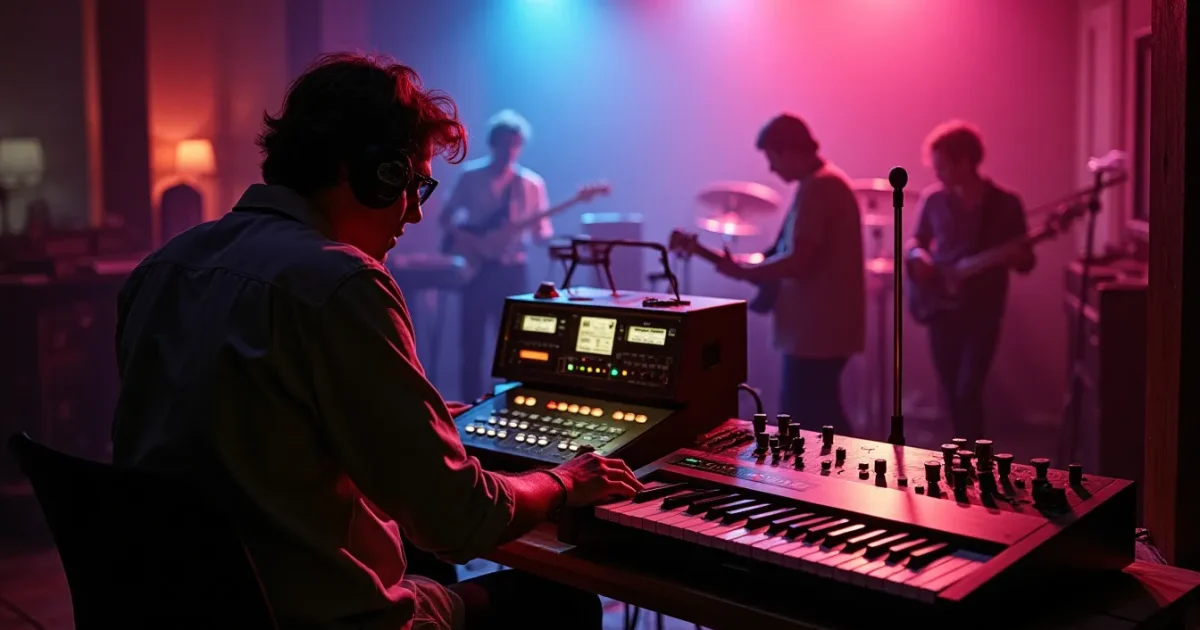
The arrival of MIDI in 1983 changed the use of drum machines. Now they could be synchronized with synthesizers and sequencers, creating complex arrangements without live musicians. For Italo Disco this was critical: the genre was built on studio projects where one producer controlled all instruments.
MIDI also allowed patterns to be saved and edited. Producers could quickly change the rhythm, copy it between tracks and standardize the sound. This made Italo Disco industrially scalable. One person could record several tracks in a day using the same drum machine.
Before MIDI drum machines were often recorded to tape as a mono or stereo signal, and after that there was no easy way to change anything. After MIDI each drum sound could go to a separate mixer channel, and the pattern could be edited at any time.
Why drum machines matter for Italo Disco
Without drum machines Italo Disco would not exist as a genre. Live drummers would have made the music more expensive, slower and less homogeneous. Electronic rhythm allowed singles to be released quickly, cheaply and in a recognizable style.
Moreover, drum machines gave Italo Disco its "mechanical" nature. A steady, perfect tempo, repeating patterns and synthetic drums all became part of the genre's identity. When a listener hears Italo Disco, they do not hear an imitation of live drums but a deliberate electronic rhythm.
This distinguishes Italo Disco from Eurodisco, where live drums and string sections remained the norm. The move to drum machines is one of the technological markers separating Italo Disco from earlier forms of European dance.
Key models in history
Brief chronology:
- 1959 - Wurlitzer Side Man (first mass-market rhythm box)
- 1960s - Ace Tone Rhythm Ace and other Japanese rhythm boxes
- 1978 - Roland CR-78 (first programming)
- 1980 - Roland TR-808 (analog revolution)
- 1982 - LinnDrum (sampled realistic sounds)
- 1983 - MIDI standard and integration of drum machines in studios
- 1983 - E-mu Drumulator (affordable sample-based drum machine)
- 1984 - Roland TR-909 (transition to techno and house)
These models show the evolution: from preset rhythms to full programmability, from analog synthesis to sampling, from isolated instrument to center of the electronic studio.
Modern significance
Today 1980s drum machines are collectible items and sources of inspiration. The TR-808 and TR-909 still sound in modern pop, hip-hop and electronic music. Many producers use emulations or original machines to get a characteristic vintage sound.
For Italo Disco the drum machine is not only an instrument but also a symbol. It means the transition from live dance music to a studio factory of sound. This transition happened in the 1980s and determined all further development of the genre.
Modern producers making Italo-style tracks often start with the drum machine. First they choose a kick and hi-hat, then bass and synthesizers. This methodology came from the 1980s and remains practical.
If you want to understand what the sound of Italo Disco is made of, start not with melody but with rhythm. It is the drum machine that gives the track its body. Everything else is texture and emotion, but without the right rhythm Italo does not work.