
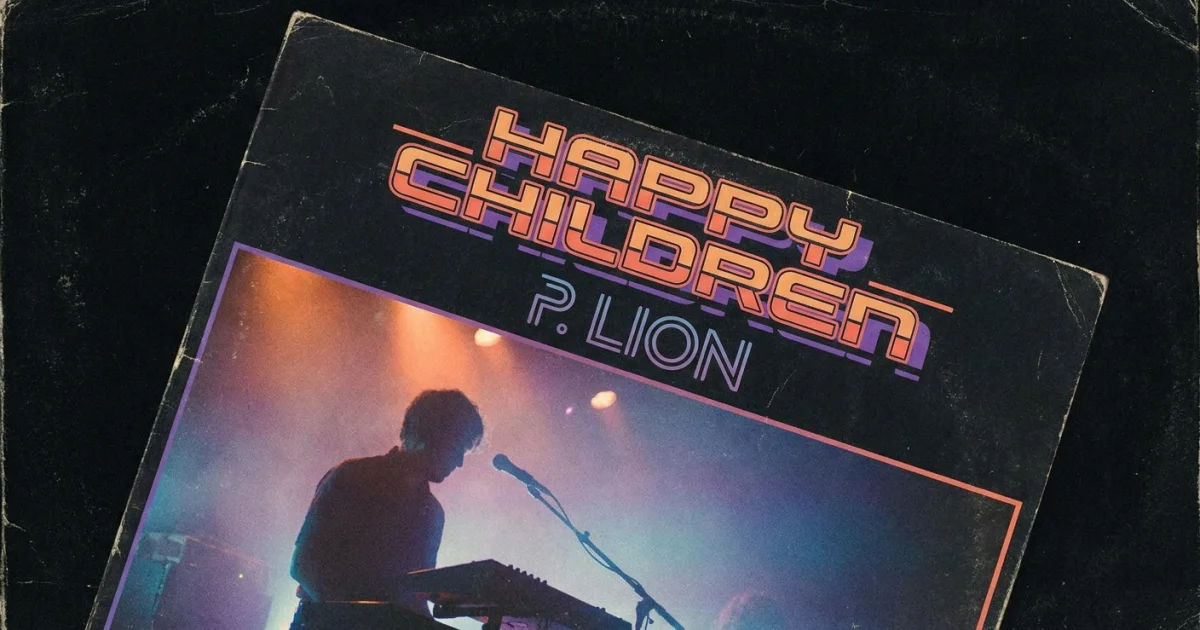
Some tracks define a genre in a single chord. P. Lion's "Happy Children" from 1983 is one of those. A melodic motif that in fractions of a second carries the listener to the Italian summer of the mid-'80s. Behind this minimalist masterpiece stands an Italian with an unusual biography and a modest but important career. Here's the person behind the Lion.
Jacopo Paolucci, aka the Lion
The artist's real name is Jacopo Pietro Paolucci, born in 1965. For the Italo Disco scene he was relatively young - "Happy Children" was recorded when Paolucci was 18. The pseudonym "P. Lion" is a minimalist combination of an initial and the English word "lion." Short, powerful, memorable.
It was a deliberate choice - a short name is easier to print on sleeves, to announce on the radio, for the audience to remember. In an era when many artists used long, complex pseudonyms, P. Lion went the opposite way - toward maximum economy.
Happy Children: an Instant Hit
"Happy Children" came out in 1983 - the very start of Italo Disco's golden era. It was a stroke of timing: the track hit the moment when the genre was still forming, and it became one of its defining compositions.
The success was quick and wide. Top 10 in Germany, Switzerland, Austria, Scandinavia. In Italy the track became one of the main summer hits of 1983. In the Eastern Bloc "Happy Children" later turned into a cult - copied onto cassettes in millions, spun at Soviet discotheques for years.
What Makes the Track Special
"Happy Children" works on several levels:
- Melodic simplicity. The central motif sticks on first listen - four notes you can't forget.
- Minimalist production. No excess - synth bass, simple drum machine, vocal, a bit of accompaniment. Nothing extra.
- Optimistic mood. In an era when many hits were melancholy, P. Lion offered pure joy.
- Universal lyric. "Happy children dancing in the summer rain" - an image any audience understands.
Dream and Springtime
After "Happy Children" Paolucci released several other singles. 1984's "Dream" and 1986's "Springtime" are the most notable. They worked in the same aesthetic but didn't repeat the commercial effect of the main hit.
It's the classic problem of one-hit-wonder artists. When a first work lands the era's mood so perfectly, repeating the effect is extremely hard. Paolucci didn't try - he kept working in his own key, without chasing his own success.
Italian Minimalism
Unlike many Italo Disco peers who worked in "maximalism" (many layers, rich arrangements, dramatic effects), P. Lion stuck with minimalism. His tracks are not overloaded canvases but careful sketches. A few elements, well-made and correctly balanced.
That connects him to some Scandinavian pop artists of the '80s or to early experiments toward Italo House. Minimalism in dance music turned out to be more durable than maximalism - which is exactly why "Happy Children" still sounds fresh.
Working With Fulltime Records
Paolucci worked mainly with the Italian label Fulltime Records and its subsidiaries. It wasn't the biggest player on the market - compared with Discomagic or Memory Records, Fulltime was mid-category.
But that was exactly what provided some creative freedom. Fulltime didn't demand aggressive commercialization from artists, let them work at their own pace. For P. Lion it was the right environment.
Modest Public Presence
Paolucci was never a "media star" in the literal sense. He didn't give scandalous interviews, didn't take part in reality shows, didn't build a public image. A modest man doing music, not a show-business career.
That approach has pluses and minuses. Minus - limited media recognition, fewer concerts, fewer mass successes. Plus - preserved creative identity, no "burnout," the ability to work for decades without crises.
Transition Into the '90s
In the '90s P. Lion adapted to new genres. His recordings of that period are closer to Eurodance, with harder beats and more modern arrangements. That was a necessary update, but the signature melodic approach remained.
Commercially the '90s were more modest than the '80s. But Paolucci kept working, which in his case was not about money but love of the process.
Return in Retro
From the 2010s and the general Italo Disco renaissance Paolucci got deserved recognition. "Happy Children" is regularly included in anthologies and retro compilations, the track gets new rotation on streaming, the artist takes part in '80s festivals.
He's listened to especially actively in Eastern Europe. At concerts in Russia, Poland, Czechia "Happy Children" remains one of the evening's climaxes. The audience meets the artist like an old friend.
Happy Children Today
The track lives its own life, independent of the author. In 2022 "Happy Children" surfaced on TikTok - 2000s teenagers made retro clips to the signature melody. A hashtag with the track pulled over 15 million views in a few months.
For a forty-year-old song it's an unusual second wind. Especially considering that TikTok audiences mostly don't know the artist or the context of his work. The melody works on its own - the best test of quality for a pop hit.
A Place in the Genre's History
P. Lion occupies an interesting niche - not a first-magnitude star, but not a forgotten secondary artist either. His contribution to Italo Disco - "Happy Children" as one of the era's defining tracks plus several less known but quality works.
For any serious genre lover, knowing P. Lion is required. It's part of the basic Italo Disco vocabulary, one of the voices without which the picture would be incomplete. Not a central figure, but an important detail.
What Remains
Paolucci didn't chase mass fame, didn't try to reinvent himself, didn't take part in scandals. He made one unqualified gem - and several good works around it. In an industry full of loud names and fast rises-and-falls, such career stability is a rare achievement.
By 2024 "Happy Children" counts more than 45 million streams on Spotify - most of them arrived in the 2020s thanks to TikTok and retro playlists. A song an eighteen-year-old Italian recorded for the Italian summer market, forty years on, works in the digital space as a stable product. Paolucci never optimized it for streaming - the track found its place in new formats on its own.