
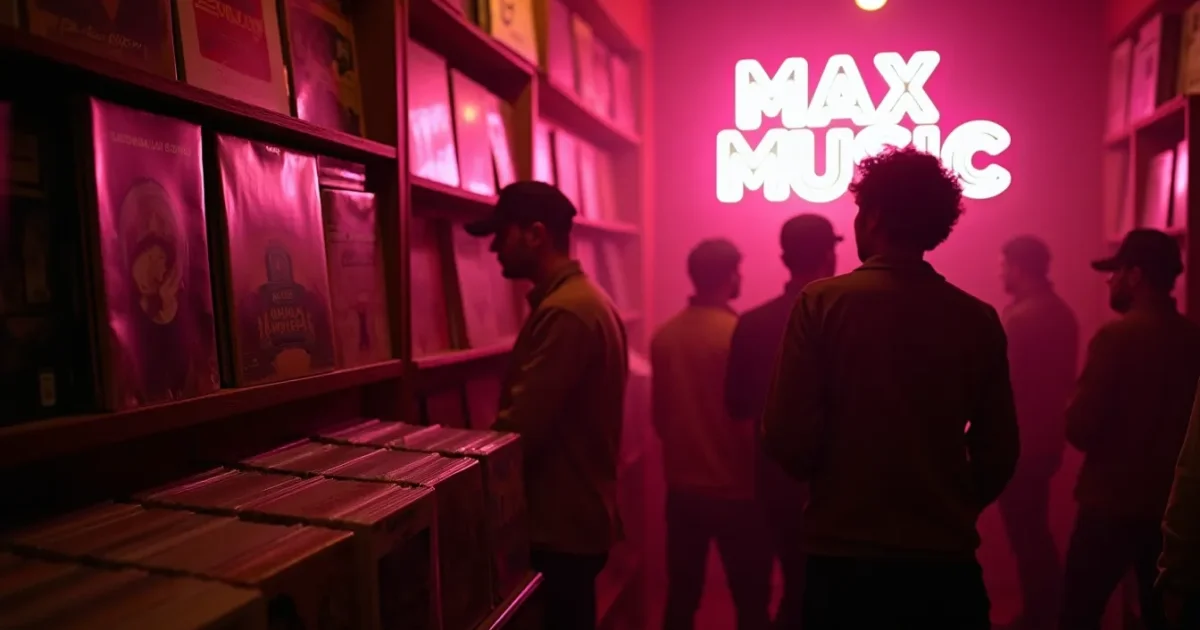
17 January 1983. In Barcelona, Félix Buget registers Blanco y Negro Music as a label. One year later, in 1984, Miguel Degá and Ricardo Campoy found Max Music. These two companies turned Spain from a market for Italian and German records into an independent hub of European dance music. They licensed Italo-disco, released their own megamixes, pressed vinyl for export to Latin America, and shaped a sound locals call the Sabadell Sound.
Why Spain, not Italy
Italo-disco is Italian by name and origin. But by 1983 it was selling more in Germany, Spain and Latin America than in Italy itself. Spanish labels took on the role of middlemen: they bought licenses from Italian independents such as Discomagic Records, Memory Records and Out Records, pressed their own editions and distributed them across the Spanish-speaking world.
Geography mattered too. Barcelona is a port city close to France and Italy, with a developed dance-music industry and club culture. Ibiza was already a centre of European club tourism in the 80s. A record released in Milan on Monday could be in Barcelona clubs by Friday.
Blanco y Negro Music: Spain's EDM pioneer
Blanco y Negro Music existed as a company from 1978, but became a label only in 1983. Spanish media calls it a pioneer of EDM in the country. Its catalogue was built on licensed Italo-disco and Eurobeat compilations, including the That's Eurobeat series.

The label's main traits:
- Licenses of Italian and German tracks - often with their own catalogue numbers and Spanish distribution.
- Compilations - megamixes and Eurobeat collections became its signature.
- Visual style - acid-coloured sleeves with futuristic typography, distinct from Italian originals.
- Export - releases travelled to Mexico, Argentina and the rest of Latin America.
Later Blanco y Negro Music worked with Pitbull, Shaggy, DJ BoBo, SASH! and Guru Josh, but its roots are in 80s dance licenses.
Max Music and the Sabadell Sound
Max Music was founded in 1984 in Barcelona by Miguel Degá and Ricardo Campoy (the latter sometimes credited as Ricardo Gómez). By 1985 they had launched their flagship product - the Max Mix series. The first two volumes were mixed by Mike Platinas and Javier Ussía; from 1986 they were replaced by Tony Peret and Josep María Castells.
Max Music created the so-called Sabadell Sound - a local variant of Italo-disco and Eurodance recorded in Barcelona and its surroundings. The label's own artists included:
- David Lyme - "Bambina" (1986), "Let's Go to Sitges" (1985).
- Alan Cook - one of the regular Sabadell Sound vocalists.
- Kristian Conde and Steve Clark - other internal-catalogue names.
Max Music sub-labels included Addicted, Bombazo Mix, Container Records, DJ's At Work, Koka Music, Lo + Duro, Maquina Total, Orbit-A and Max Music Promo. That spread shows how the label grew from Italo-disco into house, techno, trance and makina.
Licenses versus home-grown artists
The Spanish scene operated in two directions at once:
- Licensing - buying rights to Italian hits and reissuing them in Spain and Latin America, often with brighter, more "digital" mastering than the Italian originals.
- Home production - creating artists such as David Lyme, who sang in English in an Italo-disco style but recorded in Barcelona.
Detail: Discogs reviewers note that Spanish Max Music pressings often sound brighter and denser than Italian originals because of more aggressive mastering. Some DJs prefer the Spanish 12" copies.
Clubs, radio and television
Spanish Italo-disco did not live only in shops. RTVE and local private stations played megamixes. Blanco y Negro Music also handled video production - clips and TV shows helped promote artists without large concert tours.
Barcelona clubs and Ibiza discos became entry points for European tourists. A track that broke in Milan or Munich found a second life here through DJ sets and megamixes. That made Spain a bridge between Italian production and Latin American consumption.

End of the era and its legacy
Ricardo Campoy left Max Music in 1997 and founded Vale Music. Max Music itself closed in 1999. Blanco y Negro Music survived changes of ownership and format, but its 80s licenses and compilations remain in the catalogue.
For Italo-disco, the Spanish scene matters because it widened the genre's geography. Without Blanco y Negro and Max Music, many tracks would never have reached Latin America or gained a second life in megamixes. Today collectors hunt Spanish pressings not only for availability but for the sound.
Where to start
Three entry points into Spanish Italo-disco:
- David Lyme - "Bambina" (1986): pure Sabadell Sound.
- Max Mix 1-3: how Spanish DJs turned Italo-disco into a megamix.
- Blanco y Negro's That's Eurobeat compilations: licensed Eurobeat in Spanish packaging.
Compared with the European map of the genre, Spain is not the birthplace of Italo-disco, but it is one of its main transit hubs. It was here that the genre was transformed from an Italian export product into an international dance commodity that then crossed the Atlantic.