

Every genre has its stars - and its workhorses, without whom the stars would be impossible. In Italo Disco, that workhorse was Stefano Pulga - a producer who wrote and produced dozens of tracks, whose name rarely made it onto sleeves. Here's the story of a man who was everywhere and almost nowhere to be seen.
An Invisible Industry
Before talking about a specific person, you need to understand the context. The '80s Italian pop industry was a complex, multi-layered system. On the surface were the artists whose faces were printed on records. A level deeper were the lead producers who got industry recognition. Deeper still - the "work horses" who did the bulk of the work but rarely saw the spotlight.
Stefano Pulga belonged to the last category. He was a high-level professional, but his career was built not on personal popularity but on quality work behind the curtain. In the industry, people knew and valued him. Outside the industry - not so much.
Working With Artists
Pulga worked with many Italian artists and projects. He often served as arranger, keyboardist, co-producer. His name can be found in the credits of many classic records - usually in small print on the back of the sleeve, but for connoisseurs that was enough.
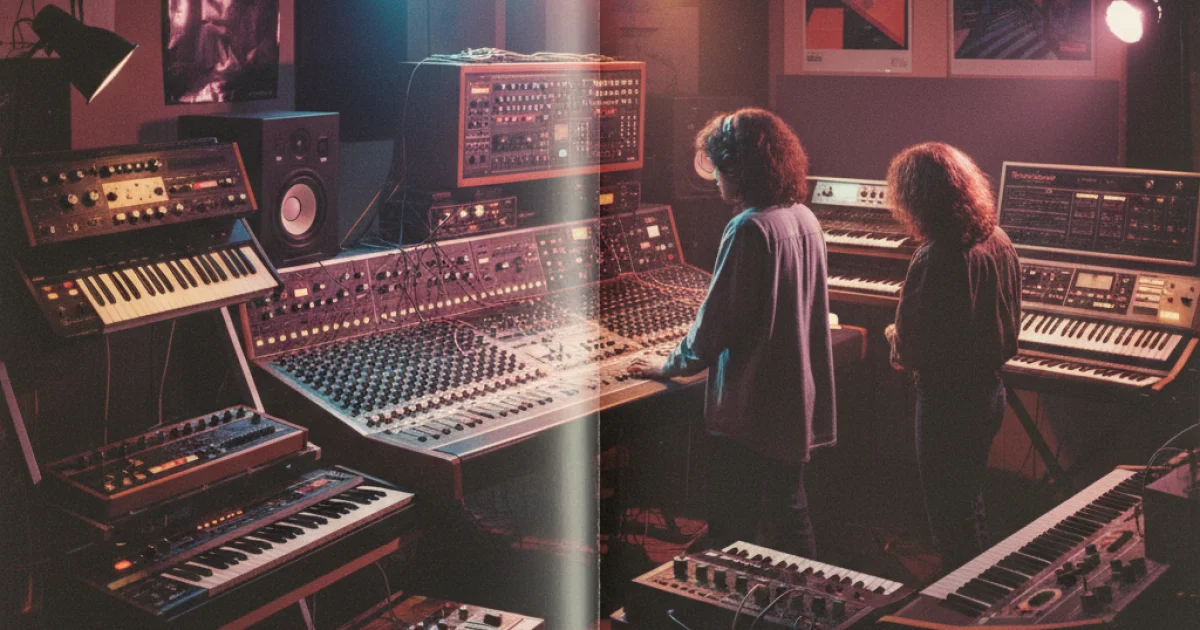
Pulga's specialty was working with melodic arrangements. He knew how to turn a simple idea into a memorable track. A producer would come to him with the main material, and Pulga would add the small details that made the song work - the right synth tone, the needed rhythm pattern, an effective transition between verse and chorus.
A Craftsman's Approach
Unlike producers with an artistic reputation, Pulga approached the work as a craftsman. Big concepts or revolutionary ideas didn't interest him. Quality, working music did - the kind that sounds great on the radio, sells in stores, makes people dance in clubs.
It's an honest position. The music industry isn't only art but production. You need people who know how to make a commercial product at a high level. Pulga was one of them - and one of the best.
Labels and Connections
Pulga worked with various Italian labels - Discomagic, Il Discotto, Memory Records, and others. That gave him a wide pool of commissions and the ability to work with different artists. He wasn't tied to one structure, which gave him independence.
In the industry, Pulga had a reputation as a reliable performer. If a producer or label commissioned work from him, they knew they'd get a quality result on time and on budget. That's a valuable quality that ensured a steady flow of work.
Multi-Instrumentalist
Pulga was a gifted musician. He played several instruments, but his main specialty was keyboards. Synths, piano, keyboard parts - that was his main toolkit.
On many '80s Italo Disco recordings, the melodic parts were played by Pulga. He didn't stand out as a performer, but his playing sounds on dozens of classic tracks. That's another level of work that stays invisible - but without it the final music wouldn't exist.
Signature Moves
Pulga had his own recognizable moves in the work:
- Synth tones. Soft, "airy" Roland Juno sounds as the arrangement foundation.
- Chorus lead-ins. Synth "bubbles," a percussion accent, brief pauses before the vocal enters.
- Work with backing vocals. Layers, echo effects, playing with space in the mix.
Experienced listeners can identify "Pulga's hand" in recordings. It's similar to an art historian recognizing an author from brushwork - an Italo Disco specialist can recognize the producer by signature arrangement details.
A Role in the Genre
Objectively evaluating Pulga's contribution to Italo Disco is hard - precisely because he was invisible. There's no big hit directly tied to his name the way "I Like Chopin" is tied to Giombini or "Tarzan Boy" to Farina. But his contribution is spread across dozens of records.
You could put it this way: without Pulga, the industry would have existed anyway, but its overall quality would have been lower. He and people like him raised the average quality bar. A subtle but important contribution.
Personal Life
There's almost no information about Pulga's personal life. He was a man who didn't put himself on display. He didn't give interviews, didn't appear at press conferences, didn't take part in public discussions. Work - and that's it.
That approach had its upsides - no scandals, a stable career, a reputation as a reliable professional. But it also meant that to the wider public, Pulga stayed unknown.
Moving Into the '90s
When the Italo Disco era began ending, Pulga, like many peers, adapted. He started working in Eurodance style, then in other more contemporary genres. The quality of the work stayed the same - only the stylistic shell changed.
It's an example of professional longevity. While trends replaced each other, Pulga stayed in the industry as a master to whom any material could be entrusted. His specialty wasn't a specific genre but music itself.
Today
Pulga continues to work in music to this day. He takes part in retro projects, works with current artists, occasionally gives interviews (though rarely). For Italo Disco specialists he's a living legend, even if not always recognized at mass level.
Current collectors actively study his discography, try to identify every project he took part in. That work is gradually returning well-earned recognition to Pulga.
Stefano Pulga's story is a reminder that the '80s music industry didn't rest only on stars. Hundreds of professionals did the real work in the shadows, and without them nothing would have existed.
When you listen to your favorite Italo Disco track - remember that behind the "known producer" and the "known artist" usually stand several less-known professionals: arrangers, keyboardists, recording engineers, session musicians. And people like Pulga.
As of today, Discogs lists over 400 credits under the name Stefano Pulga - as producer, arranger, keyboardist, composer - on releases from 1979 to 2020. That's nearly twice as many as many of the genre's "front" stars. The catalog of a man the general public didn't know in the '80s turned out to be larger than the catalog of those whose photos were printed on the sleeves.