
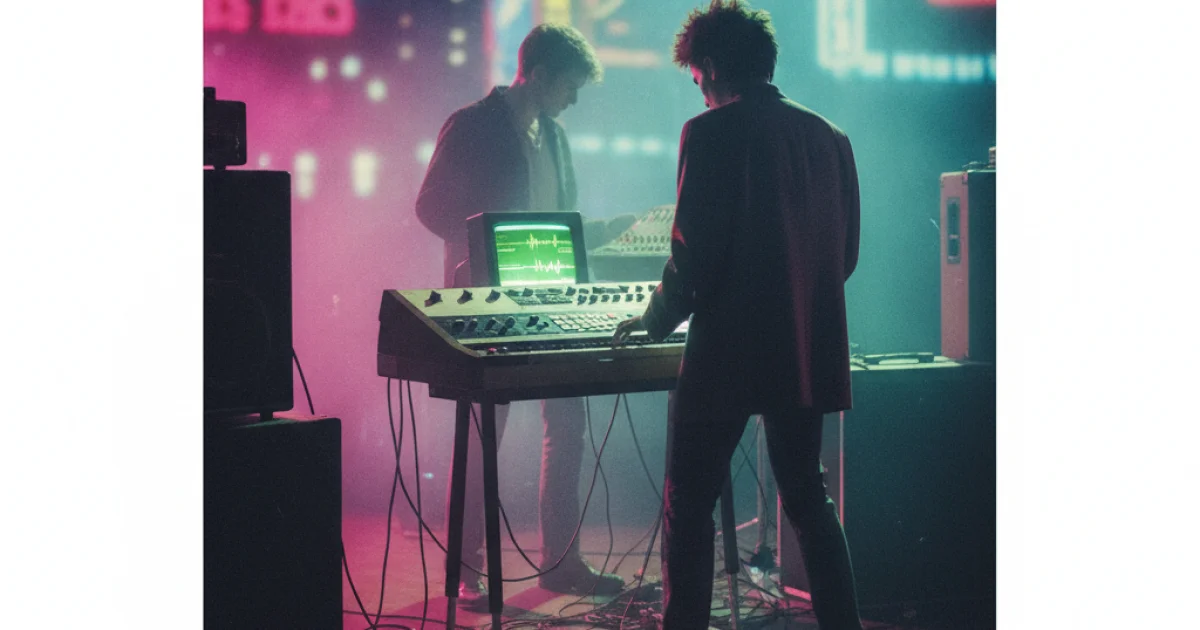
At the start of the '80s, an instrument appeared that changed the sound of pop music but could be afforded only by the richest studios. The Fairlight CMI - an Australian sampler-synthesizer that cost as much as a good apartment. It was used by Kate Bush, Peter Gabriel, Trevor Horn - and some Italian producers working with the largest budgets. Here's this legendary instrument.
What the Fairlight CMI Is
The Fairlight CMI (Computer Musical Instrument) is one of the first commercial digital samplers. It was built in Australia by the company Fairlight in 1979. The instrument let you record sounds, manipulate them, play them back from a keyboard - something that today seems like a routine feature of any DAW, but back then was a revolution.
The Fairlight's key innovation was the ability to use real sounds as musical material. Previously, synths could only generate sounds from oscillators. The Fairlight let you record the sound of anything - from a human voice to a broken bottle - and play it as an instrument.
A Crazy Price
The Fairlight's main feature was its cost. In the early '80s the instrument sold for 25,000-30,000 US dollars. Converted to today's money, that's roughly 100,000-150,000 dollars. It was the price of a whole studio or several apartments.
Only the wealthiest artists or major studios could buy a Fairlight. Peter Gabriel, Kate Bush, Trevor Horn (producer for Frankie Goes to Hollywood and other British projects) - they had a Fairlight. The average Italo Disco producer in a small Milan studio could only dream of one.
Green Screen and Light Pen
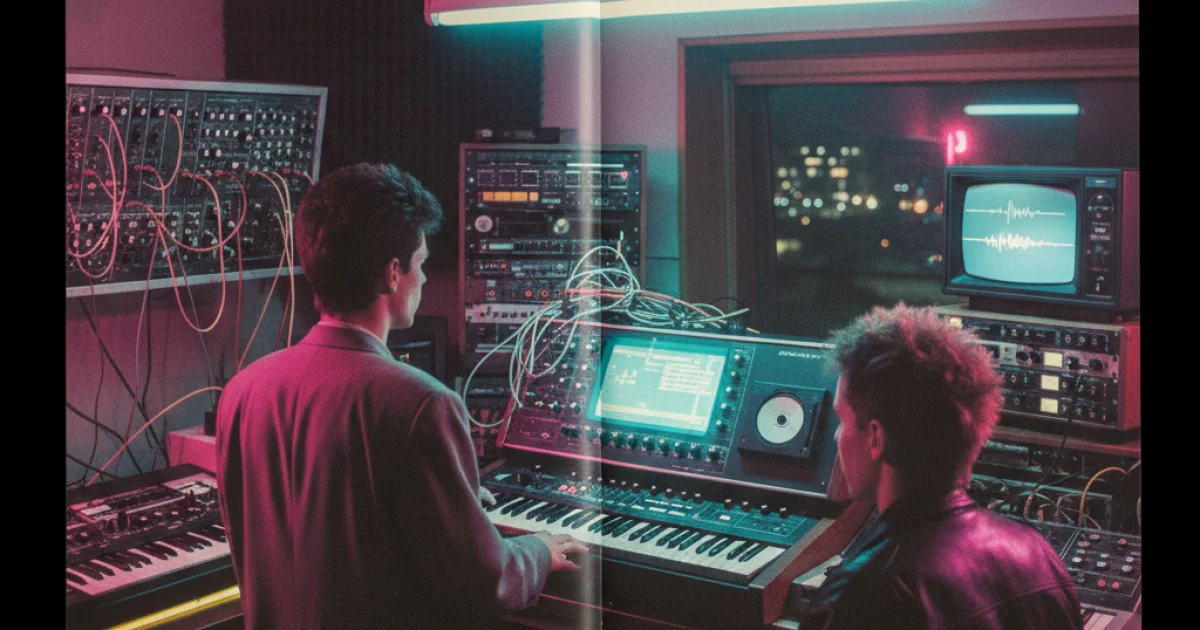
The Fairlight had a revolutionary interface for its time - a CRT monitor with green glow and a light pen. Using this pen you could draw sound waves directly on the screen, which in 1979 looked like science fiction. It was a computer working with music at a level that didn't exist before.
Visually the instrument also looked like something from sci-fi. A huge case, a green monitor, distinctive knobs and buttons. Anyone who saw a Fairlight in a studio understood they were looking at something special.
Legendary Presets
The Fairlight came loaded with signature presets that became calling cards of the era. "Orchestra hit" (an orchestral punch), "Shakuhachi" (the Japanese flute), "Chamberlain Tron Flutes" - these and other sounds played on hundreds of '80s pop hits.
"Orchestra hit" is especially famous. This short orchestral "boom" was used everywhere - from hip-hop to pop music. You can hear it on dozens of the decade's classic tracks. Though it was originally just one of the instrument's presets, it became a sonic icon of the era.
Fairlight and Italo Disco
In Italo Disco, the Fairlight was used sparingly. Most Italian producers worked with more accessible tools - Roland, Yamaha, Korg. But some major projects with big budgets could afford to rent or buy a Fairlight.
Claudio Simonetti, whom we covered in a separate article, was one of the Italian musicians to use the Fairlight actively. In his work (both the Argento soundtracks and pop projects), the signature "Fairlight" sound plays - rich textures, complex sampled sounds, cinematic effects.
Influence on Production
Even if most Italo Disco producers didn't have access to a Fairlight, the instrument influenced the whole industry indirectly. It set new sound standards - richer, more textured, more cinematic. Other manufacturers began creating more accessible tools with similar capabilities.
By the mid-'80s, more affordable samplers appeared - E-mu Emulator, Akai S-series, Ensoniq Mirage. They cost "only" a few thousand dollars (still a lot, but now realistic for major studios). Italian producers began using them, and that shifted the Italo Disco sound.
Who the Fairlight Teased
The Fairlight became an object of desire and envy in the industry. Producers who couldn't afford one listened to the work of those who could and tried to recreate a similar sound. That spurred creative experiments - how to get the "Fairlight" sound without the Fairlight itself.
In Italo Disco this process brought interesting results. Producers learned to use more modest tools creatively, to combine synths, to apply effects processing. Limited resources forced them to be inventive.
Fairlight Series
The Fairlight CMI came out in several series:
- Series I (1979) - the first model, revolutionary in capability.
- Series II (1981) - an improved version with expanded memory.
- Series III (1985) - the flagship with maximum capability and an astronomical price.
Each series was pricier and more advanced than the last.
By the mid-'80s the Series III appeared, offering even more sound-working capability. But the price was astronomical. In the end the manufacturer couldn't compete with cheaper alternatives, and by the late '80s Fairlight as a product was falling out of mass use.
The Decline
By the late '80s the Fairlight lost its unique position. Cheaper samplers and synths caught up in capability. The Fairlight company had financial trouble. By the '90s, the instrument had become a rarity, a collectible artifact rather than a working tool.
It's a typical fate for breakthrough but expensive technologies. They set a new bar, but then get overtaken by cheaper solutions, and the original pioneer fades into the shadows. With the Fairlight this happened relatively fast - in ten years.
Cult Status
Today the Fairlight has cult status among audiophiles and producers. Original working units cost tens of thousands of dollars. Plugins emulating the Fairlight have steady demand. The instrument's signature presets are used by current producers in retro projects.
For Italo Disco lovers, the Fairlight is part of the broader context of the era. It symbolizes the technological capabilities of the '80s at their peak. Even if specific Italo Disco tracks weren't made with it, it set the general sonic landscape in which the genre developed.
Modern Emulations
Today you can use Fairlight emulations in software form. Arturia CMI V, Omnisphere (which contains Fairlight-style presets), dedicated VST plugins - all of it is available for reasonable money and lets you work with the legendary sound.
For current producers working in retro style, it's a valuable tool. Signature "Fairlight" textures instantly carry the listener to the '80s. Using such presets is one way to create authentic retro sound.
The Fairlight's story is a story of how technology influences art. The instrument showed that you could create entirely new sounds - and that changed thinking about pop music production. Even those without access to a Fairlight learned from its capabilities.
In Italo Disco the Fairlight was a rare guest, but its influence was felt: every signature "cinematic" effect in a heavy Italo Disco track is an indirect reference to the Fairlight era.
In 2022, Peter Vogel himself, the Fairlight's founder, sold his own working Series III at a Bonhams auction for £68,000 - roughly three times the instrument's original 1985 price. It's one of the rare situations in the music industry where an electronic instrument appreciates over time rather than depreciates: the Fairlight has such a recognizable sound and such a limited production run that it has turned into a collector's asset on the level of antique violins.
The eight-bit path, disks and price are covered in the Ensoniq Mirage DSK-8 profile.