
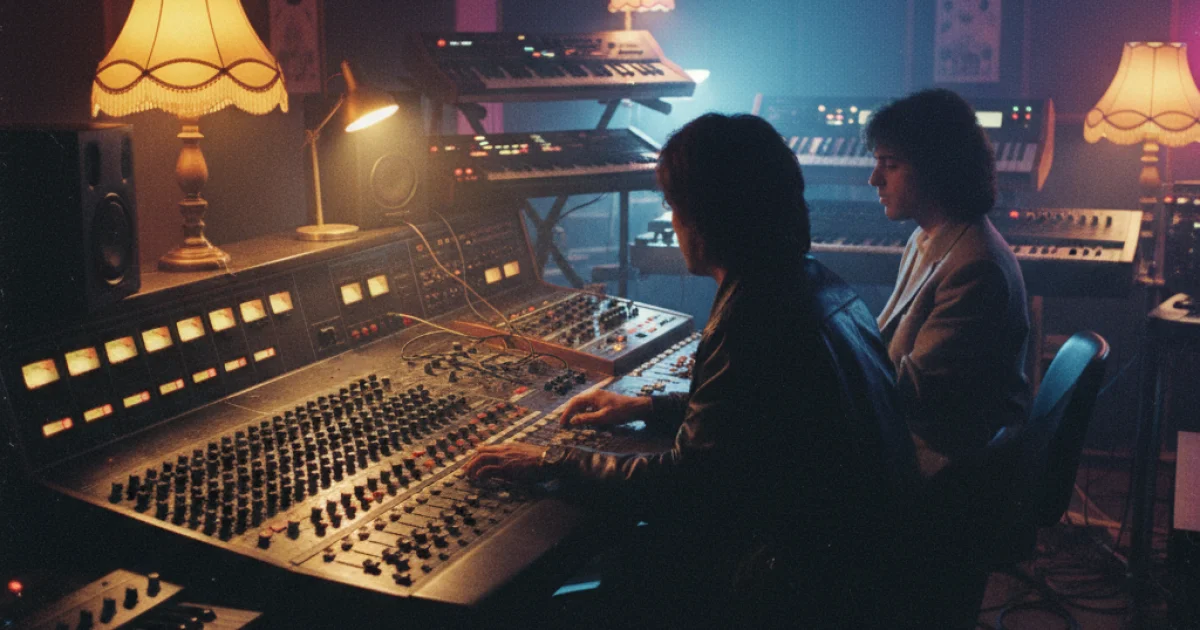
By the end of 1979, American disco was dead. At Comiskey Park in Chicago, a pile of vinyl records was literally set on fire. Radio stations scrubbed the genre from rotation, and it looked like the era of dance music was over before it had really hit its stride. But in Italy, nobody got the memo. Or if they did, they chose to ignore it.
That's exactly when Italo Disco was born - a genre that took American disco, stirred in European melancholy, cheap synths, and a dash of Italian drama, and became the sound of an entire decade.
The Ground Was Ready
Italy in the '80s was a country where every village was proud of its piazza, its sauce, and its orchestra. Music culture wasn't some elite hobby - it was woven into daily life. Add thousands of clubs along the Rimini and Adriatic coasts, where all of Europe descended in the summer, and you have the perfect conditions for an explosion.
There was another factor too: technology. The early '80s brought relatively affordable synthesizers and drum machines - the Roland Juno-60, Roland TR-808, Yamaha DX7. Young Italian producers without the budget for a full orchestra suddenly had tools that could sound like a whole band. So they started experimenting.
A Juno-60 in 1982 cost about the same as a used Fiat. For a small studio, that price tag was a turning point.

The First Hits
One of the first "real" Italo Disco tracks is usually pegged as Gazebo's "I Like Chopin" from 1983. A melancholy melody, a clear synth beat, English lyrics sung with an unmistakable Italian accent - all the genre's fingerprints are already in place. The song sold millions across Europe and showed everyone else that the formula worked.
Behind Gazebo came the first wave:
- Righeira, "Vamos a la Playa" - a beach anthem with a Spanish-language hook from two Italian brothers.
- Ryan Paris, "Dolce Vita" - a love letter to Rome laid over a synth bassline.
- Baltimora, "Tarzan Boy" - the track with the Tarzan yell that would outlive not just the '80s but the early 2000s too.
Labels pushed out records one after another, and clubs played all of it until sunrise.
What It's Made Of
You can spot Italo Disco within the first few seconds - and that's no accident. The ingredients repeat from track to track:
- Tempo of 115-130 BPM - you can dance, but it won't wipe you out.
- A synth bassline with that signature "springy" sound - almost always a Juno-60 or a DX7.
- Electronic drums with an unmistakable "clap" on the second and fourth beats.
- Accented English vocals - first a weakness, then a trademark.
- A hook you'll still be humming a full day after you heard it.
These are songs first, beats second - and that's what sets Italo Disco apart from everything that came after.
Why It Worked
Europe in the early '80s wanted to dance, but American disco had been discredited. Italo Disco offered something else - lighter, more melodic, less self-serious. The lyrics were naive, the melodies simple, the production - to be honest - cheap. And that imperfection was the whole magic.
By the middle of the decade the genre had swept Germany, Scandinavia, the Eastern Bloc, and South America. In East Germany, Italian records were passed around hand to hand like treasure. In the Soviet Union, "Modern Talking" - technically German, but working squarely in the Italo aesthetic - became the soundtrack of an entire generation.
By the end of the '80s, Italo Disco would give way to tougher genres - Eurodance, house, techno. But its DNA is everywhere: in a video game soundtrack, in a series set in the '80s, in a Weeknd track - all of it is an echo of those small Italian studios where a handful of young producers with cheap synthesizers accidentally invented the sound of an era.
On the Rimini coast in the summer of 2024, "I Like Chopin" is still played at daytime clubs - not as a retro throwback, but dropped in between modern tracks. A 1983 record that's survived forty seasons and still lands in the set, simply because it still works on the dance floor.