

When we listen to an Italo Disco hit, we usually think about the melody, the vocal, the rhythm. But behind how a track sounds - its loudness, the balance of instruments, the volume - stands a separate profession. The mixing engineer. In 1985 they had a specific set of tools, approaches, and problems. Let's try to describe what mixing an Italo Disco track looked like at that moment.
Multitrack Recording
It all starts with the track being recorded on a multitrack tape machine. In 1985 the standard was 24-track tape - a format giving enough tracks for a complex arrangement. On each track its own element: bass on one, vocals on another, drum machine across several, synth parts on the rest.
The tape machines were big, heavy, expensive. Studer A800, Otari MTR-90, MCI JH-24 - top models cost tens of thousands of dollars. Professional tape was used - 2-inch width, special magnetic-layer formulations, high recording quality.
The Console
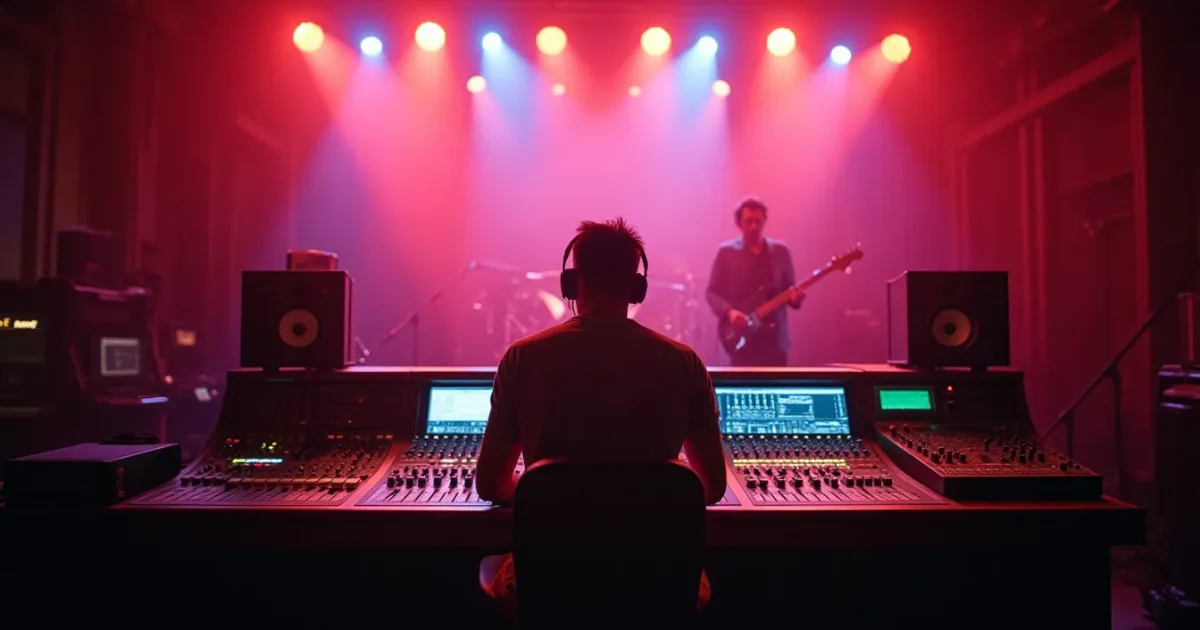
The heart of a mixing studio is the console. In 1985 that could be a Neve (British premium maker), SSL (Solid State Logic, which became the standard), API (American brand) or others. '80s consoles were huge - 3-4 meters wide, dozens of channels, hundreds of knobs and buttons.
Each console channel corresponded to one recorded track. Through the console, the engineer could adjust volume, EQ, panning of every element. It was a powerful system that demanded serious skill for effective use.
Mixing Order
The standard order for mixing an Italo Disco track:
- Rhythm section. Drum machine, bass, main rhythmic elements - the engineer works out the right balance and a punchy sound.
- Harmonic elements. Synth pads, chord parts, keyboard lines. You need to distribute the frequency range properly.
- Melodic elements. Lead synth parts, additional instrumental lines. Noticeable, but not drowning the base.
- Vocal. The main element of a pop track; a separate careful job with level, EQ, processing.
Equalization
One of the key mixing processes is equalization (EQ). It's processing that changes the frequency balance of a sound. You can remove extra low frequencies, emphasize mids, add brightness up top.
In 1985 Italo Disco, typical EQ decisions: remove the "mud" in the low end of the vocal (anything below 80-100 Hz), emphasize vocal "presence" in the mids (2-4 kHz), add "air" in the highs (10-12 kHz). For bass - keep the lows but remove overly "boomy" mids. For drum machines - different settings for different sounds.
Compression
Another important process is compression. It's dynamic processing that makes sound more "dense," leveling quiet and loud moments. A well-compressed vocal sounds more "present," more "forward" in the mix.
Popular 1985 compressors - Urei 1176 (a classic, beloved by many engineers), dbx 160 (for rhythm section), Teletronix LA-2A (for vocals, if the budget allowed). Each unit had its own sonic character, and experienced engineers chose it for the task.
Reverb and Delay
We've already covered Lexicon - the main reverb unit of the era. But besides reverb, other spatial effects were used too.
Delay is the repetition of a sound with a time offset. In Italo Disco short delays (slaps) were often applied to vocals, giving the signature echo effect. Also popular was the "ping-pong delay" technique, where the repeats bounced between left and right channels.
Chorus is another standard tool. It makes the sound "thicker," creates the feel of several performers instead of one. In Italo Disco it was often added to synth parts and vocals.
Panning
Stereo panning - distribution of sound between left and right channels. In 1985 Italo Disco the typical scheme: bass and kick in the center, vocal in the center, other elements spread left and right.
That creates a sense of wide stereo space. Synth parts could be noticeably spread (for instance, one instrument left, another right), giving a sense of depth. Drum machine claps could sit slightly off-center for extra width.
Long 12-Inch Versions
A special task for the mix engineer is to work with 12-inch versions. These extended club mixes demanded a different approach than radio versions. Long breakdowns had to be made more interesting, elements had to be added for DJ use, energy sustained across 6-8 minutes.
That often meant extra work after the main mix. The engineer built alternative versions with different balances, with specific elements pulled out, with special effects for long sections.
Mastering
The last stage after mixing is mastering. It's the final processing of the mix before cutting onto a vinyl record. The goal of mastering is to bring the track to optimal commercial sound and prepare it for physical media.
In 1985 mastering was done in specialized studios. Famous names - Abbey Road (London), Sterling Sound (New York), European mastering studios. Each had its own character of work, and some artists specifically went to a particular mastering engineer.
Vinyl Quirks
An important specific of the era - the final recording went onto vinyl. That imposed technical constraints. Too much low frequency could make the needle jump. A short side had to physically hold all the tracks. The length of each side was limited.
The mastering engineer had to account for all of this. Sometimes compromises had to be made - slightly reduce the low end so the record plays stably, or shorten the track so it fit on the right side.
Working With Analog Tape
Another specific - all work ran on analog tape. That meant every re-record slightly degraded quality. Every time you recorded over an existing recording, you had to be careful. "Editing" options were limited - in the digital world you can easily cut and paste a chunk, in analog it required physically cutting the tape.
That forced engineers to be methodical. Plan every step in advance. Make the right recordings the first time. That discipline is one reason why '80s records sound so well-made. Engineers couldn't afford "we'll fix it later" - they had to get it right first time.
Experience and Intuition
For all the technical tools, the key factor was the engineer's experience. Knowing when and how to apply EQ, when to add compression, how to balance mix elements. That came with years of studio work, with thousands of mixed tracks.
The best '80s engineers were real masters. They could say what needed to change on first listen to a mix. They felt the music on some intuitive level. That's a rare quality, and it's exactly what defines the difference between a good and a great mix.
Legacy
The mixing processes of 1985 today look archaic. Current producers work in a digital world where everything is automated, where any action can be undone, where there are no tape limits. But the sound of that time remains a benchmark for many.
A signature warmth, a particular dynamic, the right balance of elements - all of that was the result of hand work by experienced engineers with analog gear. Reproducing that character fully in the digital world is hard, though many try.
When you listen to a classic 1985 Italo Disco track and feel "that" sound - behind it stands not just the musician, but a whole team of technical professionals: the mix engineer, the mastering engineer, the assistants.
By Audio Engineering Society estimates, mixing one commercial pop track in 1985 took 30-60 studio hours at rates of 150-400 dollars an hour in top Milan studios. Total: 5,000-20,000 dollars on the mix of a single single - in today's prices, 15-60 thousand dollars. For context: Gazebo's "I Like Chopin" sold 8 million copies, "Tarzan Boy" - 1.5 million in the U.S. The investment in quality mixing paid off - and that explains why the Italian industry spent on top engineers.
The signal path and the difference from a talk box are explained in the guide to vocoders in music.