
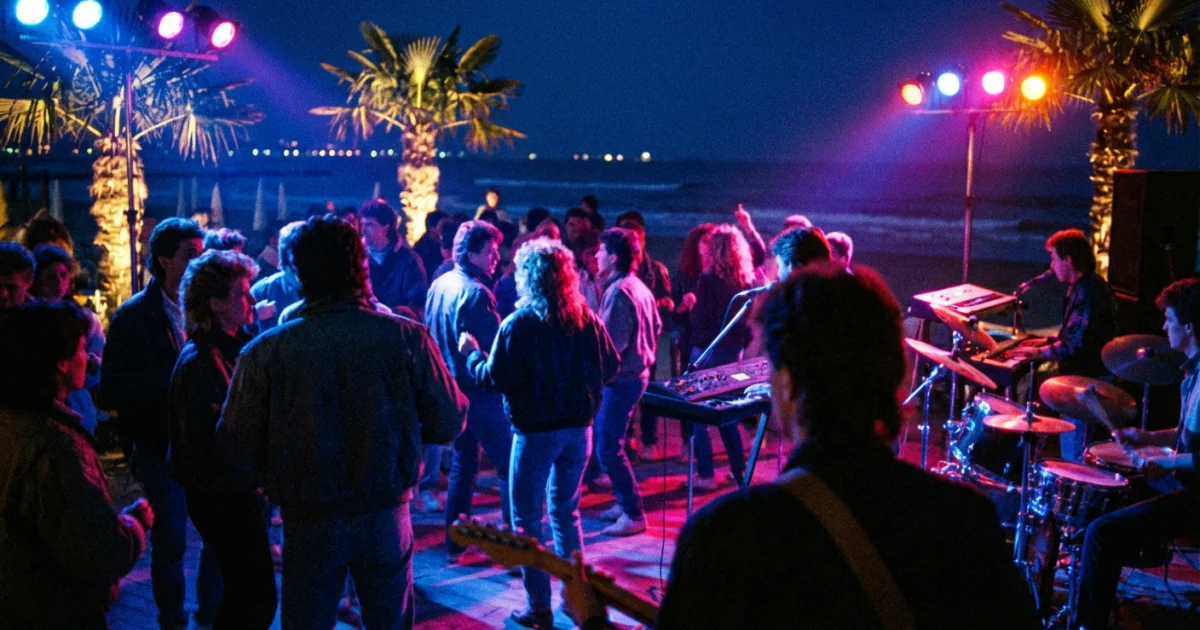
Every genre has its geographic heart. For American disco it was New York's Studio 54. For Chicago house it was the Warehouse. For Italo Disco that heart was the Rimini coast, with dozens of discotheques running all summer long. This is where the genre's culture took shape, where new hits were tested, where a motley European crowd gathered. Here's how that remarkable phenomenon worked.
Rimini and the Adriatic Coast
Rimini is a city on Italy's Adriatic coast, a historic resort with vast sandy beaches. By the '80s, the region had turned into one of Europe's main tourist destinations: every summer millions of people came - Italians, Germans, Scandinavians, Dutch, Austrians. Beyond Rimini itself, neighboring resort areas boomed - Riccione, Cattolica, Bellariva, Miramare. That whole coast turned in summer into one continuous entertainment zone, with beaches by day and clubs by night.
Baia Imperiale: the Main Temple
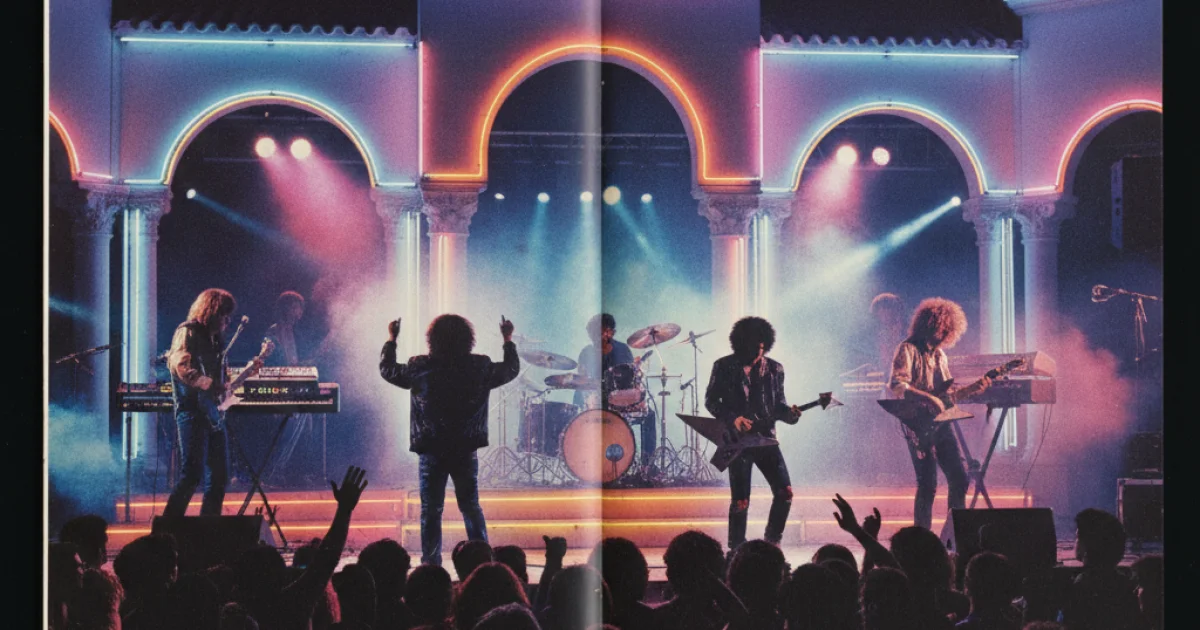
The most legendary club in the region was Baia Imperiale in the small town of Gabicce Mare, near Rimini. Opened back in the '70s, by the '80s it was a phenomenon in its own right. The club occupied a huge complex in Mediterranean style - columns, pool, terraces, several dance floors.
Baia Imperiale's capacity reached ten thousand people. On weekends at the peak of the season, enormous crowds of young Europeans gathered here - for many, a trip there was the main event of their Italian vacation.
Cocoricò, Pascià, Byblos
Beyond Baia Imperiale, dozens of other clubs operated in the region, each with its own aesthetic:
- Cocoricò - distinctive pyramid architecture; in the '90s it became a symbol of the progressive electronic scene.
- Pascià in Riccione - an elegant club for a more grown-up crowd.
- Byblos - one of the region's main players, with a focus on glam aesthetics.
Competition between clubs was intense: each tried to book the best DJs, the most beautiful dancers, the most interesting programming. That pushed the whole Italian club industry forward.
DJs of a New Kind
A new generation of Italian DJs formed precisely in Rimini's clubs. They worked with imported American disco, experimented with their own mixes, and later began playing Italo Disco proper. Many genre producers started their careers as DJs in Rimini.
These DJs weren't just "record spinners" but real stars of the club scene. People came specifically for them. Their names went on posters. They set trends and decided what thousands of people would hear that season.
A Testing Ground for New Tracks
Rimini was an ideal testing ground for new Italo Disco tracks. A producer from Milan with a fresh single would bring a record to a local DJ - and that same night, the track was playing in the club. Audience reaction gave instant feedback.
If the track moved the floor, it had potential. If the crowd stayed flat, back to the studio for a rework. This fast studio-club-reaction loop let the genre's formula sharpen fast.
An International Audience
A key feature of Rimini's discotheques was the international audience. In one club you could have Italians, Germans, French, British, Scandinavians, Eastern Europeans all dancing together. That created a unique atmosphere and let hits spread across Europe fast.
A German tourist who heard a new track at Baia Imperiale went home and looked for the record in local stores. If they couldn't find it, they wrote to magazines, called the radio, shared it with friends. That's how Italian hits became European - through live communication between audiences.
Seasonality
A crucial feature of Rimini's club scene was its seasonality. Most clubs were only open in summer - from May-June to September-October. In winter the region almost emptied out. That produced an intense concentration of events - everything that could happen in a year happened in a few summer months.
In the off-season, artists and producers went back to studio work - writing new material, preparing for the next summer. That set the rhythm of the whole Italo Disco industry: summer for promotion and sales, the rest of the year for production.
A Cultural Phenomenon
"An evening in Rimini" became a cultural code in '80s Europe. It meant a particular lifestyle - cheerful, easy, a touch hedonistic. Young Europeans dreamed of going there, families planned vacations specifically in the region, youth magazines ran dispatches.
For Rimini's locals it was a mixed phenomenon. On one hand - the economic boom, tourism, money. On the other - noise, disorder, a seasonal "occupation" of the town by outsiders. But on balance the region accepted its role as Europe's capital of summer entertainment and learned to exploit it successfully.
Scene Evolution
By the late '80s, when Italo Disco started giving way to new genres, Rimini's club scene evolved with the music. In the '90s, Eurodance played here, then house and techno. Cocoricò became one of Europe's major electronic music clubs.
That's natural evolution - clubs can't live on a single genre. They follow new trends or lose their audience. But the spirit of the place - the sense of a summer holiday, an international atmosphere, nightly revelry - stayed the same.
Today
Rimini and the neighboring resorts still work as a tourist and club destination. Some old clubs are still around, some have closed, new ones have opened. Baia Imperiale is still open, though no longer the unquestioned flagship it was in the '80s.
In the 2010s, the region started running dedicated retro festivals - nostalgic events for the people who once danced here as kids. Original Italo Disco artists came back, classic DJs played, '80s hits were back on the speakers. For many former tourists, it's a chance to return to their own youth.
A Place in the Genre's History
Rimini holds a special place in Italo Disco's history. Without this region's club scene, the genre might have stayed a local Italian phenomenon. It was through these clubs that it reached the European market, here that many hits were tested and broken, here that an international audience formed.
So when you listen to your favorite Italo Disco track, remember - it probably first played in a Rimini club one mid-'80s summer night, in front of a crowd of dancing young Europeans. And that first meeting with the audience decided its fate.
In 2024, Baia Imperiale held another annual "Italo Nights" festival - with original '80s artists: Sandy Marton, Ken Laszlo, Savage, Fred Ventura. Tickets for the three evenings sold out in a week, average audience age 45+. The club that forty years ago tested new hits is now testing its own nostalgic lineup on the same audience that came here young. Few European clubs can claim that long an unbroken run with a single audience.