
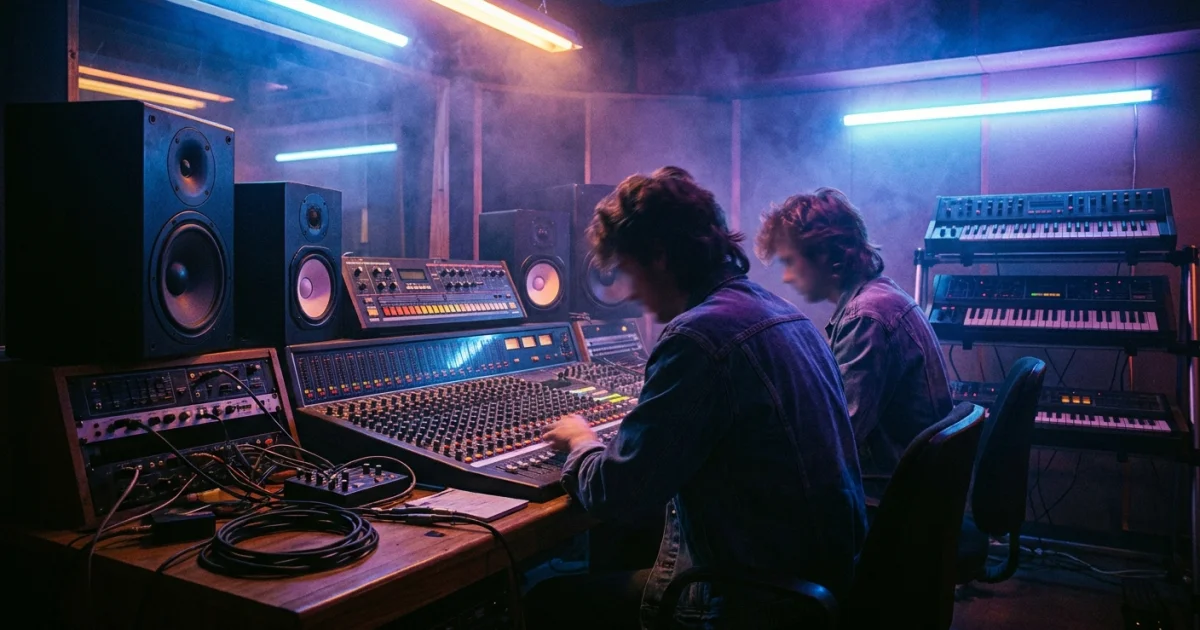
In the '80s Milan wasn't only the fashion capital - it was also the recording capital for all of dance Europe. Dozens of studios worked in the city and its suburbs, from tiny basement rooms to professional complexes with the latest gear. This is where the hits were born that would later be danced to from Lisbon to Leningrad. Here's how the industry was set up.
Why Milan
Choosing Milan as the center of Italo Disco wasn't random. The city was Italy's industrial capital, with developed infrastructure, international connections, and a concentration of business. The headquarters of every major label were here, vinyl pressing plants were close by, and distribution companies operated out of the same place.
For music producers, Milan was convenient - artists from all over Italy could come easily, and finished records moved quickly through distribution networks across Europe. Other Italian cities had studios too, but Milan was undeniably the center.
A Range of Studios
Milan's '80s studios divided into several categories. On one end were big professional complexes like Power Studios or Fonoprint (the latter was actually in Bologna, but worked with Milan labels), where the most expensive and prestigious projects were recorded.
On the other end were small studios in residential buildings, basements, and garages. This was where beginner producers worked with minimal equipment. These studios often produced surprising results - the resource limits forced them into creative solutions.
Era Equipment
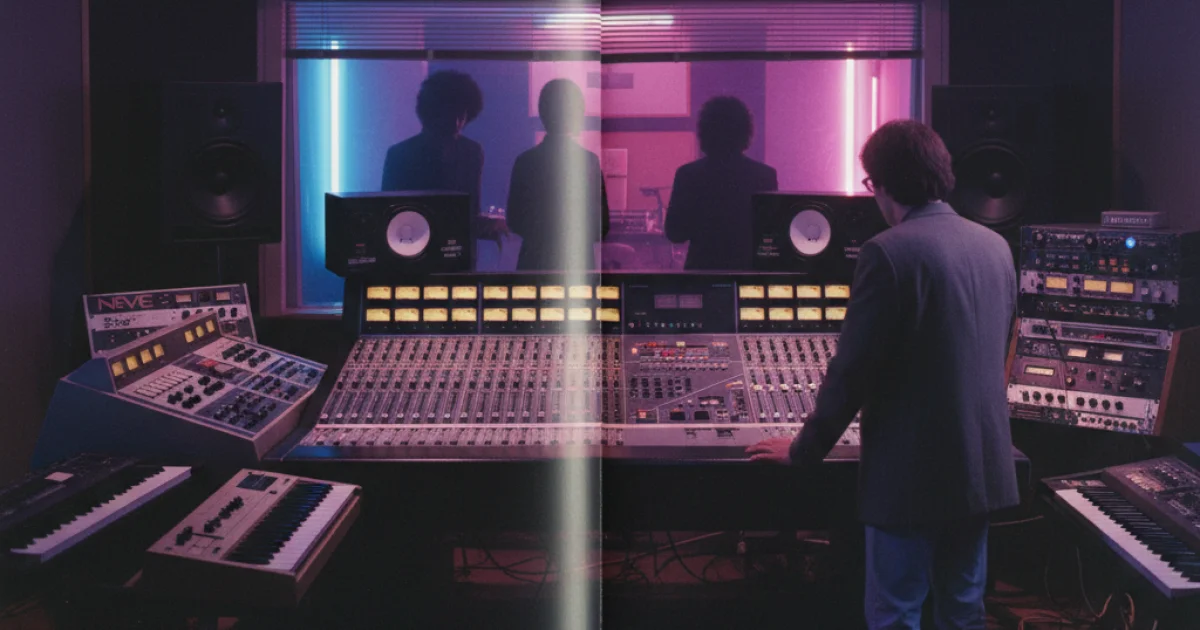
A typical mid-'80s Milan Italo Disco studio looked roughly like this:
- Roland synthesizers - Juno-60, JX-8P, often several models in one room.
- Yamaha DX7 - mandatory. This synth defined the sound of the decade.
- A Roland TR-808 drum machine or a LinnDrum.
- A mixing console - most often a Soundcraft, an SSL in wealthier studios.
- A 24-track Studer or equivalent tape machine.
- A sampler - an E-mu Emulator or a Fairlight in the higher-end studios.
- Effects processors and studio monitors.
A very solid toolkit for producing world-class dance music.
Workflow
A typical recording cycle in an '80s Milan studio ran from a few days to a couple of weeks. For "quick" tracks made to catch a market moment, 3-5 days was enough. For more serious projects, they'd block out two or three weeks.
The process looked roughly like this:
- Day 1. Recording the rhythm track on the drum machine and the basic synth parts.
- Day 2. The main melodic parts, working through the arrangement.
- Days 3-4. Recording vocals.
- Days 5-6. Mixing and final tweaks.
If problems came up or ideas were being reworked on the fly, the process stretched out.
Night Shifts
One interesting quirk of the Milan industry - many studios worked overnight. It was cheaper (daytime hours were reserved for premium projects) and more convenient for artists who might have been occupied with other things during the day.
That night atmosphere may also have shaped the Italo Disco sound itself. The melancholy, nocturnal melodies of many of the genre's tracks were literally recorded at night, when the city outside the studio window was already asleep. Producers and musicians worked until sunrise, capturing the mood that kind of late work produces.
Teams and Crews
Each major studio developed its own team. Typically that was: a head producer (the owner or main operator), a recording engineer, a keyboardist-musician (often playing the main synth parts), and session vocalists.
These teams often worked together for years at one studio, which created a recognizable sound. An experienced listener could tell where a recording was made from the character of the production - at Power Studios, at Mike Hedley's, or another specific place.
Session Vocalists
A topic of its own - the session vocalists of Milan studios. These were professional singers who recorded vocal parts for a wide range of projects at a reasonable rate. Their names rarely appeared on record covers, but their voices sang on dozens of hits.
Tom Hooker (the one who sang for Den Harrow), Joe Yellow, Ron, Dave Rodgers, and many others - all session vocalists whose voices shaped the vocal aesthetic of Italo Disco. They sometimes recorded material under different aliases for different projects, and today specialists try to untangle those puzzles by listening for characteristic vocal traits.
End of an Era
By the end of the '80s, the Milan studio industry started to change. Digital technology arrived, samplers got cheaper, and many recordings moved to home studios. Big complexes became less necessary - a producer with a computer and a couple of synths could record a track at home.
Some studios closed, others shifted to new genres. But those that survived preserved important archives - recordings, tapes with demo versions, photos from sessions. Today this material is valued by music historians as an important document of the era.
Today not much of Milan's "studio golden age" survives physically - most '80s studios have long closed or been completely repurposed. But the tapes remain, the gear sits in museums, the participants' memories live on. And of course the records themselves - thousands of tracks that came out of these studios and are still playing forty years later.
Legendary Regson on Via Magenta - one of the few where early Italo Disco records were cut - is still operating. In the 2020s, contemporary synthwave artists fly in from Northern Europe specifically to use its 1985 Solid State Logic analog console. The circle has closed: the equipment that mixed "I Like Chopin" is now being used by people who grew up on that track and are trying to recreate its sound four decades later.