1981-1987. Synthesizers became the main instruments of pop music, and groups from Britain, Germany and Japan recorded albums that still define the sound of the era. The main keyword is best synth-pop albums of the 1980s, and beneath it lies not just a list of hits but a map of how electronic music became human, melodic and mass-market. These records are connected to Italo Disco through shared synthesizers and studio principles, but synth-pop chose another path - toward song form and vocal personality.
How to choose a synth-pop album as a whole
Synth-pop in the 1980s produced many singles but not always complete albums. A good album of the genre holds together not because of one hit but through a sonic arc: how synthesizers, drum machines and vocals develop from the first track to the last. Production, choice of synthesizers and how much the record sounds like a unified whole rather than a singles compilation with filler also matter.
This list contains twelve albums worth hearing in full. The selection criterion: each record must work as an album, not as a showcase of hits.
Human League - Dare (1981)
Human League released Dare in 1981 and proved that a synthesizer band could top the charts without guitars. Producer Martin Rushent built the sound on Prophet-5, Roland Jupiter-4 and Linn LM-1. The album opens with "The Things That Dreams Are Made Of" and closes with "Don't You Want Me," but between them are eight tracks of equally strong construction. Dare went platinum in the UK and influenced dozens of later groups.
The album's secret is the balance between experiment and pop listenability. Human League came from avant-garde electronics, but Rushent made their sound clean and accessible. It showed that synthesizers could be a mass instrument, not only an art tool.
Depeche Mode - Speak & Spell (1981)
The debut album by Depeche Mode was written mostly by Vince Clarke, who left the group immediately after recording. Speak & Spell sounds lighter and more optimistic than the band's later work. The main synthesizers are the Moog Prodigy and ARP Odyssey. "Just Can't Get Enough" became a hit, but the album as a whole is interesting as a document of early synth-pop before dark lyrics and industrial sounds.
Clarke left, but his formula stayed: short songs, clear melodies and bright keyboard timbres. Without this record it is hard to imagine Depeche Mode's later path - Speak & Spell set the starting point.
Soft Cell - Non-Stop Erotic Cabaret (1981)
Soft Cell made one of the most theatrical synth-pop albums. Non-Stop Erotic Cabaret combined cheap synthesizers, a drum machine and the vocals of Marc Almond, who sounded like a cabaret performer in an electronic bar. "Tainted Love" overshadowed the album, but the record holds from start to finish thanks to a unified atmosphere of nocturnal London.
This is synth-pop unashamed of darkness and provocation. Unlike the positive sound of Human League, Soft Cell made music for closed clubs and lonely night streets. Their success showed that electronics could sell emotional unease.
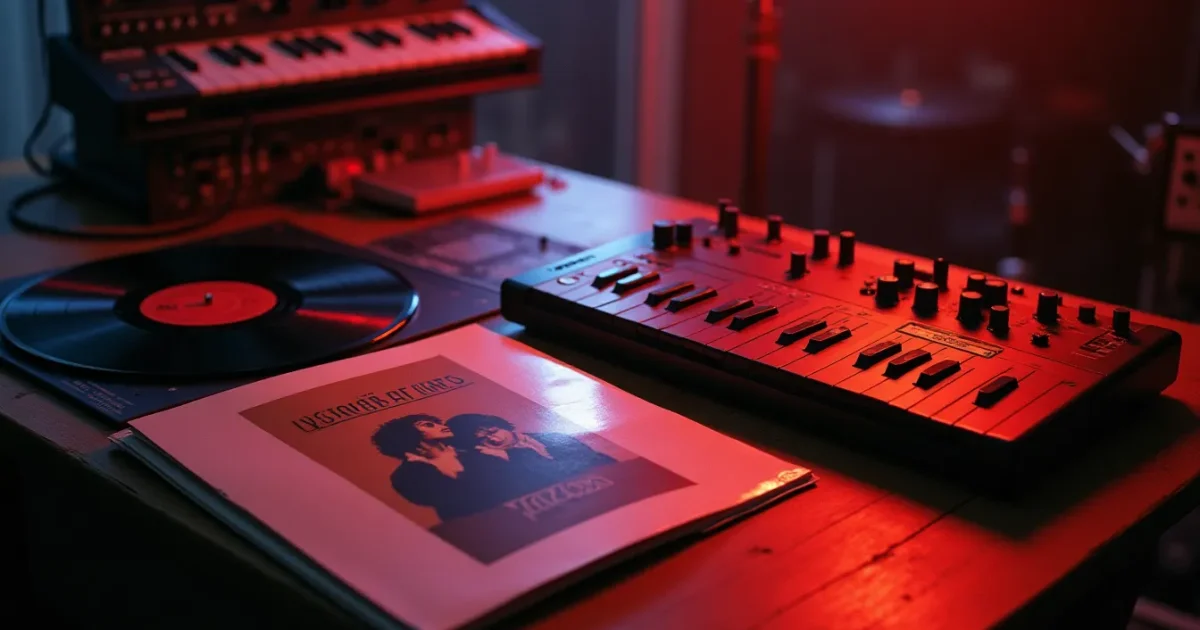
Yazoo - Upstairs at Eric's (1982)
After leaving Depeche Mode, Vince Clarke formed a duo with Alison Moyet. Upstairs at Eric's is one of the most successful synth-pop albums thanks to its contrast: Clarke's cold, minimalist electronics and Moyet's powerful soul vocals. "Don't Go" and "Only You" are the famous singles, but "Midnight" and "In My Room" show how the album works as a cycle of night songs.
Clarke found the ideal vocalist here: Moyet added human warmth to his schematic arrangements. This album became a bridge between synth-pop and blue-eyed soul.
New Order - Power, Corruption & Lies (1983)
New Order emerged from the shadow of Joy Division and recorded an album where Roland TR-808, Prophet-5 and bass guitar function as a single organism. Power, Corruption & Lies includes "Blue Monday" - the best-selling 12-inch single of all time - but also "Age of Consent" and "Your Silent Face," which make the album whole. This is a transitional record between post-punk and synth-pop.
Peter Hook turned the bass into the main melodic force, while programmable drums added club tempo. This album influenced not only synth-pop but also future house and techno.
OMD - Architecture & Morality (1981)
Orchestral Manoeuvres in the Dark reached their peak with Architecture & Morality. The album is built around Mellotron, Korg Micro Preset and Roland TR-808. "Souvenir" and "Joan of Arc" are melancholic, almost orchestral songs. The record proves that synth-pop can be not only danceable but cinematic.
OMD came from Liverpool's avant-garde scene, and this album retained their intellectuality. The songs sound like soundtracks to films that were never made.
Pet Shop Boys - Please (1986)
Pet Shop Boys made one of the most intelligent synth-pop albums. Please, their debut, includes "West End Girls" and "Opportunities." But more important is how Neil Tennant and Chris Lowe built the sound: minimalist arrangements, witty lyrics and a sense of distance. This is synth-pop for adults, not for the disco.
The album sounds cold but not soulless. Tennant sings as an observer rather than a participant, and that distance became the group's signature style.
Eurythmics - Sweet Dreams (Are Made of This) (1983)
The Eurythmics album made Annie Lennox one of the era's leading vocalists. The title track became a worldwide hit, but the whole record is interesting for its sound: powerful drums, aggressive synth bass and Lennox's voice, simultaneously cold and emotional.
Dave Stewart built the sound around analog equipment, but the songs remained pop in form. The result is synth-pop that works both in the club and in headphones.
Japan - Tin Drum (1981)
Japan recorded Tin Drum at the peak of experiments with Eastern aesthetics and electronics. David Sylvian used synthesizers as part of a minimalist palette. "Ghosts" is one of the most unusual hits of the 1980s: slow, ambient and almost drumless. The album shows that synth-pop can be quiet.
This is not a dancefloor album, but it is extremely important for understanding how far synthesizer sound could move away from the disco.
Visage - Visage (1980)
Visage, with Steve Strange and Midge Ure, created a sound portrait of the new romantic movement. Their debut album combined synth-pop with the glamorous aesthetic of London clubs. "Fade to Grey" was the hit, but the whole album holds together through cold electronics and theatrical vocals.
Visage proved that synth-pop is not only music but image. Makeup, costumes and visual styling were as much part of the album as the songs themselves.
A Flock of Seagulls - A Flock of Seagulls (1982)
The self-titled debut by A Flock of Seagulls shows new wave turning into synth-pop. Guitars are still present, but synthesizers and cosmic themes take the lead. "I Ran (So Far Away)" is the best-known track, but "Space Age Love Song" and "Telecommunication" make the album whole.
This album is a bridge between rock and electronics. For the Italo Disco listener it is interesting because it keeps dance energy but already in the song form of synth-pop.
Gary Numan - The Pleasure Principle (1979)
Although The Pleasure Principle came out in 1979, it became the foundation for all 1980s synth-pop. Gary Numan rejected guitars in favor of Minimoog and Polymoog, creating a cold, robotic sound. "Cars" became an anthem of the era, and the album itself showed that electronic music could be mass-market and dark at the same time.
Numan took from Kraftwerk the idea of a robotized sound but packaged it in song form. Without this record many albums on this list would sound different.
How to listen to these albums today
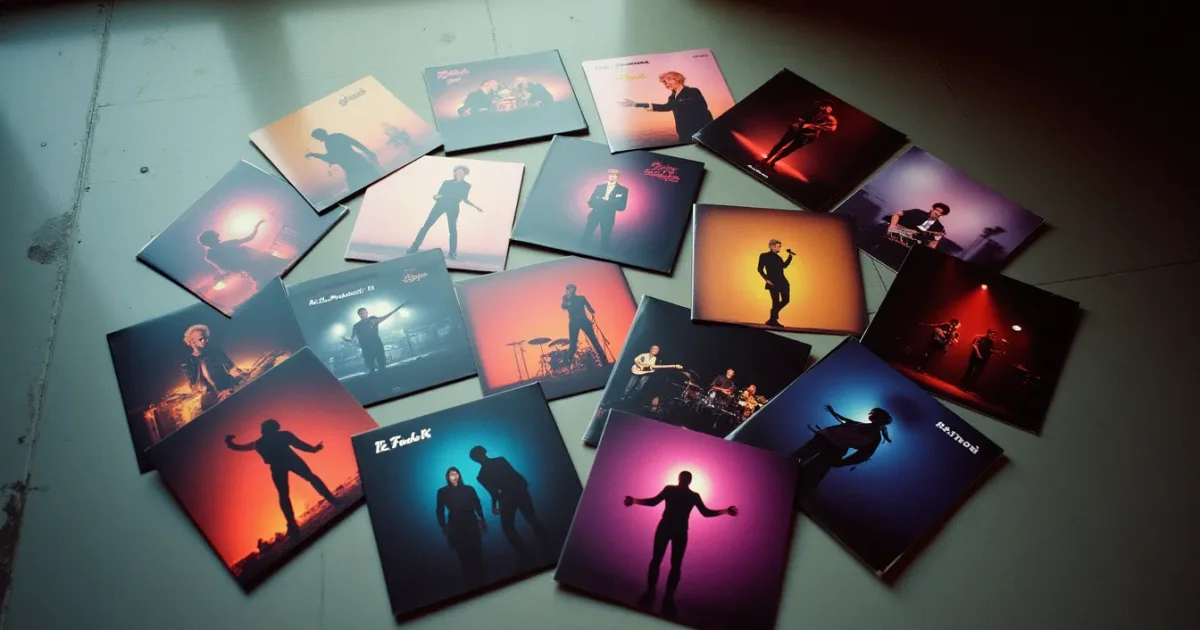
The best editions are original vinyl pressings or 2000s remasters. Many albums were released with bonus tracks, but for a first listen it is better to hear the original sequence. 1980s synth-pop sounds best when not shuffled in a playlist: each record builds its own atmosphere.
For the Italo Disco listener these albums are neighboring territory. The same synthesizers, the same drum machines, but a different focus: instead of the night club, emotion, lyrics and vocal personality. Synth-pop showed that electronics can sing about people, not only about space and dancing.
Why these twelve
The list could continue with albums by Duran Duran, Thompson Twins, Heaven 17 or ABC. But these twelve records give the full picture: from Gary Numan's cold robotic sound to Yazoo's soul vocals, from Soft Cell's theatricality to Pet Shop Boys' intelligence. Each album is not just a set of songs but a sound world that still influences new electronic music.
If you are building your own synth-pop collection, start with these records. They explain the genre better than any encyclopedia: just press play and listen from the first track to the last.