
1990, Frankfurt. Producers Michael Münzing and Luca Anzilotti, under the pseudonyms Benito Benites and John "Virgo" Garrett III, formed the project Snap! Their debut single "The Power" reached #1 in the UK, the Netherlands, Spain, and Switzerland and became the starting point for what would later be called Eurodance. Germany was not simply one of the countries where the genre was born: it became its main studio base.
Why Germany?
By the late 1980s Germany had everything needed for a new dance genre. First, a strong techno and house scene: in Berlin Westbam and Dr. Motte founded the Ufo Club and launched the Love Parade in 1989. Second, a mature recording industry in Frankfurt, Hamburg, Munich, and Cologne. Third, ZYX Music and other distributors already knew how to sell European dance music across the continent and beyond.
Eurodance was born from a mix of hip-hop, house, techno, Hi-NRG, and Eurodisco. In Germany these elements met in one place: American rap vocals and soul hooks were imported, European synthesizers and drum machines were at hand, and German producers knew how to mix it all into a commercial single.
Frankfurt: Snap!, Culture Beat, Jam and Spoon
Frankfurt became the capital of German Eurodance thanks to Snap! In 1992 their single "Rhythm Is a Dancer" became one of the genre's biggest-selling tracks. The project used imported vocals - Penny Ford, Turbo B, Niki Haris - and powerful synthesizer hooks. The formula of "female chorus + male rap + 140 BPM" later became the standard.
The same city was home to Jam and Spoon, producers Rolf Eller and Klaus Jankuhn, who had made trance and techno before Eurodance. Their project Intermission and their work with Culture Beat reinforced Frankfurt's sound. Culture Beat, although associated with Berlin, recorded with German producers and produced the hits "Mr. Vain" (1993) and "Got to Get It".
Munich, Hamburg, Cologne, and other centres
In Munich the project Masterboy was active, releasing hits such as "Feel the Fire", "Generation of Love", and "Anybody (Movin' On)". Their sound was slightly softer than Frankfurt's, with more emphasis on a melodic chorus. In Hamburg a scene developed around Coconut Records and artists like Interactive. In Cologne were based Captain Hollywood Project and labels connected to producer Tony Hendrik.
Berlin contributed less through commercial hits and more through atmosphere. The Love Parade and the east-west rave culture created an audience ready to hear dance music as a political and social sign. DJ Paul van Dyk, who grew up in East Germany, later noted that the techno-rave scene helped re-establish links between East and West after the fall of the Berlin Wall.
How a German Eurodance project was built
A typical German Eurodance project of the 1990s was not a band but a brand. Behind it stood producers who hired:
- A female vocalist for the chorus - often an American or British singer with a clean pop voice;
- A male rapper for the verses - usually an African-American performer to add a hip-hop edge;
- Dancers / a face for videos - sometimes unrelated to the recording.
This model allowed quick line-up changes, several versions of videos, and releases under one name for years. Snap!, 2 Unlimited, Masterboy, and Culture Beat all worked this way. The result was dance music that resembled factory pop but with an electronic heart.
20 key German projects
A full list of German Eurodance acts would fill a book, but the map looks like this:
- Frankfurt: Snap!, Culture Beat, Jam and Spoon, Intermission, Maxx, U96.
- Munich: Masterboy, Mr. President, Bionic Beat.
- Cologne: Captain Hollywood Project, Fun Factory, Sqeezer.
- Hamburg: Interactive, Loft, Magic Affair.
- Berlin: Centory, Activate, Bed & Breakfast.
Some artists were not German by passport but recorded in Germany and worked with German producers: for example, Haddaway (Trinidad) recorded "What Is Love" in Cologne with producers Dee Dee Halligan and Junior Torello. Real McCoy, although later associated with the US, began in Berlin under the M&R production wing.
From charts to global dominance
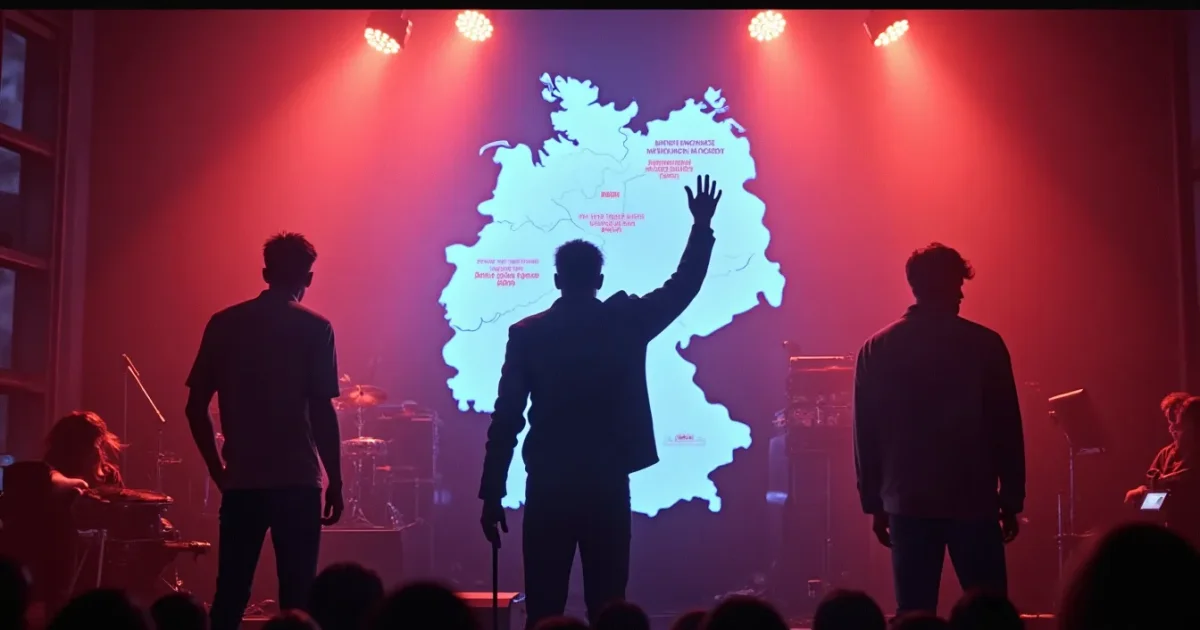
By 1995 Eurodance dominated European charts. According to Billboard, in June 1995 five of the ten singles in the European charts belonged to the genre. German projects worked not only at home: their tracks were licensed for Canada, Australia, Japan, and the US, where dance radio such as Toronto's Power 88.5 and Energy 108 played Snap! and 2 Unlimited in prime time.
By the late 1990s classic Eurodance began moving into progressive house and trance, but the German studio system remained. Many producers switched to happy hardcore, then-dance, and later trance. Some labels, such as X-It Records and Blow Up, became platforms for new waves of 2000s electronics.
German Eurodance versus Italian Eurobeat
Although the two styles are often confused, there is a difference between German Eurodance and Italian Eurobeat. Eurobeat, developed on labels such as Time Records and A-Beat C in Italy, was faster - around 150-160 BPM - and more "synthetic", emphasising speed and energy. German Eurodance stayed around 130-140 BPM, closer to the pop format, and used real vocalists and rappers rather than just samples.
This difference is explained by the audience: Italo-Eurobeat sold in Japan and at car races, where speed was a premium; German Eurodance targeted European radio and clubs, where singability mattered. Snap! and Culture Beat sounded different from Dave Rodgers or MAX Coveri, although both were called "Eurodance".
Studio culture: why the Germans dominated
Germany dominated Eurodance not only through talent but through discipline. Studios in Frankfurt and Munich worked to a schedule: production teams delivered singles to labels on time, prepared radio and extended versions, instrumentals, and a cappellas. This conveyor-belt culture allowed dozens of quality tracks to be released each year.
That is what distinguished the German scene from the more "cottage-industry" Italo Disco, where one producer could spend months refining a single. In the German approach the single became a team product rather than an authorial work. This changed the industry: dance music became a serial commodity, but a high-quality one.
Key albums and turning-point singles
Despite the focus on singles, German projects also released full albums that defined the era. Snap! - World Power (1990) opened the decade and proved Eurodance could sell in the US. Culture Beat - Serenity (1993) with "Mr. Vain" became one of the genre's best-selling records. Captain Hollywood Project and Masterboy also released albums that sold hundreds of thousands of copies in Europe.
Turning-point singles besides "The Power" and "Rhythm Is a Dancer" included 2 Unlimited - "No Limit" (1993), Haddaway - "What Is Love" (1993), Dr. Alban - "It's My Life" (1992), and Mr. President - "Coco Jambo" (1996). These tracks showed that the "female chorus + male rap" formula could adapt to different moods: from aggressive techno-Eurodance to beach reggae-Europop.
The fall of classic Eurodance and its digital revival
By 1998 charts were filling with trance, nu-metal, and pop ballads. Classic Eurodance moved into a niche, but did not disappear completely. German producers switched to happy hardcore, hands up, and dance-pop. Names such as Cascada - a successor to Snap! and Masterboy - kept the German studio tradition alive in the 2000s.
In the 2010s Eurodance gained a second life through YouTube channels such as Eurodance Encyclopedia and festivals like 90's Nostalgia. Many German projects returned to live work, releasing new singles for a fan audience. Today German Eurodance is both chart memory and a living retro genre.
5 German Eurodance tracks for a first introduction
- Snap! - "The Power" (1990): the meeting of hip-hop and European electronics.
- Snap! - "Rhythm Is a Dancer" (1992): the perfect chorus and the biggest chart success.
- Culture Beat - "Mr. Vain" (1993): pure Frankfurt sound.
- Haddaway - "What Is Love" (1993): German production, international artist.
- Mr. President - "Coco Jambo" (1996): a late but popular example of German Eurodance.
These five tracks cover the whole evolution of the genre from experiment to formula. They also illustrate the difference between the "hard" Frankfurt school and the more melodic Munich sound.
German Eurodance in film, advertising, and pop culture
Tracks by Snap!, Culture Beat, Haddaway, and Real McCoy were used in Hollywood films, TV shows, and advertising. Haddaway's "What Is Love" became an internet meme thanks to a scene in A Night at the Roxbury (1998), while "Rhythm Is a Dancer" and "The Power" regularly appear in sports broadcasts and trailers.
This cultural presence makes German Eurodance more than just 1990s music. It became a sonic marker of an era, just as 1980s synth-pop or early-1990s grunge did. For a new generation these tracks are a window into a pre-internet world where charts were decided by radio and clubs rather than streaming algorithms.
If you want to understand the structure of the genre, read "How a Eurodance song is built" and "1992 - the year Eurodance took shape". For the link to Italo Disco, start with "From disco to Eurodance", Ice MC, and Bad Boys Blue.