

Italo Disco can't be separated from the Mediterranean. Not only because the genre was born in Italy, but because it absorbed a whole aesthetic complex - sea, sun, resort life, southern European melancholy, Italian hedonism. This "Mediterraneo aesthetic" is part of the genre's DNA, and without understanding it Italo Disco seems like just dance music. Here's how the Mediterranean context shaped the sound of the era.
What the Mediterraneo Aesthetic Is
The Mediterranean aesthetic is a set of visual and emotional characteristics associated with the cultures of Southern Europe (Italy, Spain, Greece, southern France). Key elements:
- Sun and heat. Bright light, warm weather, open sky.
- Sea and coast. Beaches, yachts, sea views.
- Hedonism. Pleasure as a central value, life "now."
- Family and connection. Traditional ties, collective values.
- Melancholic beauty. Acceptance that everything passes.
- Cultural heritage. History, architecture, traditions.
All of it was reflected in Italo Disco - in sound, in lyrics, in visuals, in the overall mood.
The Rimini Coast as the Heart
The Adriatic coast of Rimini is the main geographic point of Italo Disco aesthetics. It isn't just a place where the discos were located. It was a cultural center where a specific idea of "the beautiful life" took shape.
In the '80s millions of Europeans came to Rimini in the summer. Germans, Austrians, Scandinavians, Britons, Eastern Europeans - all of them took in a portion of Mediterranean lifestyle here. Local music accompanied their holiday and returned with them to their home countries, taking this aesthetic along.
Dolce Vita as a Concept
Federico Fellini's 1960 film "La Dolce Vita" built the base cultural formula. Fellini captured a specific Italian aesthetic - glamorous decay, beautiful decadence, life for the sake of pleasure with a touch of melancholy. That formula became one of Italy's most exported cultural concepts.
'80s Italo Disco directly inherited this concept. Ryan Paris's "Dolce Vita" from 1983 is a direct reference, not a random title. The track sold exactly the Fellini concept of "sweet life," adapted to pop format.
Summer and Beach Tracks
A whole branch of Italo Disco is the "beach" branch. Sandy Marton with "People From Ibiza", Righeira with "Vamos a la Playa", Tony Esposito with "Kalimba de Luna" - all of them worked with images of sea, sun, beach holidays.
These tracks aren't just dance - they're aesthetically oriented to the Mediterranean context. Videos were shot on the coasts, lyrics mention beaches and islands, the mood is sunny and light. It sold not just music but a specific vision of life.
The Melancholic Gaze
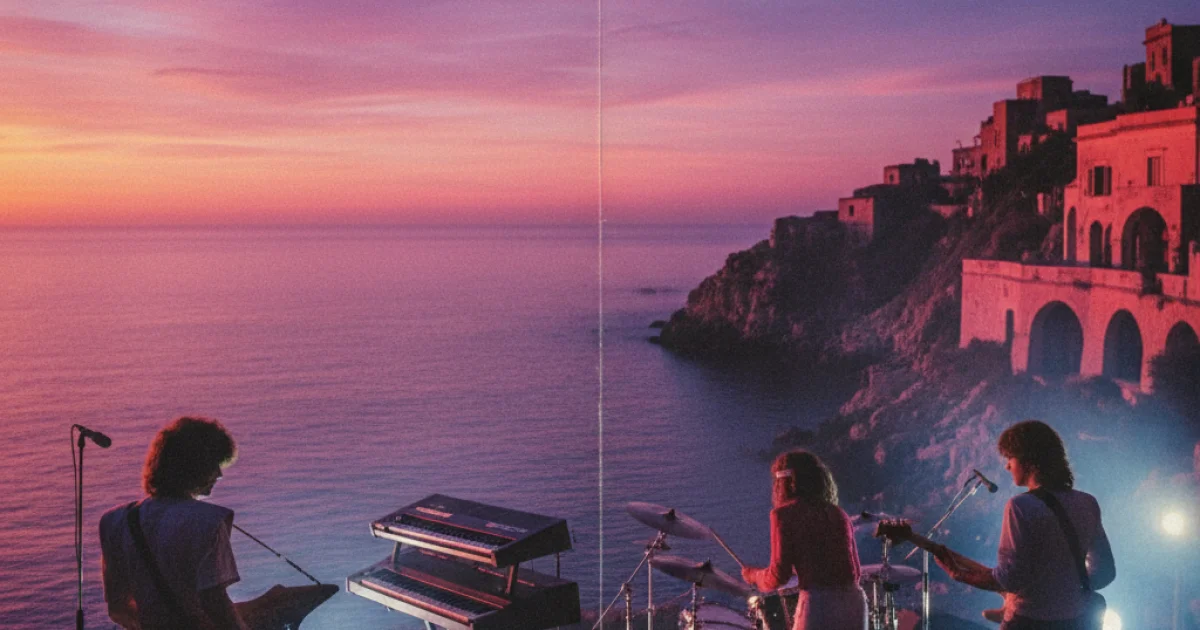
But the Mediterranean aesthetic isn't only sunny. It contains a strong melancholic component. The idea that everything passes - summer ends, love leaves, youth flies away. That melancholy is in Italo Disco alongside the hedonism.
Gazebo's "I Like Chopin", Savage's "Don't Cry Tonight," Valerie Dore's "The Night" - all these compositions carry the Mediterranean melancholy. Not northern depression, not Russian longing, but precisely southern European sadness - beautiful, sensual, accepting the passage of time.
The Italian Accent
The Mediterranean aesthetic of Italo Disco also transmits through the Italian accent in English lyrics. Soft consonants, rolling "r," signature vowels - all of it are sonic markers of southern European origin. For a normal English-speaking listener it emphasizes the "exoticism" of the artist.
Interestingly, producers deliberately kept this accent. They could have hired vocalists with perfect English but preferred artists with Italian delivery. The accent wasn't a defect but part of the genre's brand.
Fashion and Visuals
Visual elements of Italo Disco also inherited the Mediterranean aesthetic. Male artists in the style of the "Italian playboy" - with open shirts, gold chains, tanned skin, neat hair. That was the Italian (or "pseudo-Italian") lifestyle translated to the stage.
Female artists worked with similar codes - bright makeup (especially for staged photography), full hair, emotional delivery. "Italian passion" as a visual concept was sold on par with the music.
Food and Drink
The Mediterranean aesthetic of Italo Disco includes even a culinary component. Videos often show Italian restaurants, wine, pasta, seafood. That built a whole image - not just music, but a whole lifestyle including gastronomy.
For European tourists of the '80s Italo Disco was linked to Mediterranean cuisine through this visual channel. Many people first discovered Italian food via association with a holiday in Italy under this music.
Gender Dynamics
The Mediterranean aesthetic has specific gender dynamics. The traditional layout - active men and beautiful women in the role of objects. That reflected in Italo Disco: most frontmen were male, women often appeared in a decorative or supporting vocal role.
That creates an ambiguous legacy for modern perception. Sabrina's "Boys Boys Boys" video is a classic example: provocative, sexualized female delivery in a male gaze. Modern audiences take it differently - from nostalgia to criticism.
Competition with Northern Aesthetics
In the '80s European pop music was split between two big aesthetic poles. Northern (British new wave, Scandinavian electronics, German industrial music) offered coldness, detachment, technological feel. Southern (Italo Disco) - warmth, emotion, humanity.
These two poles competed for listeners. The public chose according to preference and mood. For many Europeans Italo Disco was "vacation" music, British electronics was "city" and "workday" music.
Export of the Aesthetic
Italo Disco exported the Mediterranean aesthetic to Northern and Eastern Europe. Germans, Scandinavians, Poles, Soviet citizens received through the genre access to the image of Italian "beautiful life" that they themselves didn't have in everyday life.
For Soviet youth of the '80s Italo Disco was a window into another world - a world of freedom, pleasure, hedonism. It wasn't just music, it was a cultural vector pointing to another type of life. The emotional value of the genre in Eastern Europe was tied exactly to this.
Modern Perception
Today the Mediterranean aesthetic of Italo Disco is perceived differently than in the '80s. It's no longer a "window to another world" - the Mediterranean is accessible, the Internet introduces cultures globally. But the aesthetic still works as a nostalgic code.
Modern retro projects - Sally Shapiro, Italo Connection - keep working in this aesthetic on purpose. They know the Mediterranean context builds specific emotional responses in the audience, and they use it.
What It Gives the Genre
The Mediterranean aesthetic sets Italo Disco apart from other '80s dance genres. American disco had its own context (Black clubs in New York and Philadelphia), British new wave had its own (post-industrial English cities), German electro had its own (technological futurism). Italo Disco sold a Mediterranean lifestyle.
That gave the genre a unique market niche. The public could choose not just "dance music," but a specific emotional and aesthetic atmosphere. Italo Disco offered sun, sea, and melancholy at once - no other genre of the era did that.
What It Gives the Listener
For a modern listener, understanding the Mediterranean context enriches the perception of Italo Disco. It isn't just '80s dance tracks - it's music with a specific cultural anchor, with an aesthetic you can study. Its elements - lyrics, accent, videos, sleeves, artists' lifestyle - all work toward the overall impression.
Next time you listen to a favorite Italo Disco track, pay attention to these details. Italian melodic turns, southern European emotion, references to sea and sun, melancholic delivery - all are parts of the big picture. The genre isn't just '80s music - it's a cultural manifesto of a certain lifestyle, which stays relevant today, when the Mediterranean keeps being one of the main tourist destinations of the world. The aesthetic works because the region itself stays attractive and alive.