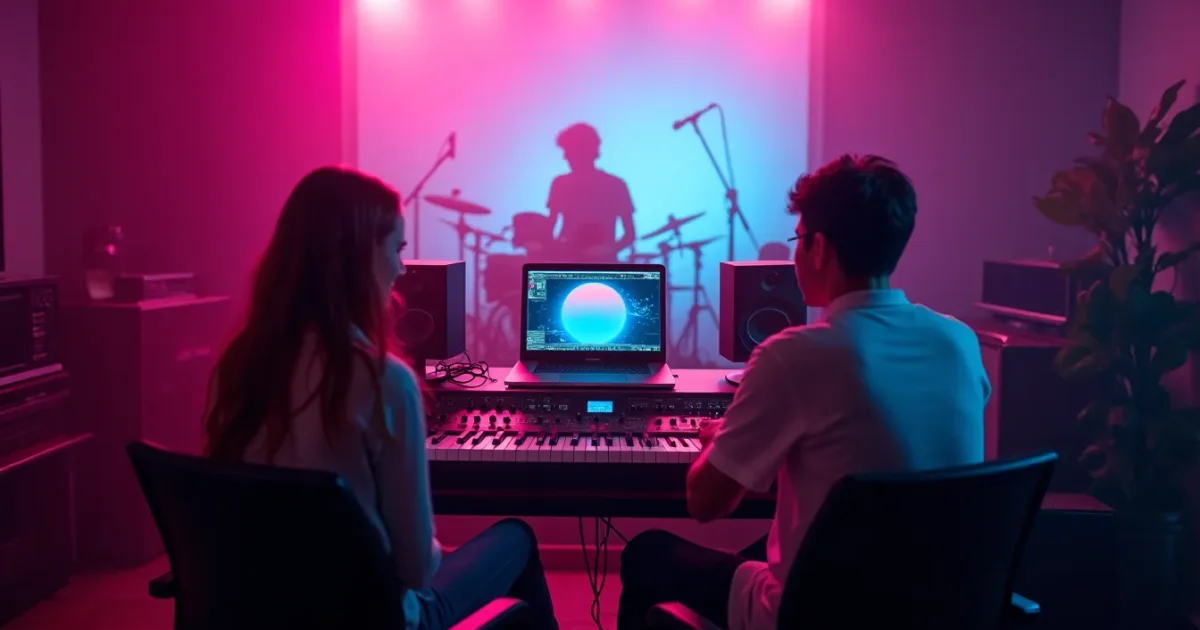
Synth-pop is growing again. In the 2020s the sound that seemed like music of the past returned to charts, festivals, and streaming playlists. From The Weeknd's "Blinding Lights" to Dua Lipa's album Future Nostalgia, retro synthesisers became one of the defining sounds of the decade. This is not mere nostalgia: modern synth-pop uses the 1980s as a language but speaks through it about today's emotions.
Why synth-pop came back in the 2020s
Several reasons explain the revival. First, the nostalgia cycle: children of the 1980s and 1990s became the main paying audience, while younger listeners discover the era through parents, games, films, and TikTok. Second, technology: analogue synthesisers became cheaper, quality emulators appeared, and home studios made the genre accessible to thousands of musicians. Third, stylistic flexibility: synth-pop blends easily with R&B, indie, electronica, and even hip-hop.
According to Wikipedia and music press, interest in synth-pop revived in the late 1990s through electroclash and indietronica, and in the 2000s Ladytron, The Killers, La Roux, and Owl City broke into the mainstream. In the 2010s Chvrches, M83, and The Naked and Famous joined. The peak of the new wave came in 2020 when The Weeknd released "Blinding Lights" - a track that reached number one in 29 countries and later topped Billboard's Hot 100 chart of all time.
Note: "Blinding Lights" is often called synthwave rather than pure synth-pop, but a mass audience heard the 1980s sound in it and opened the door to the whole family of genres.
Key modern artists
Modern synth-pop is not a monolith. Inside the genre there are several directions, each with its own artists.
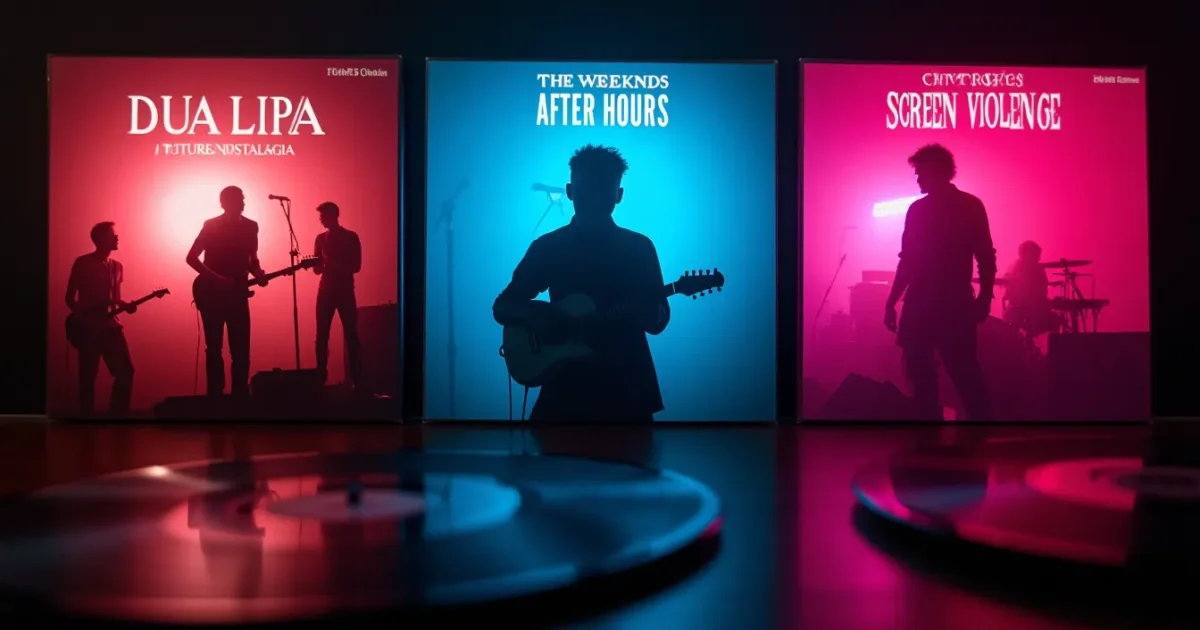
Mainstream pop with a synthesiser heart. Dua Lipa's Future Nostalgia (2020) combined disco, synth-pop, and modern dance-pop. The album won critical praise and commercial success. The Weeknd used synth-pop and synthwave on After Hours to create a nocturnal, melancholic mood. Calvin Harris, who began as an electro-pop artist, later also turned to retro synthesisers.
Indie synth-pop. Chvrches from Glasgow combine bright synthesiser riffs with Lauren Mayberry's emotional vocals. M83, the French project of Anthony Gonzalez, mixes synth-pop with shoegaze and ambient. The 1975 use synthesisers in a pop-rock context, often quoting the 1980s sound.
Russian-language scene. In Russia and the CIS synth-pop is experiencing a wave through post-punk and coldwave: Ploho, Molchat Doma, Buerak, SSSSR, Kontur. Their sound is closer to the dark synth-pop of the 1980s than to dance music. These groups show that the genre can be nostalgic, sad, cold, and urban.
Japanese technopop. Perfume and producer Yasutaka Nakata continue the Yellow Magic Orchestra tradition, mixing 1980s synth-pop with chiptune and electro house. Their album Game (2008) became the first technopop number-one album in Japan since YMO.
The technology making the revival possible
In the 1980s synthesisers were expensive and complicated. Today a musician has several paths:
- Analogue synthesisers: Sequential Prophet-6, Novation Peak, Roland Jupiter-X - more affordable than the originals of the 1980s.
- Software emulations: Arturia Collection, U-he Repro, TAL-U-NO-LX let you get the Roland Juno, Jupiter, and Oberheim sound on a laptop.
- DAWs: Ableton Live, Logic Pro, FL Studio make recording possible at home.
- Autotune and vocoder: in modern synth-pop vocals are often processed to sound "electronic".
This lowers the barrier to entry. A young musician can record a track close in sound to Depeche Mode in 1981 without buying an expensive studio. That is why the number of independent releases in the genre grows every year.
How modern synth-pop differs from the 1980s
Despite shared roots, modern synth-pop differs from the classic:
- Production. Tracks today sound more compressed, clean, and loud - modern mastering standards.
- Genre blends. Retro synthesisers sit next to hip-hop beats, R&B vocals, and indie guitars.
- Lyrics. While 1980s songs often sang about isolation and a technological future, today's lyrics are more personal, intimate, and melancholic.
- Visuals. Covers and videos actively use neon, retro-futurism, and VHS aesthetics.
Why this matters for Italo Disco
The synth-pop revival directly influences Italo Disco. When interest in 1980s synthesisers grows, interest in related genres - spacesynth, synthwave, Italo Disco - also grows. Many modern artists inspired by The Weeknd or Dua Lipa start looking for the source and discover Koto, Gazebo, and Savage.
Moreover, modern Russian projects like Disco Magic work in the same field: they take familiar melodies and dress them in synthesiser sound. This means the line between "classic Italo Disco" and "modern synth-pop" is becoming increasingly blurred - and that is a good sign for the genre.
Key albums of the 2020s
To understand modern synth-pop, listen to a few key albums. Dua Lipa - Future Nostalgia (2020): retro disco and synth-pop packaged in a modern pop format. The Weeknd - After Hours (2020): nocturnal, dark synth-pop / synthwave. Chvrches - Screen Violence (2021): indie synth-pop with a cinematic sound. M83 - Digital Shades Vol. 2 (2020): an ambient and melancholic reading of the genre.
In Russia and Belarus look at Molchat Doma - Etazhi (2018) and later works by Ploho. Their sound is not made for the dance floor, but technically it is synth-pop in a dark, post-punk interpretation. These albums prove the genre can be sad and commercially successful at the same time.
The Russian scene: from post-punk to synth-pop
In the 2010s a generation of Russian bands appeared that called their music post-punk but actually played in the synth-pop field. Ploho from Yekaterinburg, Molchat Doma from Minsk, and Buerak from Rostov all use synthesisers, drum machines, and cold vocals. Their popularity in the West was unexpected: millions of streams, concerts in Europe and the US.
This is important for understanding modern synth-pop: the genre develops not only in London, Los Angeles, and Tokyo but also in cities of the former USSR. The cold wave they represent refers back to early Depeche Mode, Joy Division, and 1980s German synth-pop, but speaks about today's urban life.
Where to start listening to modern synth-pop
If you are new, the best route is from hits to indie. Start with Dua Lipa's Future Nostalgia and The Weeknd's After Hours: this is modern mainstream with retro synthesisers. Then move to Chvrches' The Bones of What You Believe for a more "live" indie sound. For the dark side try Molchat Doma's Etazhi. For Japanese technopop, Perfume's Game. This path covers every face of the genre.
Five 2020s tracks that explain the genre
- The Weeknd - "Blinding Lights": the most recognisable retro hit.
- Dua Lipa - "Physical": synth-pop blended with disco and anime aesthetics.
- Chvrches - "Leave a Trace": indie synth-pop with a powerful chorus.
- M83 - "Wait": the melancholic, cinematic side of the genre.
- Molchat Doma - "Sudno": post-punk synth-pop from Belarus.
These five tracks give a sense of the range of modern synth-pop: from the dance floor to solitude, from Los Angeles to Minsk.
The future of the genre
Synth-pop will not disappear because its main instrument - the synthesiser - remains the main instrument of pop music. While Dua Lipa, The Weeknd, Chvrches, and their followers are in the charts, the genre will keep growing. The next step is an even closer blend with AI tools, generative graphics, and interactive releases. But the basic formula - melody + synthesiser + emotion - will remain.
Synth-pop in advertising, film, and games
The synth-pop sound is widely used in modern culture. Retro synthesisers appear in series such as Stranger Things, in car and perfume advertising, and in video games like Cyberpunk 2077 and Hotline Miami. This makes the genre part of the 2020s visual language: neon, night city, nostalgia, technology.
This media presence also influences Italo Disco: when audiences hear retro synthesisers in a series, they start looking for similar music. That search often leads to classic Italo hits and modern projects like Disco Magic.
Summary: why synth-pop is growing again
Modern synth-pop is not a copy of the 1980s but their continuation. The same synthesisers, but new emotions, new technology, and a new audience. Dua Lipa, The Weeknd, Chvrches, M83, and Russian projects like Molchat Doma show that the genre can sound differently: from the dance floor to melancholic indie. For Italo Disco this is good news: the more people become interested in retro synthesisers, the more of them find their way to classic Italo.
If you want to explore the roots, read "Italo Disco and Eurodance", "Synth-pop and new wave", and "Russian synth-pop". For the link to Italo Disco start with "The new wave: who makes Italo Disco now" and "The synths that built Italo Disco".