
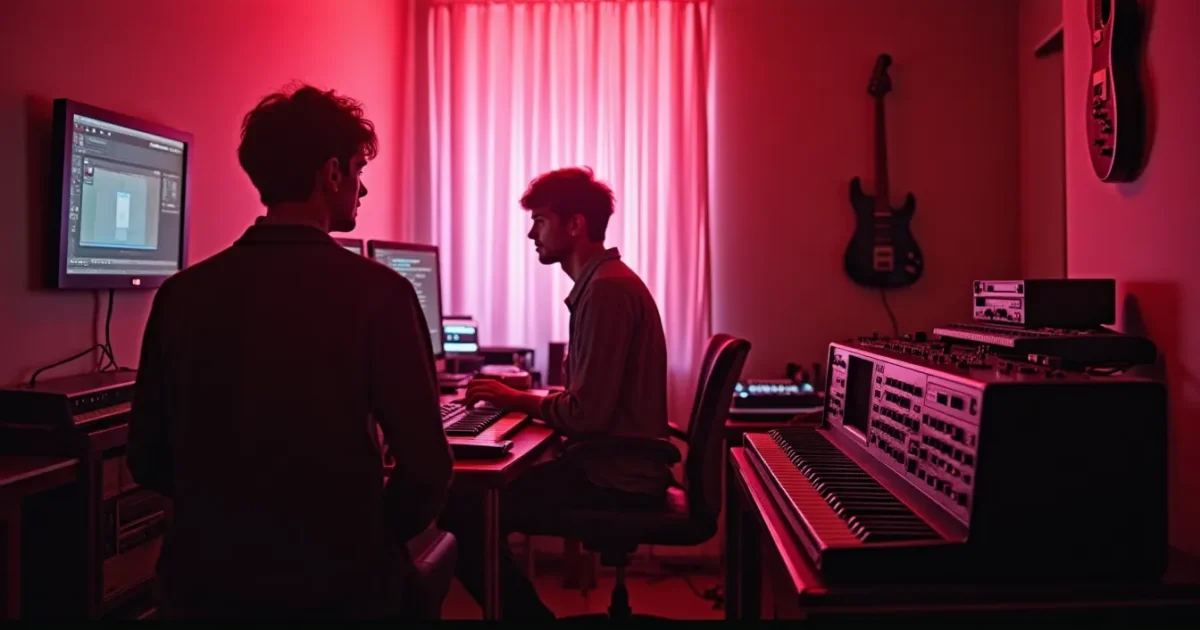
Russian synth-pop is not simply "European synth-pop in Russian". It was a 1980s attempt to combine Western synthesizer sounds with Soviet estrada, rock and singer-songwriter traditions. Bands used whatever instruments they could find - Polivox, Elektronika EM-25, imported Roland and Korg machines - and produced a cold yet melodic sound that felt Western and Soviet at the same time. This article covers the history of the genre, its key bands and its essential albums.
What is Russian synth-pop?
Synth-pop in the USSR appeared in the late 1970s as part of a wider wave of electronic music. Unlike Italo-disco, which was dancefloor and club-oriented, Russian synth-pop was song-based. The priority was melody, lyrics and image. Synthesizers were a tool, not an end in themselves.
The genre overlapped with:
- New wave - light dance rhythms, ironic lyrics;
- Post-punk - cold sound, minimalism, detachment;
- Author song - emphasis on text, personal lyrics.
Pioneers: Forum, Tekhnologiya, Secret
The key groups of early Russian synth-pop:
- Forum - a Soviet-Swedish project founded in 1982 by producer Alexander Kudryavtsev. Hits include "Belaya Noch" (White Night), "Davayte Sozvonimsya" (Let's Call Each Other) and "Na Semi Vetrah" (On Seven Winds). Their sound was close to European synth-pop and Italo-disco.
- Tekhnologiya - a Moscow group formed in 1990. Albums "Vse, Chto Ty Khochesh" (Everything You Want) (1991) and "Sdelano v Rossii" (Made in Russia) (1992). Their sound was synthetic, commercial and danceable. Hits: "Pesnya Bez Slov" (Song Without Words), "Nazhmi na Knopku" (Press the Button), "Slezy" (Tears).
- Secret (Sekret) - usually called a rock band, but in the 80s they used synthesizers extensively. The album "Bit-Kvartet Sekret" (1987) is an example of synth-rock with pop leanings.
Leningrad and new wave: Kino, Bravo, Zvuki Mu
In Leningrad synthesizers became part of the rock-club scene. Kino used keyboards for atmosphere, especially on the album "Gruppa Krovi" (Blood Type) (1988). Bravo with Zhanna Aguzarova blended rock and roll, new wave and synths. Zvuki Mu, fronted by Pyotr Mamonov, were experimental synth-post-punk with absurdist lyrics.
In Yekaterinburg (Sverdlovsk), keyboards played a major role in Nautilus Pompilius - especially on the album "Knyaz Tishiny" (Prince of Silence) (1989), where synthesizer pads sat next to the guitar of Vyacheslav Butusov.
Soviet instruments: Polivox, EM-25, Ritm
Without synthesizers there would have been no Russian synth-pop. Available instruments in the USSR included:
- Polivox - a Soviet analogue synth, duophonic, with a characteristic "cold" sound. Used in the live setups of many bands.
- Elektronika EM-25 - the workhorse of Soviet studios.
- Ritm-2 and Ritm-77 - Soviet electronic drum machines.
- LinnDrum, Roland TR-808, Yamaha DX7 - imported machines that reached the USSR through Melodiya, diplomats or the black market.
The limitations of the equipment made the sound distinctive. Polivox could not produce rich dynamic envelopes, so its pads were static and dreamy - that became the "signature" tone.
Golden age and 90s decline
Between 1991 and 1993 Russian synth-pop reached peak commercial popularity. Tekhnologiya filled stadiums, and Laskoviy May (often classified as pop, but arranged as pure synth-pop) sold millions of cassettes. It seemed the genre was destined to become Russia's answer to Depeche Mode.
But by the mid-90s everything changed. Russian pop with lush arrangements, Eurodance and rock took over. Synth-pop, without strong image or big budgets, drifted to the margins. Many bands split or changed style.
2010s revival: the new cold wave
In the 2010s and 2020s Russian synth-pop returned through post-punk and cold wave. Key groups:
- Ploho - Novosibirsk, gloomy cold wave, influenced by Soviet synth-pop.
- Molchat Doma - Belarus, post-punk with vivid synthesizer sound and echoes of the 80s.
- Human Tetris - Moscow, new wave / synth-pop.
- Peremotka - retro aesthetics, synthesizers and lyrics about provincial life.
- Crimean scene - a cluster of groups reinterpreting Soviet synth-pop through late-Soviet nostalgia.
These groups do not copy the 80s. They use its sonic codes - cold pads, minimal drums, Russian-language vocals - to talk about contemporary melancholy.
15 essential Russian synth-pop albums and songs
- Forum - "Belaya Noch" (1985)
- Tekhnologiya - "Pesnya Bez Slov" (1991)
- Tekhnologiya - "Nazhmi na Knopku" (1992)
- Sekret - "Moya Lyubov na Pyatom Etazhe" (1987)
- Kino - "Gruppa Krovi" (1988)
- Bravo - "Veryu Ya" (1986)
- Nautilus Pompilius - "Knyaz Tishiny" (1989)
- Zvuki Mu - "Prostye Veshchi" (1988)
- Laskoviy May - "Belye Rozy" (1989)
- Mirage - "Muzyka Nas Svyazala" (1987)
- Alla Pugacheva - "Aisberg" (1985)
- Mikhail Boyarsky - "Gorodskiye Tsvety" (1985) - estrada with synthesizers.
- Ploho - "Gorkiy Opyt" (2018)
- Molchat Doma - "Etazhi" (2018)
- Peremotka - "Vstrecha" (2020)
Why Russian synth-pop matters
It is one of the few genres that works equally well in 1985 and 2025. In the 80s it introduced Soviet youth to a Western sound. In the 2020s it helps new bands talk about the same things - loneliness, the provinces, lost time - but in the language of nostalgia.
If you already like Italo-disco, Russian synth-pop will feel familiar: the same synthesizers, the same cold pads, but instead of English "baby" you get Russian "snow", "night" and "fifth floor".