
In 1984 the German company Palm Products GmbH (PPG) released the PPG Wave 2.3, one of the most unusual synthesizers of the 1980s. It was a hybrid: a digital wavetable generator plus analogue VCFs and VCAs. The result is a sound unlike the warm Moog or the glassy DX7: it feels alive, yet capable of sharp spectral shifts. PPG Wave was used by Depeche Mode, Tangerine Dream, a-ha, Alphaville, Propaganda and many others. Here is why the instrument matters for understanding digital synthesis.
Wolfgang Palm and the birth of wavetable synthesis
PPG founder Wolfgang Palm was born in 1950 in Hamburg. By the mid-1970s he was already building modular synthesizers for Tangerine Dream and other electronic musicians. In 1978 came the Wavecomputer 360 - Palm's first wavetable synthesizer. The idea of wavetable synthesis: the memory holds a set of single-cycle waveforms with different spectral content, and the synthesizer can scan from one waveform to another, smoothly changing timbre.
The Wavecomputer 360's problem was the lack of filters: the sound was buzzy and thin. Palm added analogue filters and VCAs - and the Wave series was born. Digital oscillators provided complex, moving timbres; the analogue section provided warmth and character.
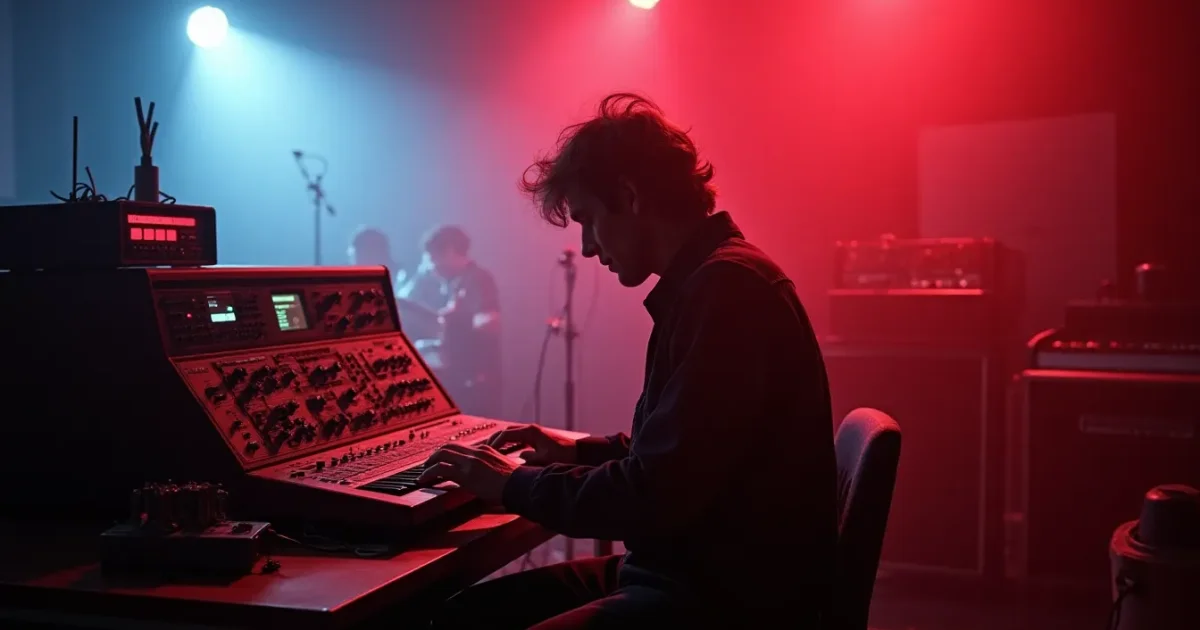
Evolution of the Wave series: 2, 2.2, 2.3
The Wave series was produced from 1981 to 1987. Three main versions:
- Wave 2 (1981-1982): 8 oscillators (one per voice), 8-bit resolution, single modulation wheel, CEM 3320 filters.
- Wave 2.2 (1982-1984): 16 oscillators (two per voice), 8-bit, dual modulation wheels, SSM 2044 filters.
- Wave 2.3 (1984-1987): same 16 oscillators, 12-bit for samples via Waveterm, SSM 2044 filters, 8-part multitimbrality.
The Wave 2.3 was not just "another synthesizer". It offered 8 independent parts simultaneously, making it a full workstation for the studio. It could also be connected to PPG peripherals: PRK (keyboard controller), EVU (eight-voice expansion unit), and Waveterm A/B (sampler, wavetable editor, sequencer). Together they formed the PPG Wave System - a direct competitor to the Fairlight CMI, but cheaper. With the Fairlight costing around £27,500, the PPG Wave System looked like a relatively affordable solution for producers who needed both wavetable synthesis and sampling. Even so, the system remained expensive: the Wave 2.3 itself cost about $7,000-10,000, and the Waveterm added thousands more. So the instrument was found mainly in large European studios and with successful groups, not in home studios of beginners.
The multitimbrality of the Wave 2.3 was revolutionary: eight independent parts let one instrument replace several synthesizers. In practice this meant a producer could record bass, pad, lead and percussion in one box, then mix them through a desk. For mid-1980s studios this saved time and cabling.
How the PPG Wave 2.3 sounds
The main feature is its dynamic spectrum. In a conventional analogue synthesizer timbre changes through the filter: close the cutoff and the sound dulls. In wavetable synthesis the timbre changes through the waveform itself: sawtooth to sine, noise-like to organ-like. This yields sounds that are hard to get from a Minimoog or Juno: bell-like, metallic, vocal-like, cosmic.
The SSM 2044 analogue filters in the Wave 2.3 are smooth, 24 dB/octave. They soften the digital "hardness" and add sustain. Combined with powerful modulation (LFO and envelope on wavetable position), the result is pads that drift and change colour within a single note. This makes the Wave especially valuable for songs with long instrumental passages, where a static analogue pad would quickly become boring. Keyboard parts in the Wave style sound "alive" - the listener hears the timbre breathe and shimmer rather than simply holding one wave shape.
Who used it and for what
The PPG Wave was loved in synth-pop, new wave, progressive rock and film music. Depeche Mode used the Wave in the 1980s for pads and effects. Tangerine Dream used it for cosmic landscapes. Alphaville used it for bright synth-pop textures. a-ha used it on the albums Hunting High and Low. Trevor Horn used the PPG Wave in productions for Frankie Goes to Hollywood, Art of Noise and Propaganda, employing it for percussion and cinematic pads.
Importantly, the PPG Wave was not a "dance" synthesizer in the style of the Juno-60 or TB-303. Its strength lay in complex, evolving pads, strange percussion, vocoder-like sounds. For Italo Disco it was used less than Roland or Yamaha, but its sound can be heard in European acts such as Propaganda and The Twins. It is in these records that the PPG Wave adds a "cosmic" exoticism that sets them apart from the more "down-to-earth" Italian Roland Juno hits.
PPG Wave 2.3 and its competitors
In 1983-1984 the Yamaha DX7 and Fairlight CMI Series II entered the market. The DX7 was cheaper and simpler, the Fairlight was more powerful as a sampler. The PPG Wave occupied the middle ground: more alive than the DX7, more affordable than the Fairlight. But the price was still high - $7,000-10,000 - making the Wave an instrument for major studios and successful bands. The DX7 sounded simpler but cost around $2,000; the Fairlight offered sampling and sequencing but required a dedicated room and engineer. The PPG Wave occupied a golden middle: powerful enough for albums, compact enough for a normal studio.
By 1987 cheap samplers and competition from Yamaha, Ensoniq and Sequential drove PPG into bankruptcy. But the technology lived on in Waldorf Music: Microwave (1989), WAVE (1993), Microwave II/XT (1997-1999), Blofeld (2007), Quantum (2018). So the spirit of the PPG Wave 2.3 survives to this day.
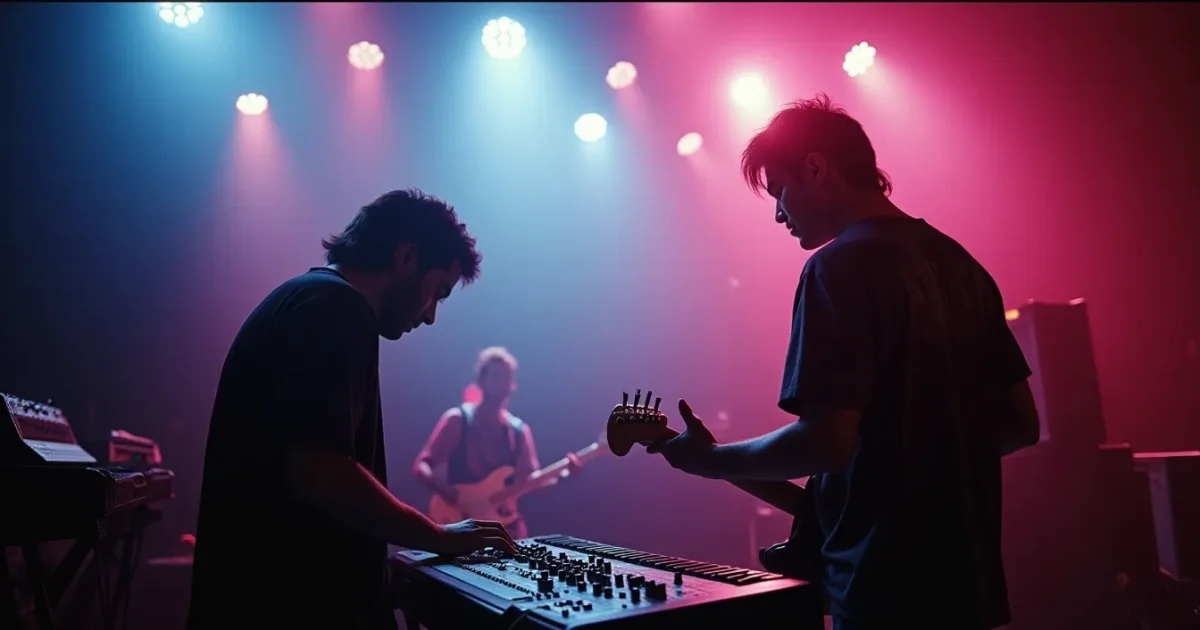
Legacy: from PPG to modern DAWs
Wavetable synthesis became one of the pillars of digital synthesis. Its idea - storing tables of waveforms and scanning between them - underlies Serum, Massive, Vital, Phase Plant, Pigments. All these modern synthesizers work with tables, LFO modulation of position and interpolation between waves - the concepts Palm invented in 1978.
In 2024 Behringer released a hardware clone of the PPG Wave 2.2/2.3, and Waldorf Wave 3.V (co-developed with Palm, 2011) exists as a VST. So the instrument that cost as much as a car in the 1980s is now available as a plugin.
How the wavetable generator works inside
The core is a table of single-cycle waveforms - from simple (sine, saw) to complex (formant-like, noise-like, "organ"). The oscillator reads the table at a set speed, and pitch is determined by reading frequency. A modulator (LFO or envelope) controls "wavetable position", forcing the timbre to travel from one form to another. This movement inside a single note is what distinguishes wavetable from ordinary subtractive synthesis, where timbre only changes through the filter.
In the PPG Wave 2.3, analogue SSM 2044 filters are added. They smooth the stepped transitions between waves and add sustain. The result is a sound that can be "digital" in character due to spectral changes and "analogue" in colour and dynamics. This hybrid quality made the Wave popular with artists looking for something between the warmth of the Prophet-5 and the coldness of the DX7.
PPG Wave in film music and progressive rock
Besides synth-pop, the PPG Wave was widely used in film music and progressive rock. Tangerine Dream used it for the soundtracks of Risky Business and Legend, creating atmospheric landscapes. Peter Gabriel used the Wave on So (1986) for unusual percussion and textures. Thomas Dolby and Paul McCartney also experimented with wavetable sounds. These examples show that the PPG Wave was not only a "German synth-pop instrument" but a universal sound-design tool.
Why this matters for Italo Disco and Disco Magic
Italo disco relied most on Roland and Yamaha, but the PPG Wave shows an alternative European path: German engineering, wavetable sound, hybrid digital/analogue design. If Roland made "discotheque" pads and Yamaha made glassy pop sounds, PPG made cinematic textures - sounds that work well on albums and soundtracks.
Disco Magic & valex77, working in Italo disco and retro-electronics, can use wavetable plugins for the same purposes: adding an unusual pad, a strange percussion hit, a cosmic texture. Understanding the PPG Wave helps choose sounds that do not repeat the Roland/Yamaha canon but remain within 1980s aesthetics. In Serum or Vital it is enough to load a wavetable, assign an LFO to position and add an analogue filter - and the same principle Palm used in 1984 is reproduced.
Moreover, the PPG Wave teaches that synthesis innovations often come not from large corporations but from small engineering teams. Palm began with modular systems for Tangerine Dream and ended with mass-market wavetable synthesis that is still used in DAWs. This story matters for anyone interested in retro-electronics and sound design.
What to listen to next
To explore the PPG Wave try the albums: Depeche Mode "Black Celebration", Tangerine Dream "Hyperborea", Alphaville "Forever Young", Propaganda "A Secret Wish", a-ha "Hunting High and Low". To understand the synthesiser chain read about the synthesizer and drum machine, French synth-pop, space disco and the AMS RMX16 digital reverb used alongside PPG Wave on 1980s recordings.
Bottom line: the PPG Wave 2.3 was not a mass-market 1980s instrument, but it is an important node in synthesis history. It combined wavetable digital sound with analogue filters, gave a sound used by the best synth-pop and electronic artists, and laid the groundwork for today's wavetable synthesizers. For Disco Magic this means the retro sound palette includes not only Roland and Yamaha but also the German "cinematic" alternative that still sounds fresh and unique.