
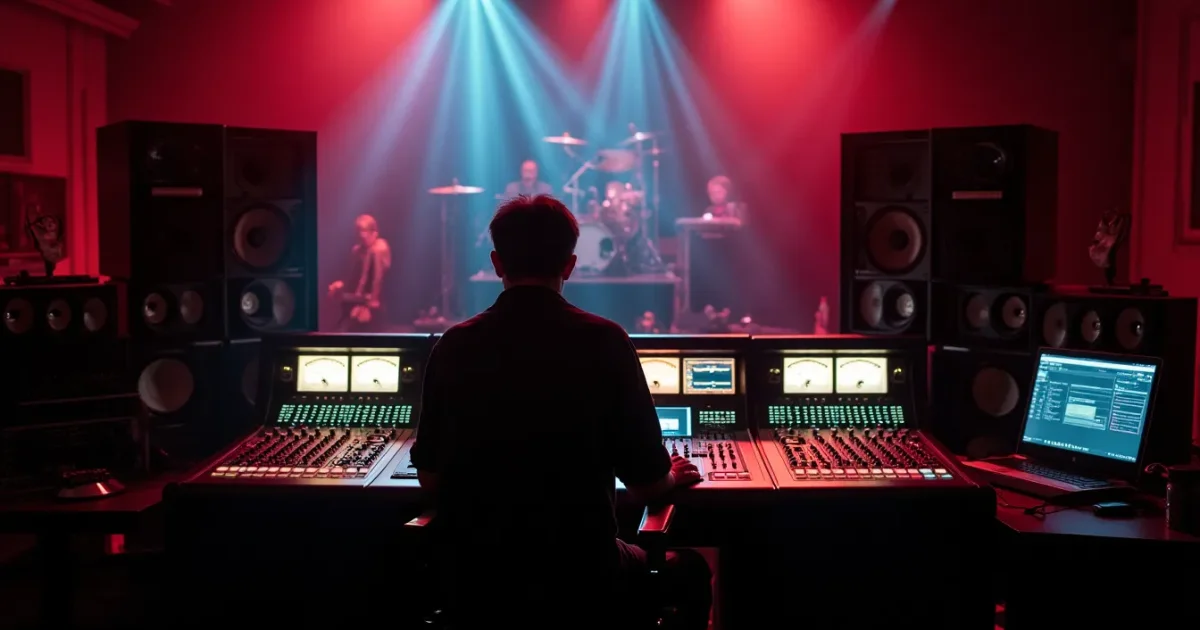
1979. British company Solid State Logic released the SL 4000 E series - the first mixing console to put a compressor and gate on every channel, with a stereo bus compressor in the master section. A decade earlier engineers had to memorise knob positions by hand; now the Total Recall button saved an entire session to a 5¼-inch floppy disk. By 1996, Billboard reported that 83% of US number-one singles were mixed on an SSL console.
From organ tab stops to a mixing desk
Colin Sanders founded SSL in 1969 in Oxfordshire, originally building solid-state control systems for pipe organs. His own Acorn Studios in Stonesfield pushed him to find a mixer with flexible routing and setting recall - something that simply did not exist at the time.
The prototype SL 4000 A led to the B series, introduced in 1976. Six B-series consoles went to Abbey Road Studios, Le Studio in Canada, Townhouse Studios in London, and other rooms. The B already offered computerised fader automation and programmable tape transport auto-location - the technologies that made SSL a recognised brand.
Detail: it was on an SL 4000 B at Townhouse that engineer Hugh Padgham accidentally discovered gated reverb while recording Phil Collins's drums for Peter Gabriel's 1980 track "Intruder".
E Series: a compressor on every channel
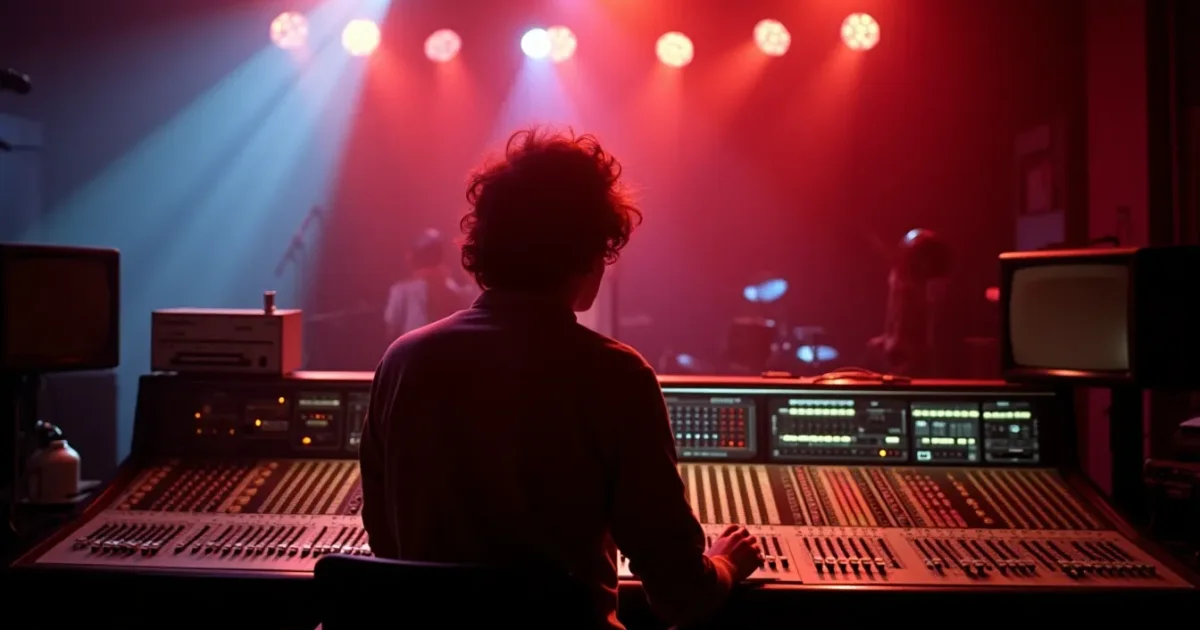
In 1979 the SL 4000 E Series got a four-band EQ developed with George Martin, later nicknamed the "Black Knob EQ". The headline feature was a dynamics section on every channel: compressor/gate/expander plus parametric EQ. Previously that required outboard racks and dozens of patch cables; now it was built in.
The E Series master section also introduced the Stereo Bus Compressor. Its job was to "glue" the mix, adding density and controlled aggression. Auto Fade and computerised fader automation made smooth transitions that were hard to repeat by hand.
- Total Recall saved every rotary control position to a floppy disk and returned the desk to those settings exactly.
- The G Series, launched at AES New York in 1987, redesigned the EQ and expanded routing.
- The 5000/6000/8000 Series were E/G architecture variants for film, television, and broadcast.
Why mixes got denser
Before SSL, a typical pop mix was arranged so each element sat in its own frequency pocket. Sanders's console allowed engineers to process dozens of tracks individually: compression evened out dynamics, gates cut noise, and EQ cleaned up clashes. The result was that tracks could be layered more densely without turning the mix to mud.
The bus compressor played a separate role. Working across the master bus, it added a unified "glue" that made drums, bass, and synths sound like one system. Engineers began placing it early in the mixing chain rather than at the end, creating the punchy SSL sound heard on records from post-disco to synth-pop.
Brightness came from the EQ. The "Black Knob" delivered clear upper-mids and tight lows without adding noise. Combined with clean mic preamps, it meant you could push vocals and hi-hats brighter without worrying that the background would turn dirty.
Studios that adopted SSL
The first E Series consoles were bought by Battery Studios and RG Jones Recording Studios, quickly followed by Eden Studios and Sarm Studios. Hansa Tonstudio in Berlin commissioned three custom desks in "hansa blue"; two are still in use. In New York, SSL became the backbone of Power Station; in Los Angeles, Larrabee and Record One.
Engineers whose mixes passed through the SL 4000 include Bob Clearmountain, Steve Lillywhite, Tom Lord-Alge, Alan Moulder, and Trevor Horn. Those names explain why the "SSL sound" quickly became the standard for commercial recording: this was the console on which hits were mixed, not an experimental machine for enthusiasts.
"SSL gave us the ability to come back to a mix in the morning and get the same picture. Before that, it was impossible."
- Bob Clearmountain, Sound on Sound interview, 2001
Specific records on SSL
A full list of albums made on SSL would fill a book, but a few examples show the scale. At Le Studio, the SL 4000 B was used for Rush's Moving Pictures (1981) and Bryan Adams's Cuts Like a Knife (1983). At Townhouse, the B console handled XTC's Drums and Wires and Simple Minds' Once Upon a Time.
The E Series links directly to Phil Collins: in 1980-1981 Hugh Padgham recorded drums for "Intruder" and the solo single "In the Air Tonight" at Townhouse. The gated reverb born from SSL's Listen Mic button became one of the signature sounds of the 1980s.
By the late 1980s the SL 4000 G Series dominated rooms working in synth-pop and pop-rock. The desk's one-button switching between recording, mixing, and mastering matched the workflow of densely electronic albums.
Total Recall as a working tool
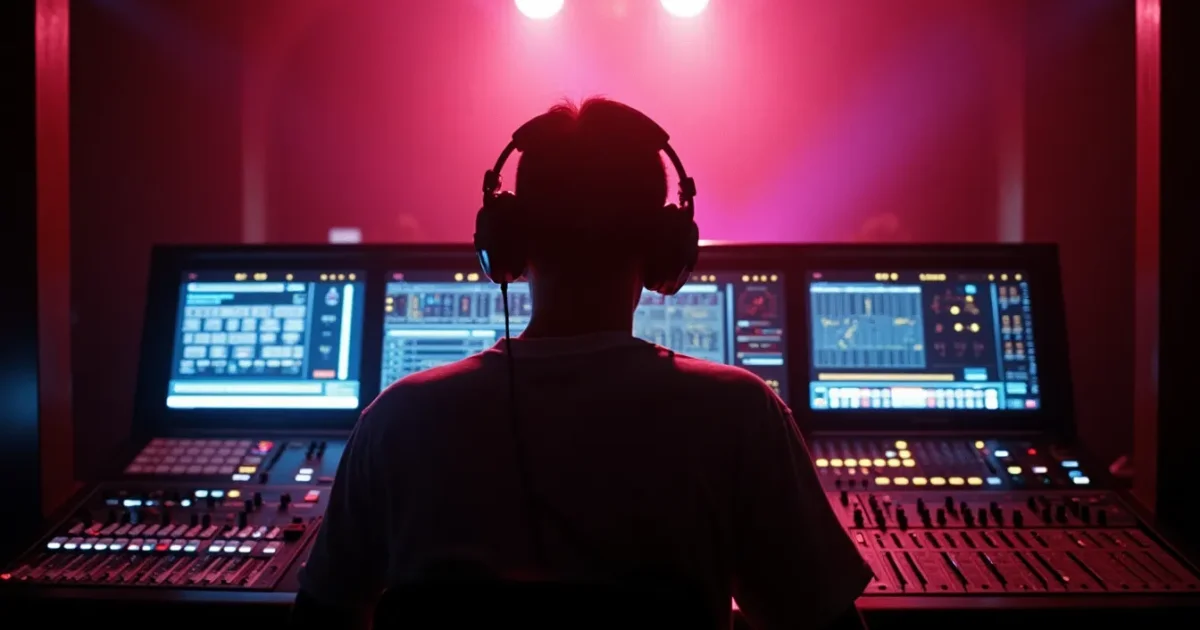
Before SSL, an engineer asked for an alternate mix kept a notebook of fader and knob positions. If a client came back a week later asking for "half a dB more vocal", the session effectively started from scratch. Total Recall on the SL 4000 E let the desk save every rotary setting to a floppy disk and return to the same point the next day.
This changed the economics of mixing. Multiple mix versions - radio, club, instrumental - no longer risked losing a good basic balance. For disco and Italo Disco, where a single track often had four or five mixes, this was especially valuable: every version could be made on the same desk while preserving the original settings.
Fader automation also stopped being a luxury. Previously it required separate external systems such as Allison Research or EMT; on SSL it was built into the desk and locked to the tape machine. An engineer could record fader moves, edit them step by step, and replay them with the tape.
SSL versus Neve: two sound camps
In the 1980s professional studios divided roughly into two camps: Neve and SSL. Neve desks, especially the 80 series, were celebrated for a warm, rounded sound and musical saturation; they were chosen for rock and acoustic recordings. SSL sounded cleaner, harder, and "faster" - more convenient for electronic, pop, and dance music.
The difference was audible in the low end: Neve gave a thick, slightly rounding bass, SSL gave a short, defined punch. In the highs SSL won on transparency, helping synths and drum machines stay clear under guitars. That is why rooms working with drum machines, sequencers, and samples more often chose the SL 4000.
Many large facilities kept both desks: Neve for "live" material and SSL for electronics and mixing. That split itself shows the SL 4000 was not a universal replacement for everything, but a specialised tool for dense, technological mixes.
The bus compressor as "invisible producer"
The SSL stereo bus compressor uses a VCA design with fast attack and auto-release. Engineers typically used low ratios - 2:1 or 4:1 - to avoid crushing transients and simply add density. When set properly, it made a mix sound louder and brighter without obvious compression.
That effect became so characteristic that SSL Bus Compressor plug-ins are now standard in many DAWs. Universal Audio, Waves, and SSL itself sell digital replicas of the E Series and G Series. Analog SL 4000 production ended in 2002, but the sound lives on in emulations.
Price and adoption
The SL 4000 E was expensive even by major-studio standards: in the early 1980s a full-size 48-channel desk cost several hundred thousand dollars. That made it not a home-musician's tool but a calling card for a commercial facility: having SSL on the equipment list signalled that the room could handle big albums.
Still, the high price paid for itself in versatility. One desk replaced the mixer, automation, channel dynamics, and master compression. For labels it reduced mixing time and allowed more bookings. By 1990 SSL had more than three thousand installations worldwide - a figure no competitor of the era could match.
Today a working SL 4000 E or G+ on the second-hand market costs tens of thousands of dollars, and demand exceeds supply. The company still makes spare parts and expansion modules, and some studios keep the old desks specifically for the "analogue character" that plug-ins imitate but never fully copy.
What remains
In 2004 the SL 4000 series was inducted into the TECnology Hall of Fame, an award for innovations that "had a lasting impact on the development of audio technology". SSL also received a Technical Grammy Award that year. Several hundred 4000-series desks are still working worldwide; owners often prefer the old desk to plug-ins precisely for its tactile feedback and immunity to digital artefacts.
For the 1980s, the SSL 4000 was not just a console but a working environment: automation, channel compression, and the bus compressor made mixes sound denser, brighter, and more controlled all at once. That technical shift is one reason pop recordings of the decade sound different from 1970s mixes.
Want to explore more sounds of the era? Read about Lexicon reverb, the Roland TR-808, and how tracks were mixed in 1985. If you are interested in studio technique through an Italo Disco lens, start with the guide for beginner producers.