On 26 August 1986 Cyndi Lauper released “True Colors” - the title track of her second album. Billboard Hot 100 #1 for two weeks (from 25 October 1986), UK #12. The song was written by the authors of “Like a Virgin” - Tom Kelly and Billy Steinberg. Lauper at first refused to record it, calling it “too standard”. After Lennie Petze talked her into a second look, she rebuilt the arrangement down to the minimum - voice, grand piano and a faint synth pad. In 1987, the song became Kodak's main commercial track (a 29-second spot, $3 million budget), and that same year - an anthem of the LGBT movement after Lauper performed it at the San Francisco Pride parade.
Tom Kelly, Billy Steinberg and a “song about a mother”
The authors - Tom Kelly and Billy Steinberg - wrote “True Colors” in summer 1985. They were already top-tier songwriters: “Like a Virgin” for Madonna (1984), “Alone” for Heart (1987). “True Colors” was an autobiographical song by Steinberg about his mother Sally Steinberg, who was dying of breast cancer.
Steinberg explained in a 2010 interview: “I wanted to write about the fact that a mother keeps seeing in you a rainbow of colours that no one else can see. Even when she was ill, she found in me something I myself had forgotten”.
The first version was written with an orchestral arrangement and sent to Lauper in March 1986. Lauper refused - called it “too standard” and “too similar to other Steinberg/Kelly songs”. Producer Lennie Petze convinced her to give it a second look - but only if Lauper could rebuild the arrangement.
A minimal arrangement: voice + piano + synth
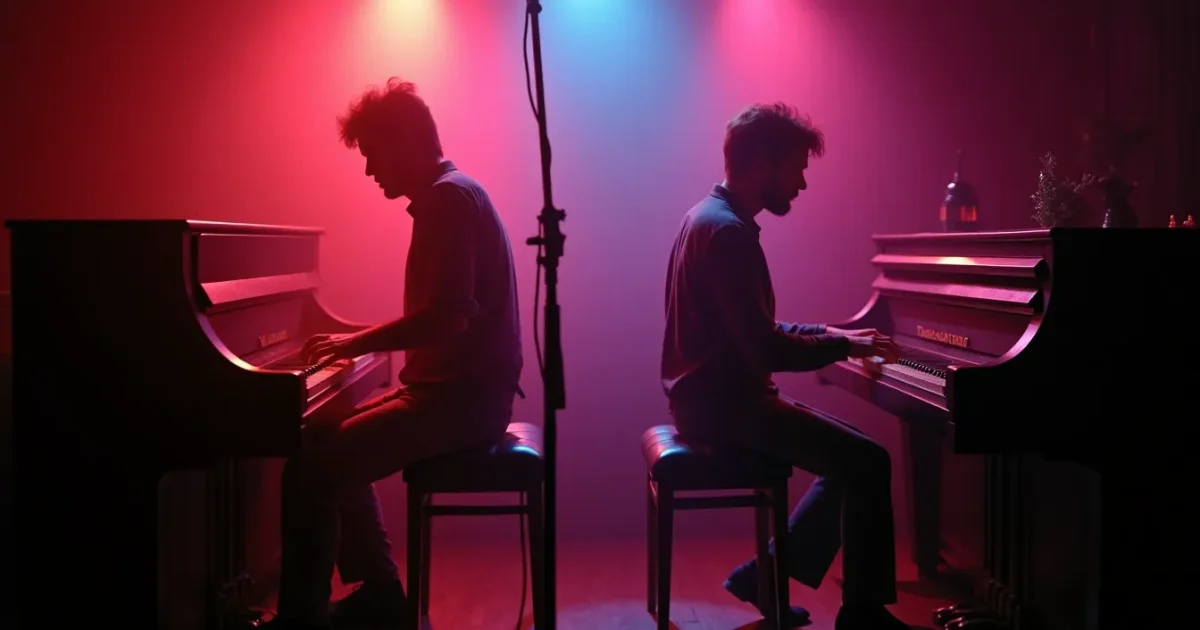
At the end of April 1986 Lauper returned with a new arrangement. She dropped the orchestra, dropped the drums and kept three elements: grand piano (Yamaha C7), voice, and a very faint background synth (Yamaha DX7 on an FM-piano preset).
This was radical for 1986 pop balladry - tracks of this kind were usually recorded with full orchestra and choir. Lauper: “I heard the song as a dialogue between a mother and a daughter. No other voices should be there. Otherwise you lose the intimacy”.
Recording began in June 1986 at The Record Plant in Los Angeles. Producers - Lennie Petze and Lauper herself. Pianist - Robbie Kondor. Synth - Jeff Bova. The lead vocal was cut on the first take - Lauper refused to do second takes, saying: “The emotion is either in the first take, or it's not there at all”.
“I cried while recording. Billy had told me about his mother a day before the session. I thought about my own mother - she was an emigrant from Germany, she'd been through everything. This song is for all mothers, not only Sally Steinberg”.
- Cyndi Lauper, Out Magazine interview, 1996
Anatomy of the sound
- Key: D major, simple I-V-vi-IV progression
- BPM: 68 (slow ballad)
- Length: 3:46 (single), 3:49 (album)
- Grand piano: Yamaha C7, Robbie Kondor
- Background synth: Yamaha DX7 FM-piano preset, Jeff Bova
- Strings: NONE (deliberate)
- Drums: NONE
- Bass: NONE (only piano)
- Vocals: Lauper, Neumann U87, one lead take + double-tracking on the chorus
- Producers: Lennie Petze + Cyndi Lauper
- Studio: The Record Plant, LA, June-July 1986
- Single release: 26 August 1986, Portrait Records / Epic
Kodak and the $3 million 1987 commercial
In September 1987 Kodak paid Epic Records $500,000 (plus royalties) to use “True Colors” in a film-stock commercial. The slogan: “Kodak Film. See how colorful it all can be.”
A 29-second TV spot ran in the US and logged 2 billion impressions over six months. It entered the top-10 most-played commercials of 1987 per Nielsen. After that, many people started hearing “True Colors” as “the Kodak song” - an association Lauper would spend years resisting in interviews.
In 1995 commercial rights reverted to Lauper and Steinberg/Kelly, and the song left Kodak's ad library. But the cultural link persists.
An LGBT anthem: San Francisco Pride 1987
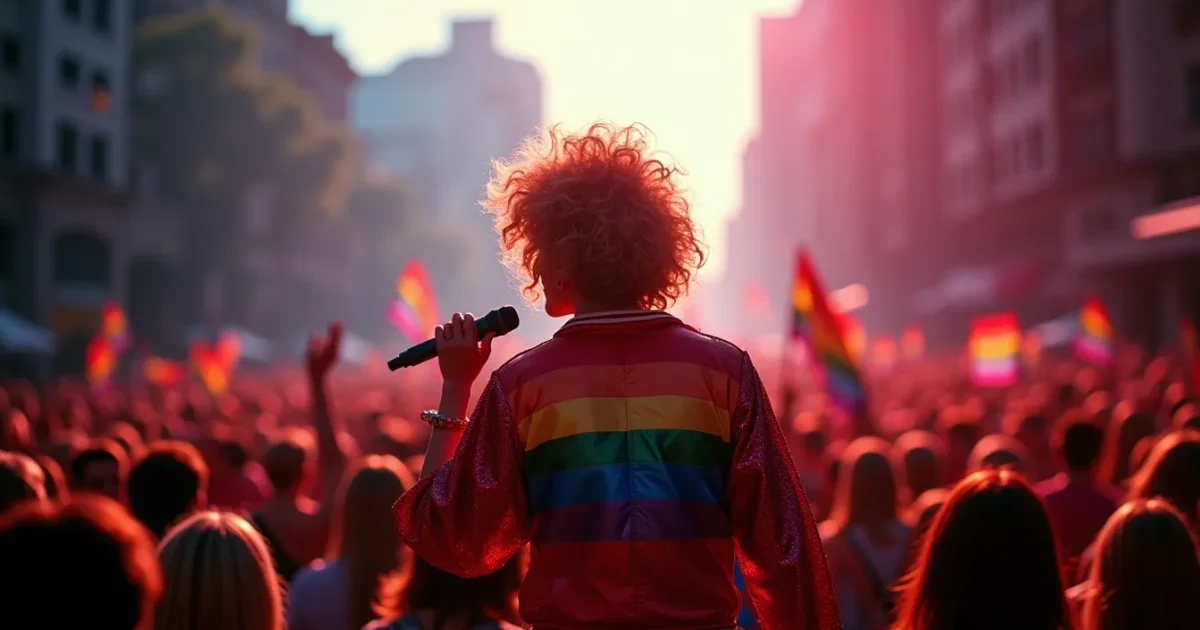
On 26 June 1987 Cyndi Lauper performed at the Gay Freedom Day Parade in San Francisco in front of 500,000 people. She played “True Colors” as the centrepiece of her set. The audience took every line as metaphor for the LGBT experience.
After that performance, “True Colors” became the unofficial anthem of the American LGBT movement. In 1992 it was used in an AIDS campaign. In 2005 - at the opening ceremony of the San Francisco Gay Games. In 2008 Lauper founded the non-profit True Colors United, working with homeless LGBT youth (by 2025 - 200,000 young people served).
Chart history and legacy
US Billboard Hot 100: #1 for two weeks (25 October - 7 November 1986). UK: #12. Australia: #3. Canada: #1 for one week. Single sales worldwide - 2.5 million copies.
The True Colors album - 2 million copies in the US, 1.5 million worldwide. It was Lauper's second Billboard Hot 100 #1 after “Time After Time” (1984). After “True Colors” Lauper moved past strict pop: 1989 - a duet with Frank Sinatra; 2013 - a Grammy for the Kinky Boots musical.
What to listen for next
Lauper 1983-1986: “Girls Just Want to Have Fun” (1983) → “Time After Time” (1984) → “True Colors” (1986). Three eras - dance anthem, ballad, intimate confession.
Tom Kelly and Billy Steinberg as writers 1984-1988: “Like a Virgin” Madonna (1984) → “True Colors” Lauper (1986) → “Alone” Heart (1987). Three Billboard #1s by the same writing duo.