
In July 1987 New Order released the single “True Faith”. It became New Order's first hit to break into the US top-40 - #32 Billboard Hot 100. In the UK - #4 UK Singles Chart. That sounds modest, but for a band that hadn't cracked American charts in seven years it was a pivot moment. More importantly, the Philippe Decouflé video for “True Faith”, winner of the 1988 Brit Award for Best British Video, became one of the most talked-about MTV clips of the year and redefined the visual language of British electronica for the next decade.
Seven years after Ian Curtis's death
New Order - Bernard Sumner (vocals, guitar), Peter Hook (bass), Stephen Morris (drums), Gillian Gilbert (keys) - formed in 1980 out of the remnants of Joy Division after Ian Curtis's death on 18 May 1980.
By 1987 they had released four albums and the cult single “Blue Monday” (1983), which became the best-selling 12-inch single in British history. But in the US New Order was still a dance-club band - no radio rotation, no Top-40 hits. “True Faith” was meant to change that.
The idea came from Rob Gretton, the band's manager and co-owner of Factory Records. He pushed for New Order to hire American producer Stephen Hague - the man who had produced Pet Shop Boys' “West End Girls” (1985). “We need someone who makes us radio-friendly without killing our character”, Gretton wrote in his 2014 autobiography.
Recording: Studio Guillaume Tell, Paris, spring 1987
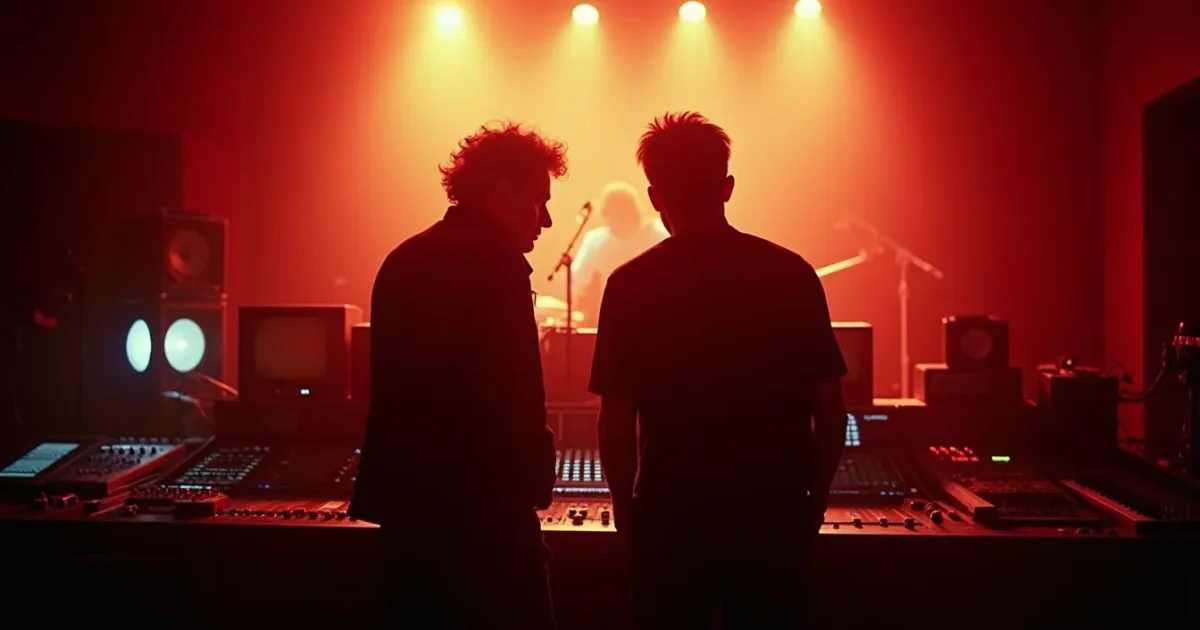
New Order and Hague recorded “True Faith” at Studio Guillaume Tell in Paris between March and May 1987. The French studio choice was strategic - Hague wanted to “distance” the band from their Manchester habit and push them out of the comfort zone.
The main sampler was the Akai S900, the cutting-edge 12-bit sampler of the time. Hague and Morris sampled a choral fragment and built the famous synth riff of the intro from it. Hook's bass line (as ever - high-register, melodic, on top) was cut on a Yamaha BB3000 through a Peavey BA50.
Drums - hybrid: Stephen Morris plays a live pattern on a Tama kit while an Oberheim DMX lays electronic hi-hats and toms alongside. A sequenced bass line on a Roland TB-303 (yes, the same unit behind 1987 acid house) plays through the quieter sections.
The lyric: drugs or faith?
Sumner wrote the lyric of “True Faith” over two weeks before recording. It opens with nostalgic lines about childhood: “I feel so extraordinary, something's got a hold on me”. Then it shifts to darker imagery: “I used to think that the day would never come”.
The song is about drug dependency. Sumner admitted in a 1987 Melody Maker interview: “It's about MDMA and heroin. About stepping into a world where ordinary life becomes fake. But I wrote the lyric deliberately so it could also be read religiously. Many listeners still hear it as a hymn to faith”.
The double meaning became the song's hook. The lyric can simultaneously be read as:
- Drug euphoria
- Love
- Religious faith
- A parting from a friend
That makes “True Faith” universally usable - you can play it at a wedding, at a funeral, at a club night.
“In 1987 in Manchester we were all on „True Faith". I remember dancing to it at the Haçienda until 4am. I didn't grasp then that Bernard was singing about what I was doing.”
- Peter Hook, autobiography Substance, 2016
Sound anatomy
- Key: A major, modulating to B major on the last verse
- BPM: 114
- Length: 5:52 (single), 9:20 (12-inch Shep Pettibone remix)
- Producer: Stephen Hague
- Album: not released on an album in 1987; later on Substance (August 1987)
- UK sales: 400,000 singles
- Worldwide: over 1.5 million
The Philippe Decouflé video: a revolution
The “True Faith” clip was directed by French choreographer and director Philippe Decouflé. Previously he had been known mainly in the contemporary dance world - short pieces for France's Arte TV. “True Faith” was his first major commercial clip.
Video budget - £50,000 (about average for 1987). Filmed in Paris, Studio Paris-Nord, over four days. The concept - dance without music. The clip has no scenes of New Order playing. Only dancers in strange costumes performing abstract moves to the song. Elements:
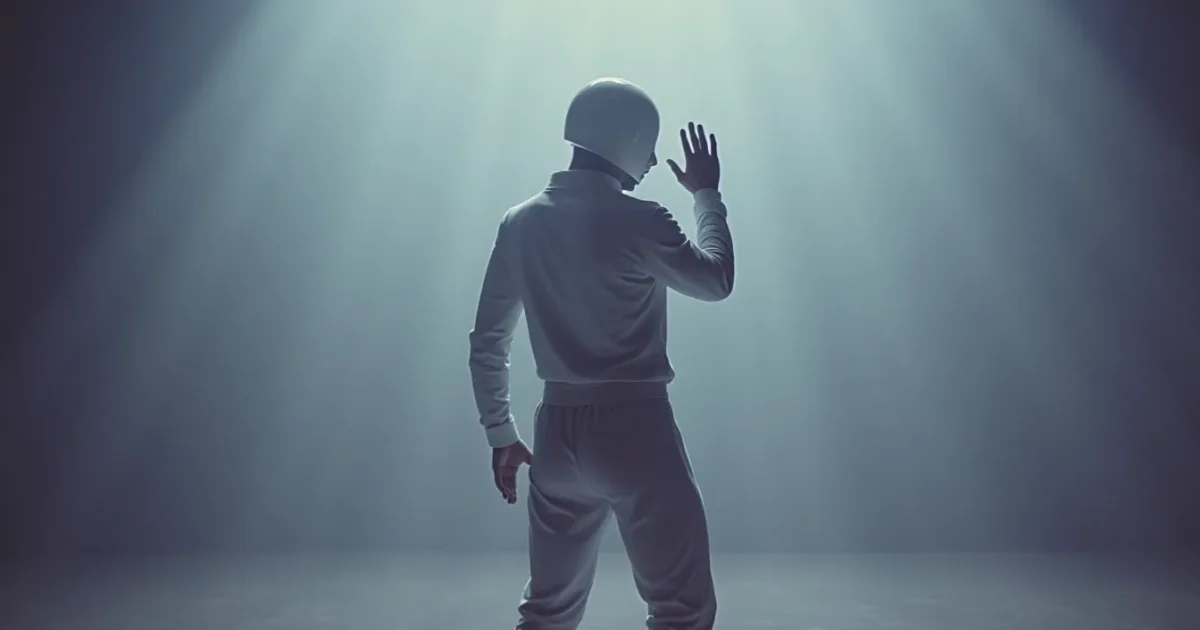
- A dancer in a helmet slapping his own face
- Two women in bright leotards “talking” with their hands
- A dancer in a “white angel” costume slowly falling
- A man in a red cloak fighting his shadow
The clip won the 1988 Brit Award for Best British Video (the only time a non-British director received that award - but the sponsor was a British label). In 2002 MTV included it in its top-10 most-influential 80s clips.
Longevity and placements
“True Faith” is one of the few New Order songs to have been successfully re-issued multiple times:
- 1994: reissue - #9 UK Singles Chart
- 2006: “Lo-Fi FM Radio Edit” Warp remix - #28 UK
- 2019: on the Shazam! soundtrack
- 2020: featured in Killing Eve (four seasons)
By 2024 “True Faith” has passed 800 million Spotify streams. It is the second most-popular New Order track after “Blue Monday”.
New Order today
New Order has worked continuously since 1987 without a break. Peter Hook left the band in 2007 after a conflict with Sumner - they had a public legal dispute over the New Order trademark. In 2011 the other three plus new bassist Tom Chapman continued as New Order.
In 2015 New Order released the album Music Complete - their first in 10 years. As of 2024 the band tours every two years, playing stadium shows with a 40-year setlist running from Joy Division to today. “True Faith” is always in the finale.
What to listen to next
For the “Joy Division → New Order” arc: “Love Will Tear Us Apart” Joy Division (1980) → “Blue Monday” New Order (1983) → “True Faith” (1987) → “Bizarre Love Triangle” (1986). Four stages of the transformation from post-punk despair to American dance success.
For the “Americanisation” of British electronica through Stephen Hague, listen to “West End Girls” Pet Shop Boys (1985) and “Opportunities (Let's Make Lots of Money)” Pet Shop Boys (1986). Both with the same producer - the “Hague touch” is equally audible there and on “True Faith”.