
In December 1984, ten months after Purple Rain dropped, Prince walked into the offices of Columbia Records management. He carried a fresh demo tape of a track called “Manic Monday”. On the tape, hand-written across the top: “for Susanna Hoffs”. Eighteen months later, in March 1986, The Bangles' single of that song hit #2 Billboard Hot 100. The only thing keeping it off #1 was Prince's own “Kiss”. The author gave the song away and then blocked it from the top with his own single.
Prince and the “Christopher” alias
From 1984 to 1985 Prince was writing aggressively for other artists but hiding his authorship under pseudonyms. On “Manic Monday” Prince was credited as “Christopher” - not “Christopher” as a name, just a pseudonym. In the ASCAP registry the track was listed as written by Christopher until 1991. Only after the Warner Bros. lawsuit against Prince in 1993 was the authorship legally moved to “Prince (Christopher)”.
The reason for the alias was contractual. Per his Warner Bros. agreement Prince could release only one album a year. But he was writing roughly 30 tracks a year. He gave the excess to others - Sheila E., Morris Day, The Time, Sheena Easton, Martika, Madonna (the track “Love Song” on Like a Prayer). Under different pseudonyms.
“Manic Monday” was originally written for Apollonia 6 - the female trio Prince was producing. But he decided to keep it off their album, and it sat on the shelf. In December 1984, having heard Susanna Hoffs of The Bangles in a club called Lovely, he decided to give the song to them.
The Bangles: Los Angeles power-pop
The Bangles - an American all-female power-pop trio (later quartet): Susanna Hoffs (guitar, vocals), Vicki Peterson (guitar, vocals), Debbi Peterson (drums, vocals; Vicki's sister), Michael Steele (bass, vocals). Formed in Los Angeles in 1981, originally called The Bangs.
By 1985 they had released two albums on indie labels - both overlooked. Columbia Records signed them in 1985, and they began recording their second album, Different Light. They needed a headline single. Producer David Kahne received the “Manic Monday” demo from Prince's agent in early 1985.

Recording: Sunset Sound, Los Angeles, July 1985
The Bangles cut “Manic Monday” at Sunset Sound Studios (the same room where Toto cut “Africa”) in July 1985. Prince gave them full arrangement freedom but set three conditions: (1) Susanna Hoffs had to sing lead, (2) tempo must not change, (3) do not touch the lyric.
The instrumental sticks close to Prince's demo: Yamaha DX7 (main pad), Oberheim OB-X (strings), LinnDrum LM-1 (rhythm). Vicki Peterson's guitar on a Fender Stratocaster, playing an I-vi-IV-V arpeggio on the verse. Michael Steele on Fender Jazz Bass, eighth notes.
The key tracking moment is the three-part vocal harmony on the chorus. Hoffs sings lead; Vicki and Debbi Peterson stack upper thirds and fifths. Kahne insisted on recording each harmony pass separately and layering - the Beach Boys / Fleetwood Mac method for “stacked” vocals. Six vocal tracks from three voices play across the chorus.
“Prince sent the demo on a cassette labelled „for Susanna". I didn't even know he remembered me from that club night. I listened to it 20 times in a row in my car. It felt like a love letter.”
- Susanna Hoffs, Rolling Stone, 1986
Sound anatomy
- Key: F major, modulating to G major on the final chorus
- BPM: 120
- Length: 3:03 (single), 3:38 (album)
- Producer: David Kahne
- Album: Different Light (January 1986, Columbia Records)
- US sales: 1 million singles (Platinum)
- Worldwide: over 3.5 million
- Album: 4 million US copies, 8 million worldwide
Blocked from #1 - Prince vs. Prince
The single was released on 27 January 1986. By March - in the Billboard Hot 100 top-10. On 31 March - #2, where it stayed for three weeks. At #1 was Prince's “Kiss”, released three weeks earlier.
The situation became symbolic: the author gifted the song to the band and then blocked its path to the top with his own single. In a 1986 Rolling Stone interview Prince said: “I felt a little awkward toward The Bangles. But I couldn't withdraw „Kiss". They'll forgive me in 30 years”.
In the UK the song reached #2 UK Singles Chart - five weeks before “Kiss” got there. Canada - #3. Australia - #1. Netherlands - #1. #1 across several European countries, just not the UK.
The lyric: Monday as universal experience
“Manic Monday” is a song about how hard it is to get up for work on a Monday morning after the weekend. The key line “I wish it was Sunday, ‘cause that's my fun day” is universal. The lyric is not tied to gender, profession, or era.
That was its longevity. From 1986 onward “Manic Monday” became an unofficial anthem of office culture. It regularly plays in British office sitcoms, American workplace comedies, and stress-management ads.
By 2024 “Manic Monday” sits in the top-50 most-streamed “office” songs on Monday mornings per Spotify data. Each week the song picks up roughly 15 million new streams - overwhelmingly on Monday mornings.
The Bangles after “Manic Monday”
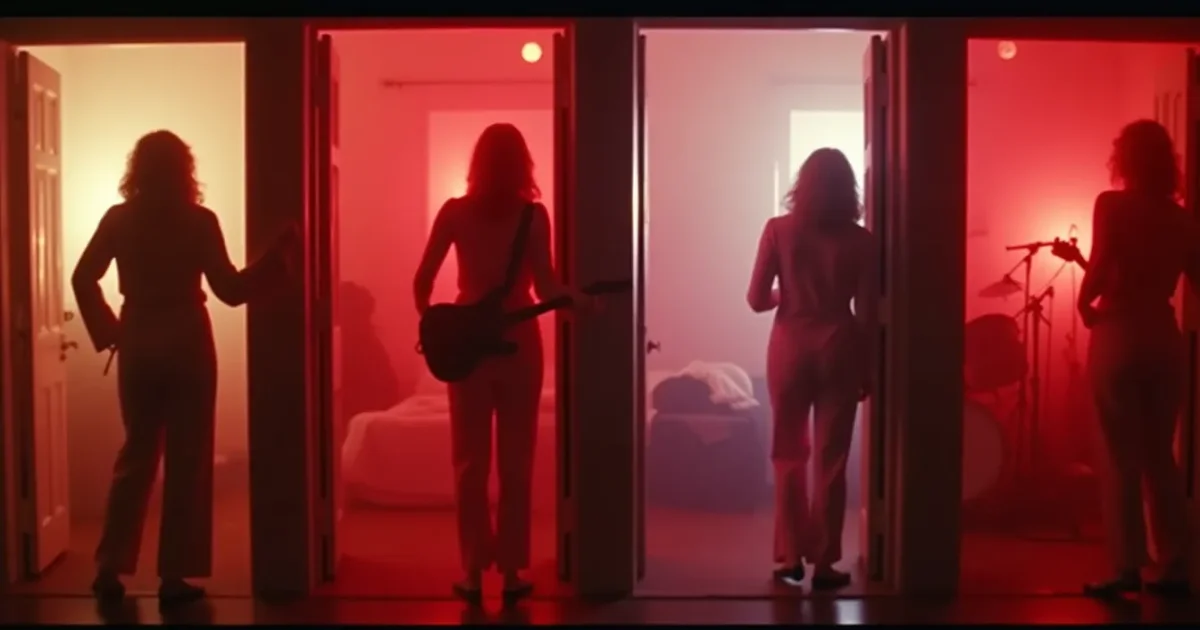
After “Manic Monday” The Bangles released two more major hits: “Walk Like an Egyptian” (#1 Billboard for 4 weeks, September 1986) and “Eternal Flame” (#1 Billboard, March 1989). Both made the band the mid-80s star power-pop quartet.
By 1989 tensions inside the group had grown. Michael Steele left in 1989. Susanna Hoffs launched a solo project and released When You're a Boy in 1991. The Bangles officially split in December 1989.
They reunited in 1998 and have toured intermittently since. In 2011 they released Sweetheart of the Sun - their first album in 22 years. Hoffs also hosts the podcast “Under The Covers” with Matthew Sweet, performing classic covers.
What to listen to next
To understand Prince as a “quiet author” for other artists: “Manic Monday” (Bangles 1986) → “Nothing Compares 2 U” (Sinéad O'Connor 1990, also written by Prince under the alias The Family) → “Sugar Walls” (Sheena Easton 1984). Three different female vocalists, one writer - Prince in his various aliases.
For a parallel in 1986 female power-pop, try Katrina and the Waves “Walking on Sunshine” (1985) and Cyndi Lauper “Girls Just Want to Have Fun” (1983). Three different ways to package a female pop voice in the 80s - major, ironic, power-pop harmonic.