
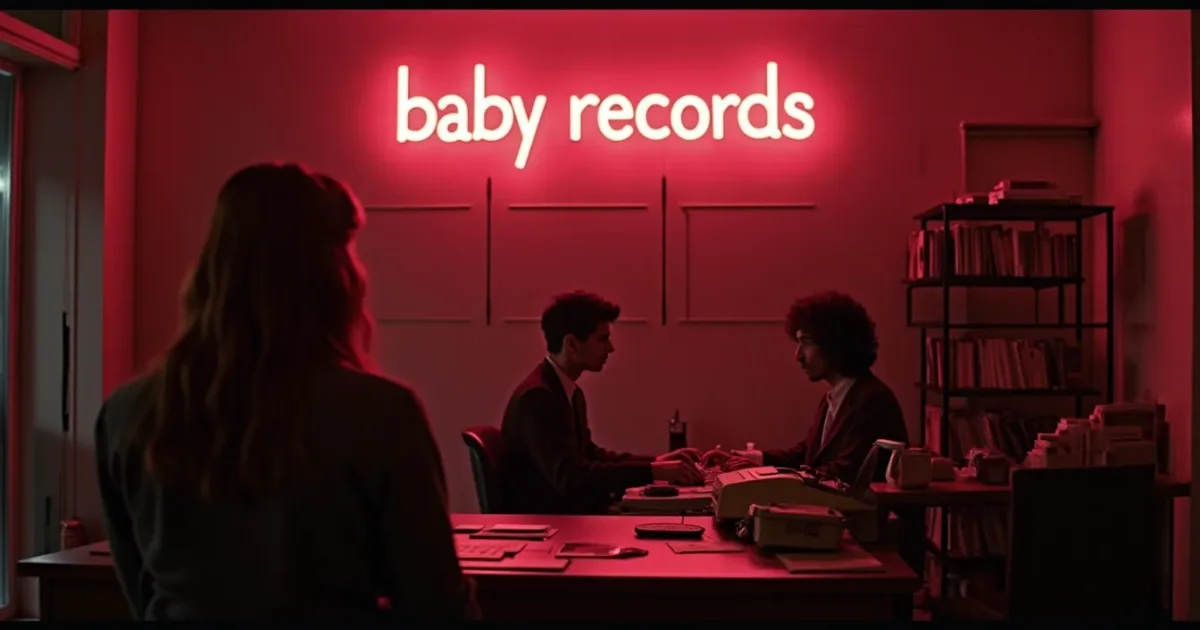
1974, Milan. Freddy Naggiar founds Baby Records in a premises on Piazza della Repubblica. A year later the label gets its first hit in the Italian charts - "Tornerò" by Santo California. But the path from Italian pop to disco and italo-disco will take six years: only by 1980 will Naggiar begin signing the artists who will define the label's sound for the entire decade. Baby Records will become one of the few Italian companies to combine pop, disco, and instrumental music under one roof - from La Bionda to Rondò Veneziano.
Freddy Naggiar and the birth of the label
Freddy Naggiar launched Baby Records in Milan in 1974, initially with distribution through Yep. The first success came in 1975 - "Tornerò" by Santo California, a track that sold across Italy and became the label's calling card at launch. In the early years Baby Records focused on Italian pop: Al Bano & Romina Power, Ricchi e Poveri, Pupo - artists far removed from disco. The label was first located on Piazza della Repubblica, then moved to Via Timavo - a relocation that coincided with the catalog's expansion and the shift toward dance music.
The turn toward disco came in the late 70s, when Naggiar signed La Bionda - brothers Carmelo and Michelangelo La Bionda, who by then were already working in Munich. Their albums "La Bionda" (1978) with the hit "One for You, One for Me", "High Energy" (1979), and "I Wanna Be Your Lover" (1980) came out on Baby Records and became the foundation of the label's disco direction. The single "One for You, One for Me" sold across Europe and opened the international market for Baby Records. D.D. Sound - a project by the same La Bionda brothers with studio musicians in Munich - was also released on Baby Records. The Munich connection mattered: La Bionda worked in the same studios where Giorgio Moroder recorded, and brought to Baby Records the German approach to disco production - a tighter bass, a cleaner mix.
Detail: Baby Records' distribution changed three times over the label's history: CGD (1975-1988), PolyGram (1988-1994), BMG Ariola for West Germany (1988-1990). The distributor change in 1988 coincided with the beginning of italo-disco's decline.
The disco era: Den Harrow, Gazebo, Albert One
In the first half of the 80s Baby Records signed the artists who became the face of Italian disco and italo-disco. Den Harrow - a project around which a significant part of the label's promotion was built; Den Harrow singles on Baby Records sold across Europe, and the singer's image - a blond with accent makeup - became the label's visual trademark. Gazebo (Paul Mazzolini) - the author of "I Like Chopin" (1983), one of the most recognizable italo-disco tracks, which Baby Records released and which sold in quantities that made it an international hit. Albert One (Alberto Carpani) - another studio project that Baby Records promoted on the international market. All three released singles and albums that reached the German and Scandinavian charts.
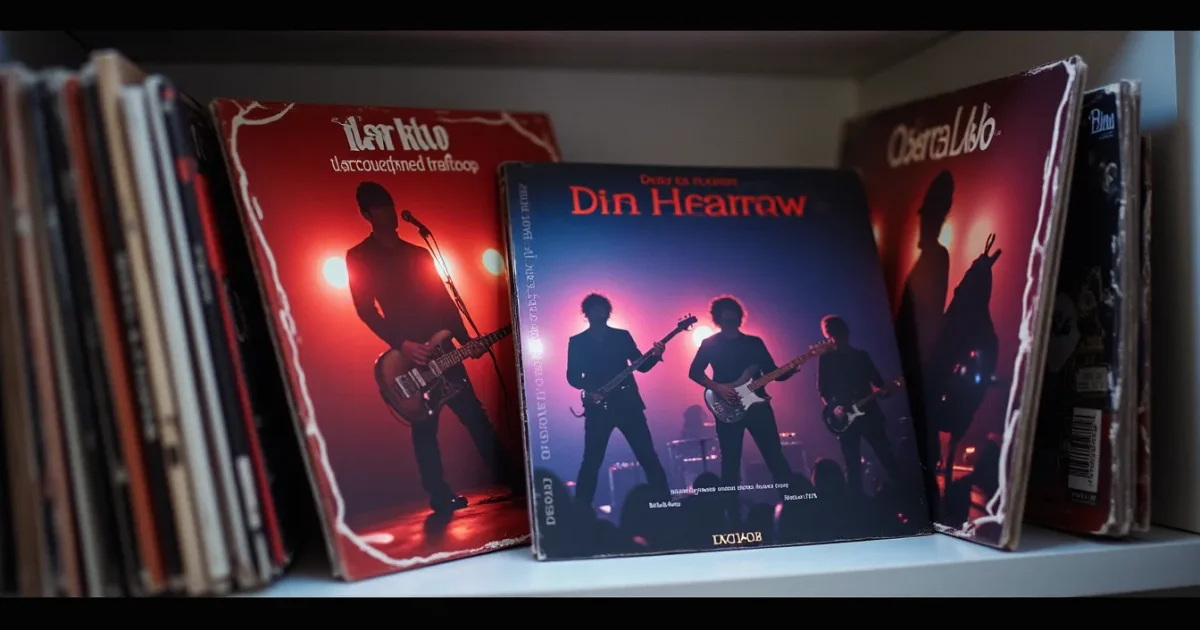
The role of Baby Records in Gazebo's career deserves separate mention. Paul Mazzolini recorded "I Like Chopin" in 1983 - a track with a piano hook, synth bass, and melancholic vocals that became the standard of italo-disco. Baby Records provided distribution through CGD and licensing abroad - the single reached the top-10 in Germany, France, and Scandinavia. For the label it was the first international breakthrough of this scale; for Gazebo it was the career peak that would never be surpassed.
Beyond vocal disco, Baby Records invested in instrumental music. Stephen Schlaks - an American pianist whose instrumental albums were released on the label. Rondò Veneziano - a Venetian ensemble combining baroque with disco rhythm; their releases on Baby Records had greater commercial success in Germany than in Italy. Rondò Veneziano were a unique phenomenon: an ensemble in 18th-century costumes playing parts recorded on synthesizers - a classic crossover that Baby Records managed to sell to both Italian and German audiences. Kimera - a singer whose opera-pop recordings sold in significant quantities in Asia. This was a strategy that distinguished Baby Records from its Milanese competitors: Naggiar did not limit himself to one genre.
Mixage and compilations
In 1983 Baby Records launched Mixage - a series of dance compilations that gathered tracks from the label and licensed numbers from other artists. Mixage became one of the first Italian disco compilations aimed at a mass audience rather than DJs: each release contained 10-14 tracks in edited versions ready for home listening. It was followed by Bimbomix - a series for a younger audience, with children's songs in dance arrangements. Both series were released regularly through the end of the 80s and formed a separate revenue stream - compilations sold better than individual singles on a declining market.
Mixage compilations had a side effect too: they introduced Italian audiences to tracks that Baby Records had not released as singles in Italy. P. Lion with "Happy Children" (1983, originally released on Discomagic Records) appeared on Mixage compilations, as did other artists from outside labels. This expanded Baby Records' perceived catalog without the need to release individual singles - a strategy that other Italian labels later adopted.
"Highway To Freedom" and Fahrenheit 104
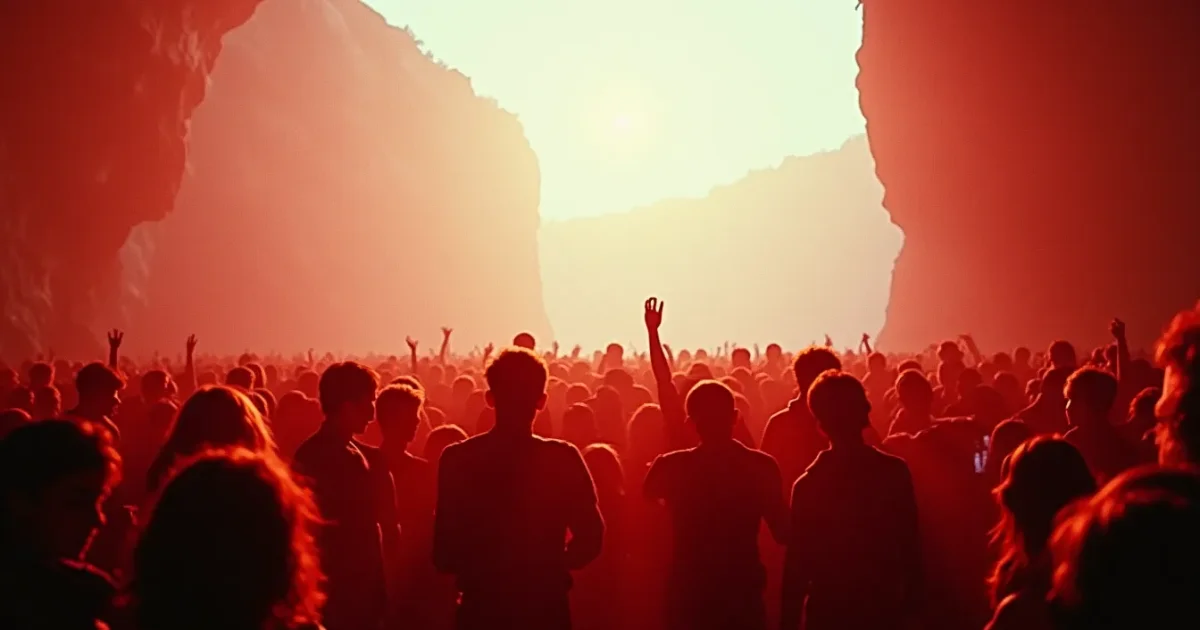
In 1986 Baby Records released an unofficial label anthem - "Highway To Freedom" performed by the project Fahrenheit 104. The lineup included the label's artists, producers, and composers: Tom Hooker, Maurizio Vandelli, Dario Farina, and Jane Hill. The video was shot in a chalk quarry in Kent (England) - among thousands of participants appeared Eddy Huntington. It was a promotional gesture: Baby Records showed its roster power in one project and one video, uniting vocalists, producers, and composers under one brand.
International distribution and export
Distribution through CGD gave Baby Records access to Italian retail, but for international export the label worked through licensing deals. Den Harrow and Gazebo records came out in Germany through BMG Ariola (1988-1990), in Scandinavia through local distributors. La Bionda had separate distribution in Germany through Munich labels. This was the typical model for Italian independent labels of the 80s: strong domestic distribution plus targeted licenses abroad.
Rondò Veneziano is a separate export story. Their albums on Baby Records were released in Germany under the name "Rondò Veneziano" (in Italy - "La Serenissima"), and in England and the US the label transferred licensing rights to local partners. In Germany Rondò Veneziano sold better than any italo-disco star on Baby Records - the baroque-disco crossover found an audience that had no interest in vocal disco.
By the end of the 80s Baby Records ventured into television production and the international market. Successful releases of the 90s included "Once Upon a Time" by Down Low and "Only You" by Rappers Against The Racism - both tracks reached chart positions in Germany. The label had ceased to be a purely Italian disco label and turned into an international production company.
Spargo, Stefano Pulga, and the studio ecosystem
Baby Records was not only a label but also a studio center. Stefano Pulga - a producer and keyboardist who worked on the label's releases - was part of the studio team that shaped the sound of Den Harrow and Albert One. Spargo - an Italian disco group whose track "You and Me" (1981) became one of the first Italian disco hits in the Netherlands - was also released on Baby Records. Pino Presti - a bassist and arranger who worked with La Bionda and other label artists. The Baby Records studio ecosystem was closed-loop: the same musicians, arrangers, and engineers worked on releases by different projects, giving the label's catalog a unified sound. When Den Harrow recorded a single, the engineer at the console might be the same person who worked on a Spargo track or a Stephen Schlaks instrumental album. This consistency was a commercial advantage: a buyer who knew Baby Records from one hit could pick up another release from the label and get a similar sound.
1994: Baby Records International
In 1994 Baby Records changed its name to Baby Records International and expanded operations to Germany, England, and North America. By then the original italo-disco catalog had stopped generating revenue - the genre was dead, and CD reissues brought no significant profit. Naggiar reoriented the company to new genres: hip-hop, pop production, television projects. The era of Baby Records as an Italian disco label had ended. The original address on Via Timavo, where Gazebo and Den Harrow tracks were recorded and mixed, closed along with the genre.
What remains of the catalog
Original Baby Records vinyl releases - singles and albums by Den Harrow, Gazebo, La Bionda, Albert One - are today the subject of collector demand. The print and graphic quality at Baby Records was higher than at competitors: Naggiar invested in covers and design. This makes creased copies a rarity - most surviving records are in good condition. Mixage compilations also hold value: they contain versions of tracks that were not released on individual singles - alternative mixes and edits.
For those who collect Italian disco, Baby Records is one of the essential labels alongside Discomagic Records and Memory Records. The difference is that Baby Records did not start with disco but with Italian pop and arrived at the dance market through La Bionda. This was reflected in the catalog: Baby Records released instrumental albums by Stephen Schlaks and baroque-pop by Rondò Veneziano, impossible to imagine on a purely disco label. Freddy Naggiar built a company where disco was one direction, not the only one - and it was this diversity that distinguished Baby Records from competitors who started and ended with italo-disco. Twenty years, one address in Milan, three distributors, and a catalog where "I Like Chopin" stands next to baroque Rondò Veneziano.