

1985, West Germany. The trio Silent Circle releases the single "Touch in the Night" - a German Eurodisco track that would become the group's calling card and one of the genre's most recognizable hits. Vocalist Martin Tychsen (stage name Jo Jo Tyson), keyboardist and composer Axel Breitung, drummer Jürgen Behrens (CC Behrens) - three people who first played together in 1979, split up, and reassembled in the early 80s. "Touch in the Night" is the group's second single after "Hide Away - Man is Comin'!", and it is the one that put Silent Circle on the European disco map.
Silent Circle before "Touch in the Night"
Silent Circle first assembled in 1979 but quickly disbanded. In the early 80s the trio reunited and began working toward a more sustainable format. The first single - "Hide Away - Man is Comin'!" (1985) - drew attention but did not break into the charts. German Eurodisco labels were looking for hits with a direct pop hook and a memorable chorus - and "Touch in the Night" answered that demand.
Axel Breitung is the group's key figure. As keyboardist and composer, he wrote the material and built the arrangements. After the success of the first singles, Breitung stepped back from public performances - he was replaced by Harald Shaefer - and focused on writing and producing songs. This was the typical German Eurodisco model: the creative centre is one person, while live performances are fronted by a different lineup.
Detail: Silent Circle worked with labels Ariola and Blow-Up (a division of Intercord Company). In 1987 two singles - "Danger Danger" and "Oh, Don't Lose Your Heart Tonight" - were released on Teldec. The label change in 1987 coincided with an attempt to refresh the sound.
"Touch in the Night": how the track is built
"Touch in the Night" follows the formula of German Eurodisco in 1985: four-on-the-floor kick, synth bass in sixteenth notes, pad swells, and a melodic hook on the synthesizer. Tychsen's vocal - a male voice in the middle register with reverb - is typical of German dance pop of the mid-80s. The chorus is melodically simple, built around the repeating phrase "Touch in the Night," which is easy to remember after a single listen.
The key is minor, the tempo around 120 BPM - the standard corridor for Eurodisco of that period. The structure is verse-chorus-verse-chorus-break-chorus, with an instrumental interlude before the final chorus. This is not the Italian italo-disco formula with extended intros and dub sections - the German approach was more radio-oriented: the track opens with vocals, not a minute-long instrumental prologue.
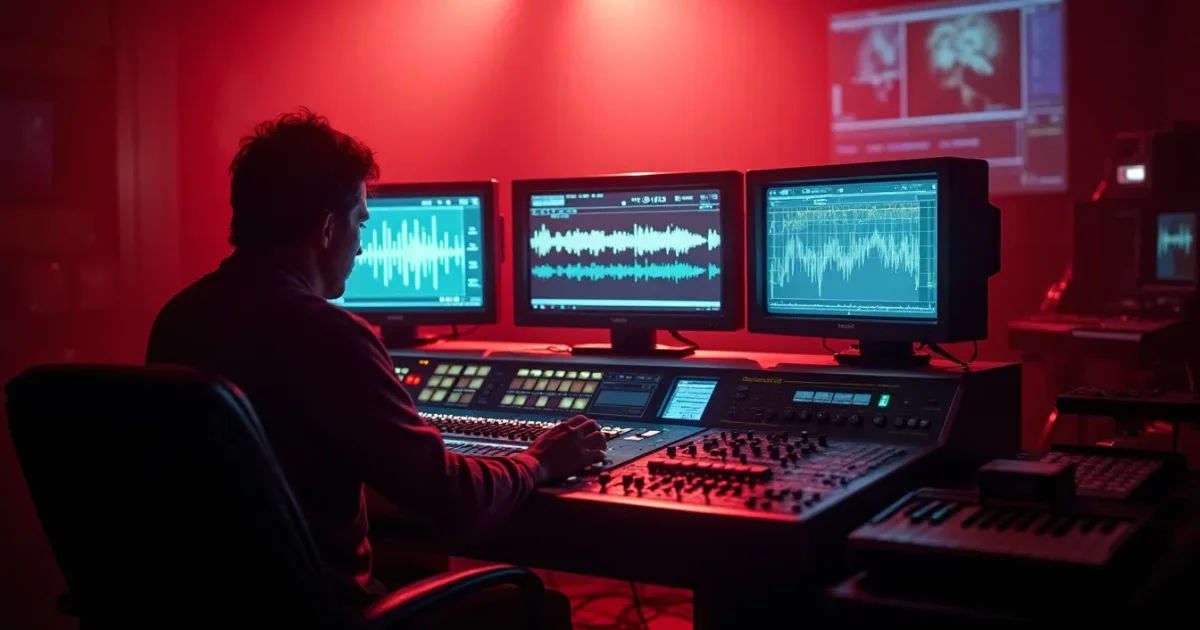
The instrumentation of "Touch in the Night" reflects the standard of a German studio in 1985: Roland and Yamaha synthesizers, a Roland TR-808 or LinnDrum drum machine, a sequencer for the bassline. Axel Breitung, as keyboardist and composer, programmed the synth parts and built the arrangement. Tychsen's vocal was recorded with reverb - a standard Eurodisco technique where the voice needs to sound "deep" and "spacious." The mix was denser than the Italian approach: more bass, less air, a more direct attack. This makes the track recognizable even without the title - German Eurodisco sounds different from Italian, and "Touch in the Night" is a textbook example.
The album "No. 1" and the Silent Circle catalog
In 1986 Silent Circle released their first album - "No. 1", consisting of 11 songs. The album came out on the Blow-Up label, a division of Intercord Company. "No. 1" collected the singles from 1985-1986 and new tracks: "Stop the Rain" / "Shy Girl," "Love Is Just a Word," "Time for Love." This was the standard approach for German Eurodisco groups - the album as a collection of already-released singles plus filler.
"Touch in the Night" was the album's lead track and its main commercial argument. Buyers who knew the group from radio rotation got the album with the same track plus ten more songs in a comparable style. For collectors today, "No. 1" is the key Silent Circle release: the original vinyl pressing on Blow-Up is uncommon. The album was released in several versions for different markets: the German pressing on Blow-Up, editions for Scandinavia and the Netherlands through local distributors. The catalog numbers differ, but the tracklist is identical - 11 songs, "Touch in the Night" at number 1.

After "Touch in the Night": singles and labels
Silent Circle continued releasing singles through the end of the 80s. In 1987, "Danger Danger" and "Oh, Don't Lose Your Heart Tonight" came out on Teldec - both with a modified sound, closer to the Italian formula with extended instrumental sections. "Moonlight Affair" (1987) continued the same line. In 1989 "I Am Your Believer" and "What a Shame" were released - but by then Eurodisco was losing its market, and the singles went unnoticed despite Breitung's quality arrangements.
In 1990 Silent Circle released a second album - 10 songs, two of which were 1987 singles and two were remixes. By then the genre that created the group was in decline, and 90s Eurodance had not yet taken shape. The pause in new material stretched to 1994, when the album "Back" with 12 new songs was released. By then the musical landscape had changed: Eurodance, house, and techno dominated clubs, and German 80s Eurodisco was perceived as retro. "Back" attempted to update the group's sound but produced no commercial result - the market that once bought "Touch in the Night" had moved on.
Russian popularity
Silent Circle hold a special status in Russia and the former USSR. "Touch in the Night" is included in most retro-80s compilations and dance retro playlists that shaped the Russian-speaking audience's perception of Western 80s music. Russian reissues appear on Discogs: "Turbo Disco" (2002), "The best" (2010) - local compilations for the CIS market. The group continues to perform, and their official website silentcircle.de maintains activity. In 2024 the compilation "The Second: Singles 1985-1989" was released, collecting singles from that period.
Place in German Eurodisco
Silent Circle is a textbook example of German 80s Eurodisco: a trio, studio sound, one composer-arranger (Axel Breitung), a vocalist-frontman (Martin Tychsen), a drummer (Jürgen Behrens). They can be compared to Bad Boys Blue or Fancy - the same model: German label, German studio, melodic Eurodisco with male vocals. The difference is in the melodic material: Breitung wrote more atmospheric, nocturnal tracks than his competitors. "Touch in the Night" - a title that sets the mood: nocturnal, melancholic, but with a dance rhythm.
The connection between Silent Circle and italo-disco is terminological. The group's genre is more often defined as Eurodisco rather than Italo Disco, but in the practice of the 80s music market the boundary was conditional. Italian and German projects used the same synthesizers - Roland Jupiter-8, Yamaha DX7, Roland TR-808 - the same studio techniques, and sold through the same distribution networks in Germany and Scandinavia. Silent Circle is the German voice of the same sonic world inhabited by Savage, Ryan Paris, and Den Harrow.
Why "Touch in the Night" outlived the other singles
Of all Silent Circle singles, it is "Touch in the Night" that has stuck in collective memory. The reasons are melodic and structural. The chorus is built on a descending melodic phrase that resolves on the tonic - creating a sense of completion and memorability. The title phrase "Touch in the Night" repeats three or four times in the chorus, fixing it in the listener's memory after one or two plays. The group's other singles - "Stop the Rain," "Love Is Just a Word," "Time for Love" - are melodically no weaker, but lack the same instant hook.
Another factor is contrast. "Touch in the Night" begins with a relatively quiet verse and builds dynamics toward the chorus, where the full synthesizer arrangement kicks in. This "quiet-loud" contrast is not a new invention, but Breitung applied it within a dance track format where dynamics are usually constant. The result is a track that works on the dancefloor, in radio rotation, and in home listening. It is a versatility that none of the group's other singles managed to replicate, even though Breitung wrote at least twenty songs for Silent Circle over their career.
"Touch in the Night '98" and the late career
In 1998 Silent Circle reissued "Touch in the Night" as the "'98" version - a remix tailored to 90s Eurodance standards, with a faster tempo and a reworked bassline. The reissue was part of a wave of 80s-hit remixes that German labels were running. That same year the album "Stories 'bout Love" with 12 new songs came out - the first album of new material since 1994. The group continued releasing compilations and reissues in the 2000s and 2010s, and in 2018 released updated versions of "2 Night" and "Every Move Every Touch" - studio re-recordings of classic material.
For vinyl collectors, the original 12-inch maxi-single of "Touch in the Night" from 1985 is the primary target. The 90s and 2000s CD reissues are common but contain remixes, not the original arrangement. Silent Circle is an example of a group where one single outlived the entire remaining catalog: "Touch in the Night" plays in retro playlists today, while the other 11 tracks from the "No. 1" album are known only to collectors. But for most listeners, Silent Circle is one phrase, one chorus, one 1985 night track that needs no introduction. And there is nothing wrong with that - not every song is meant to outlive its decade.