
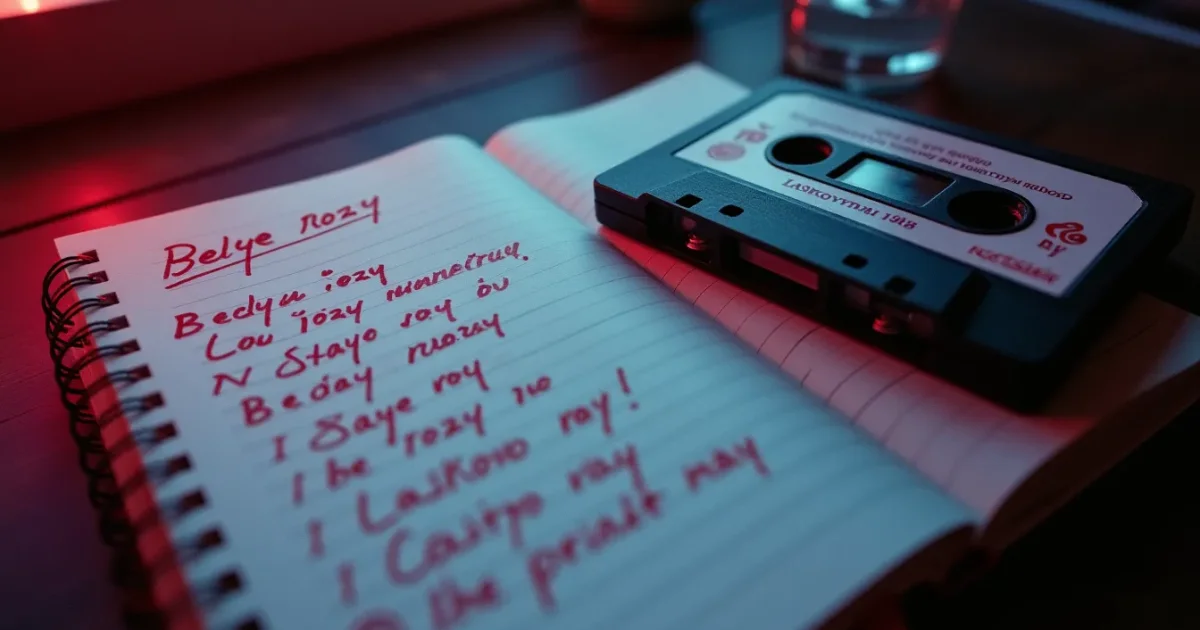
1986, Orenburg. Sergei Kuznetsov returns home from the first performance of the group Laskovyy Mai - a New Year's concert at Boarding School No. 2. The next morning he picks up a red pen and writes the song "Belye rozy" (White Roses) in 15 minutes. Yura Shatunov, who will sing it, is 13 years old. Two years later, in 1988, the album "Belye rozy" will be recorded at the SPM Record studio in Moscow, and in January 1989 the music video will air on Utrennyaya pochta (Morning Post) on Central Television - and the group will instantly become a national sensation. "Belye rozy" "Laskovyy mai" is a search query that gets 13,119 impressions per month in Russian Wordstat: the song has lived for 38 years and has not lost its recognisability.
Who wrote "Belye rozy"
The music and lyrics of "Belye rozy" were written by Sergei Borisovich Kuznetsov - composer, poet, keyboardist. Born 6 January 1964 in Mednogorsk, Orenburg region. At 12 he found a detonator, suffered clinical death, and spent three months in hospital with bandaged eyes - that was when he discovered the group Space. He later became a fan of Modern Talking. At 13 he worked as a cinema mechanic at a rest home, where there was a piano - on it he learned to play Space songs and began composing his own melodies. At 16 he failed to enter music college because he did not know notation. A year later he completed music school in one year - a five-year course done externally.
Kuznetsov ran a music club at Orenburg Boarding School No. 2. The director, Valentina Tazekenova, brought wards from the Akbulak children's home, including 18-year-old bassist Vyacheslav Ponomaryov. Kuznetsov and Ponomaryov decided to form a teenage group and looked for a singer aged 12-13. Ponomaryov suggested Yura Shatunov - a boy with a good ear. They drove for him at night. The first performance of Laskovyy Mai took place on 28 December 1986. The group's name was taken from the lyrics of the song "Leto" (Summer): "But tender May will take its rights…"
According to Kuznetsov himself, "Belye rozy" was written the morning after the first concert. The original manuscript - in red pen on a notebook page - was kept at Kuznetsov's home. In 2013 he said that the flowers in the song are an allegory for people who are discarded after they have been used and are no longer needed.
Recording: two versions of one album
The album "Belye rozy" is the second studio album by Laskovyy Mai. It has two recording versions. The first was recorded on 18 February 1988 in Orenburg by Sergei Kuznetsov - at the House of Children's Creativity, which housed the group's unofficial rehearsal space. This version is known as "Laskovyy Mai-1". There were few instruments: a synthesizer, a simple arrangement, a teenager's voice.
In the spring of 1987 the group performed at a children's-home festival with the song "Tayushchiy sneg" (Melting Snow). The jury, made up of Soviet officials, did not like a teenager singing about love - and Kuznetsov was fired from the boarding school. He worked at the Orbita community centre until autumn 1987, then was asked back to run discos. For the New Year holidays Kuznetsov recorded a backing track - a "minus". With it the group sounded much better. This was the technology that would become Laskovyy Mai's signature: performing to a backing track, in stadiums.
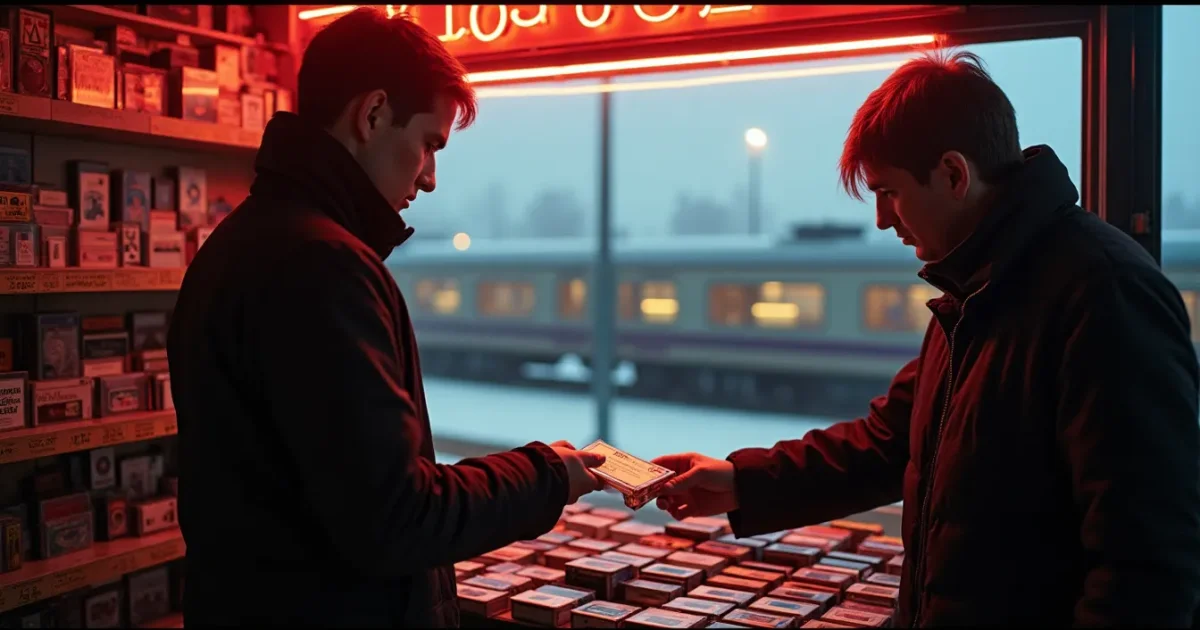
Kuznetsov handed the cassettes to a seller at a kiosk near the Orenburg railway station. The recording began to travel the country - by train, through resellers, through underground copying. Without a label, without a print run, without Melodiya. The Soviet cassette infrastructure worked without a formal market: the station kiosk replaced distribution, and the train replaced retail. When Razin later said he handed out cassettes on trains, there was no need - they were already spreading on their own. Razin had a different experience: he had appeared on Utrennyaya pochta in 1985. With Laskovyy Mai he bet on television, not on street distribution.
In 1988 the recording was heard by Andrei Razin - the administrator of the group Mirazh, who worked at the Moscow Studio of Popular Music "Record" under the USSR Ministry of Culture. According to another version, the cassette was brought to Moscow by Arkady Kudryashov. Razin came to Orenburg, took Kuznetsov and Shatunov to Moscow, and the album was re-recorded in better quality at the SPM Record studio - on 1 October 1988. This second version was titled "Belye rozy" and became canonical.
What's on the album
Genre: pop music and eurodisco. Total duration: 28 minutes 49 seconds. Six tracks, all written by Sergei Kuznetsov:
- "Belye rozy" - 5:21
- "Ya otkrovenen tolko lish s lunoy" - 3:33
- "Leto" - 3:29
- "Pust budet noch" - 5:21
- "Nu chto zhe ty" - 4:51
- "Sedaya noch" - 6:14
Labels: the Pioneers' House (Orenburg) for the first version, SPM Record (Moscow) for the re-recording. Language: Russian. Previous album - "Pervyy albom" (1987), next - "Medlenno ukhodit osen" (1988).
The Melodiya vinyl single
In 1989 the Melodiya label released a 7-inch vinyl single at 33⅓ rpm - catalogue number S62 28083 003. Side A - "Belye rozy", side B - "Sedaya noch". This was the first official vinyl publication of Laskovyy Mai - after the song had already spread across the country on cassettes. Vinyl came last, but it cemented the canonical status: Melodiya was the only state label of the USSR, and getting on it meant official recognition.
Music video and television
The video for "Belye rozy" was shot in late 1988. It was first shown in January 1989 on an episode of Utrennyaya pochta (Morning Post) on Central Television. Razin bet on television - he had experience with Utrennyaya pochta as far back as 1985. The bet paid off: the song had an enormous effect, the group instantly became a national sensation, and the songs were heard everywhere.
During the winter holidays, from 28 December 1989 to 10 January 1990, Laskovyy Mai gave 13 sold-out solo concerts at Moscow's Olimpiysky sports complex with the programme "White Roses - White Winter…". Instead of tickets to the New Year's tree celebration, thousands of girls bought tickets to see their favourite group. In other cities the number of concerts reached eight a day, over forty a month. According to some reports, about 47 million concert tickets were sold in the first five years - the group was entered into the Guinness Book of Records. For more on how Soviet pop intersected with European electronic sound, see the article on Soviet synth-pop.
Poland and international life
"Belye rozy" was popular in Poland from the late 1980s. In early 2008 the singer Natasha Urbanska performed the song at a New Year's concert broadcast on two central Polish TV channels. In July 2008 the Ukrainian group "TiK" released a Ukrainian-language version, "Bili trojandy", included on their album "Tykhiy". The song remains popular in Poland: it is played in restaurants and at festive events.
What happened to the song next
In 2009, on a wave of renewed popularity tied to the 1990s nostalgia trend, the Russian biographical film "Laskovyy Mai" was released - with the slogans "Millionaires from the orphanage" and a line-up of Andrei Razin, Sergei Serkov, Andrei Kucherov and Sergei Lenyuk. The film brought the songs back into mass circulation: "Belye rozy" sounded again on radio and in retro programmes. On Channel One, in the programme "DOstoyanie REspubliki", "Belye rozy" became the viewers' choice.
Laskovyy Mai broke up in 1992. Kuznetsov had left earlier - on 7 March 1989, due to a conflict with Razin. Shatunov left Razin in 1991. But "Belye rozy" outlived both the group and the split: the song remained in Shatunov's repertoire for decades. In 2009 the group reappeared on stage with Razin, Serkov, Kucherov and Lenyuk. In 2019 Dima Bilan released the song "Pro belye rozy" - the lyrics reference "Belye rozy" and other hits of the late 1980s. Later it was covered by Yura Shatunov himself. Mikhail Shufutinsky, the group "Steklovata" (created by Kuznetsov himself), Sergei Minaev and Vladimir Markin (parody "Belye kozy") - each found their own way to work with the song. A detailed breakdown of covers is in the article on the history of "Sedaya noch" and its covers, and in the overview of Russian synth-pop.
Detail: Kuznetsov wrote "Belye rozy" while tipsy, by his own admission. The morning after the first concert - 15 minutes, a red pen, a notebook page. The original was kept at his home for over 25 years.
Kuznetsov and Shatunov: the ending
On 17 June 2022 Shatunov won back the rights to several Laskovyy Mai songs. Forensic analysis proved that Kuznetsov's signature on the contract with Razin had been forged. On 23 June 2022 Shatunov died in Domodedovo. Kuznetsov died on 7 November 2022 in Orenburg - 137 days later. On 15 February that same year they performed together at Shatunov's concert in Orenburg. In the last years of his life Shatunov helped Kuznetsov financially and took some of his new songs. At one concert he said that Laskovyy Mai was only Sergei Kuznetsov and Yura Shatunov.
"Belye rozy" was written in 15 minutes with a red pen on a notebook page, recorded on a synthesizer at the House of Children's Creativity, distributed through a station kiosk and published on Melodiya vinyl under catalogue S62 28083 003. Every link in this chain is a fact, not a legend. Another song from this repertoire is available in the breakdown of the "Sedaya noch" remix. Kuznetsov said the flowers in the song are an allegory for people who are discarded when they are no longer needed. 13-year-old Shatunov sang about it in a way the whole country heard.