
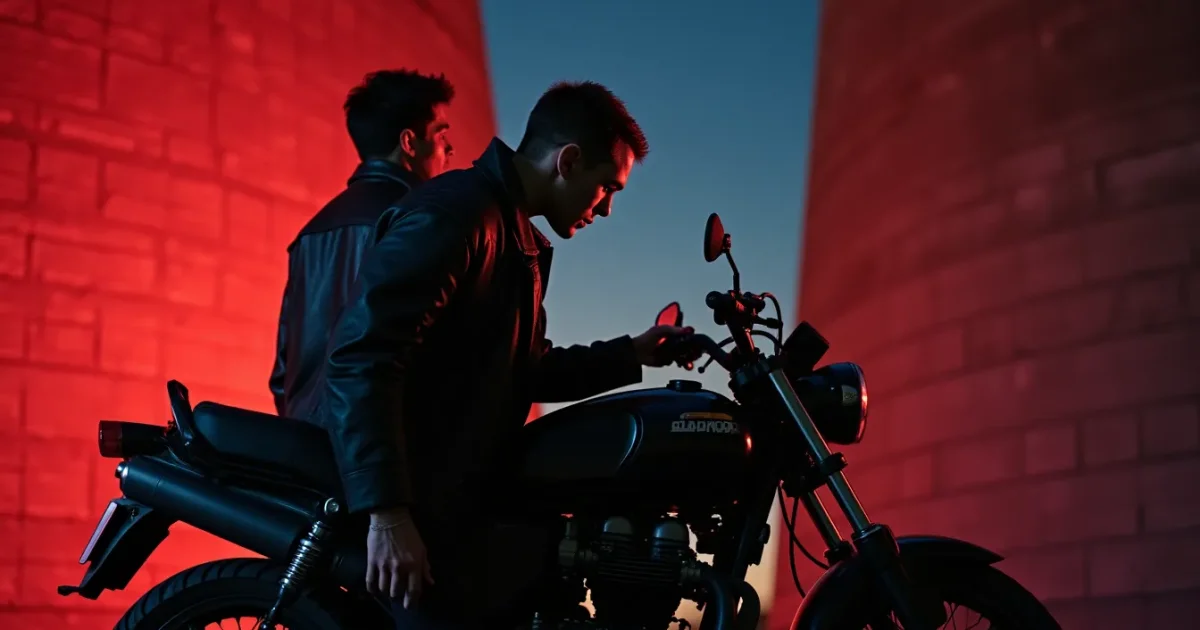
August 24, 1991, two days after the failed putsch. Bogdan Titomir shoots the video for "Delai kak ya" ("Do As I Do") in a single night on the grounds of the "Trekhgornaya Manufaktura" power plant on the Krasnopresnenskaya embankment in Moscow. The lyrics were written by German Vitke, the music by Alexander Ivanov; Titomir is the performer and the ideologist of the "High Energy" project. The song will come out on the "Gala" studio compilation "Megamix '91" in September, and the full version will land on the debut album "Vysokaya Energiya" in 1992. According to iTunes, the album is dated January 1, 1992; the genre is hip-hop.
"Kar-Men" before the solo career
Bogdan Petrovich Titomir was born on March 16, 1967 in Rostov-on-Don. In 1989, while a student in the directing department of the Moscow Institute of Culture, he started earning money at the "Record" studio, making arrangements for the group "Laskovyi Mai" on commission from Andrei Razin. He then worked as a session musician - playing drums for Dmitry Malikov, where Sergey Ogurtsov (Lemoh) played keyboards. In October 1989, Titomir and Lemoh created the exotic-pop duo "Kar-Men," which became known for the hits "Parizh, Parizh" ("Paris, Paris"), "London, Good-Bye!" and "Chio-Chio-San."
In the autumn of 1989, during a performance at a cafe, the producer Arkady Ukupnik noticed the duo. Learning that the artists wrote their own words and created "music built on an octave bass," Ukupnik invited them to record at his "Gala" studio. On January 1, 1990, "Kar-Men" signed a three-year contract with the "Gala" studio and began recording their debut album. In March 1990, the magnetic album "Vokrug Sveta" ("Around the World") was released - a conceptual album dedicated to foreign lands: Nagasaki, Siberia, Delhi, Istanbul, Paris, London, a hotel in Riccone, New Orleans, New York, the Bahamas. Ten songs in the genres of electropop with heavy guitar riffs and hip-hop elements. According to Roman Ryabtsev of the group "Tekhnologiya," Lemoh used two Korg M1 digital synthesisers simultaneously, which allowed him to make denser arrangements.
Based on the results of 1990, the newspaper "Moskovsky Komsomolets" named "Kar-Men" "Best Group of the Year," and their magnetic album "Vokrug Sveta" was chosen "Best Phonogram of the Year." The group received several awards: "Shlyager-90" (1990), "50x50" (1991), "Zvyozdny Dozhd" (1991), "Ovatsiya" (1991). But by the spring of 1991, Lemoh's and Titomir's visions for the project's future had diverged: Lemoh stuck to the "exotic pop" style, while Titomir proposed using hip-hop elements. The last concert of the duo with the dance machine took place in Chernigov on May 12, 1991.

Summer 1991: meeting German Vitke
In the summer of 1991, at the Gala Records studio in the "Avtomobilist" House of Culture, Titomir met German Vitke, who wrote the lyrics to "Delai kak ya" for him and suggested the musical direction. Vitke showed him two MC Hammer clips, after watching which Titomir was fired up to do something similar. The music for this song, as well as for all the other songs on the debut album, was done by Alexander Ivanov. After recording the song, Titomir approached the producer Sergey Lisovsky to get a budget for his "High Energy" project.
German Vitke and the MC Hammer influence
Vitke in 1991 was not just a songwriter but the person who set the direction. From May to August 1991, he wrote the lyrics for "Delai kak ya," "Kaif," and others for Titomir. The two MC Hammer clips he showed Titomir are, in all likelihood, "U Can't Touch This" (1990) and "Pray" (1990), Hammer's two biggest hits of that period. The direct influence is there: dance rap with a repeating hook, an eighth-note bass line, a video with tight choreography. Structurally, "Delai kak ya" is closer to "U Can't Touch This" than to anything in the Soviet repertoire: a short intro, spoken verses, a repeating hook in the chorus, a dance break in the instrumental. The tempo is around 100 BPM - below standard eurodance, but above spoken rap. It is a middle ground on which a Soviet audience in 1991 could accept rap as dance music rather than as exotica.
- Lyrics: German Vitke
- Music: Alexander Ivanov
- Performer: Bogdan Titomir
- Recording: summer 1991, Gala Records studio, DK "Avtomobilist"
- First release: compilation "Megamix '91" (September 1991)
- Album: "Vysokaya Energiya" (1992)
Detail: the phrase "Hey, buddy, look at me. Do as I do!" was perceived in 1991 as the motto of a new generation - not a metaphor, but a quote that the magazine "OM" six years later would call defining for the era.
The clip in one night: August 24, 1991
The video for "Delai kak ya" was shot in a single night on August 24, 1991, two days after the putsch, at the "Trekhgornaya Manufaktura" power plant on the Krasnopresnenskaya embankment in Moscow. The clip was shot by the company Red Video, which the year before had shot the video for "London, Good-Bye!" for "Kar-Men," and the year after "Sex Without a Break" for the group "Malchishnik." The director was Mikhail Khleborodov, the cameraman Mikhail Mukasey.
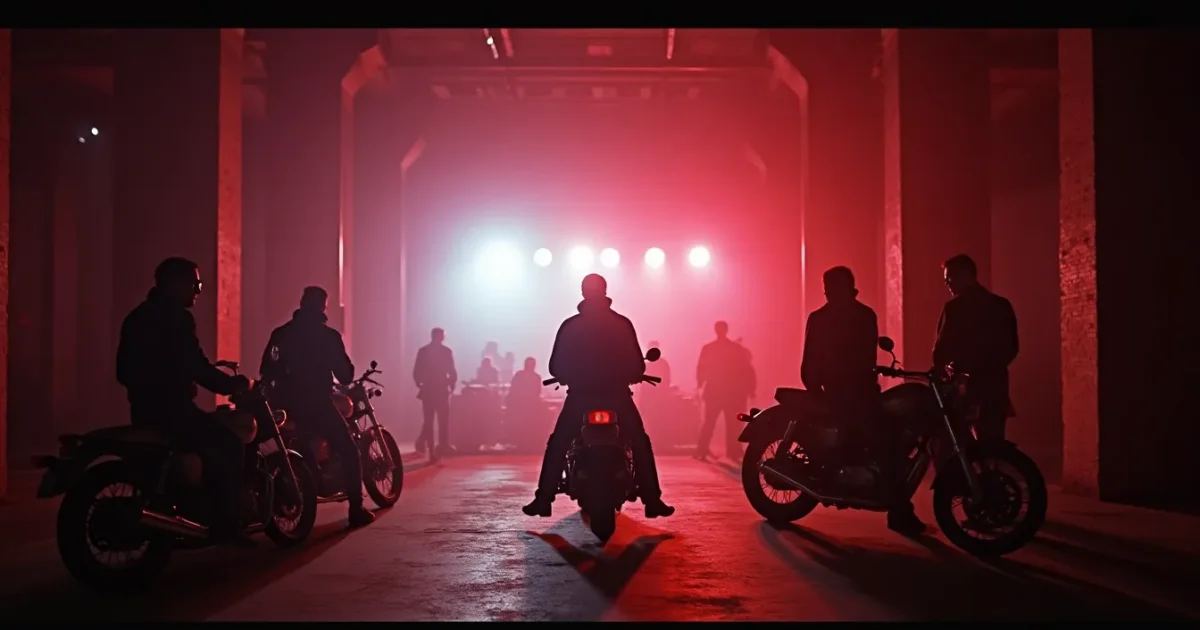
According to Khleborodov, Titomir arrived at the shoot on a motorcycle borrowed from the "Nochnye Volki" ("Night Wolves") biker club, in exchange offering them a part in the shoot. About a hundred motorcycles arrived at the factory toward morning, when the film had already run out. The cameraman Mukasey shot them without film, saying nothing to the bikers. This is not an anecdote but the production reality of a night shoot on exhausted film - and that reality became part of the clip's image.
Rotation on 2x2 and the reaction
The song quickly became ultra-popular, repeatedly topping hit parades; the channel 2x2 played the clip several times a day in prime time. In 1997, the magazine "OM" named "Delai kak ya" the highest achievement in the artist's career. According to the internet project Moskva.FM, "Delai kak ya" is Titomir's most popular radio track, with 168 thousand listens over the seven years from 2008 to 2015.
Titomir was variously called in the media "the first hip-hop performer," "the founder of Russian hip-hop," and "the founder of rave culture in Russia." These are not self-descriptions but journalistic labels - yet they say that "Delai kak ya" was perceived as a starting point: not just a hit, but the song after which Russian-language rap got a mass audience. In 2007 and 2008, two new clips for the song were shot in Ukraine. In 2011, Titomir performed it at the anniversary of "Song of the Year." In 2013, Eva Polna performed the song in the image of Bogdan Titomir on the show "Odin v Odin!" - the performance was approved by Titomir himself and the jury. In 2022, Vanya Chebanov presented his version in the image of Button on the show "Fantastika" - the song continued to live in television covers thirty years later.
The album "Vysokaya Energiya" and what came after
The debut album "Vysokaya Energiya" ("High Energy") was recorded at the Moscow "Gala" studio and released in April 1992. According to iTunes, the release date is January 1, 1992; the genre is hip-hop. The music for all songs on the album was done by Alexander Ivanov, the lyrics by German Vitke. The album included, besides "Delai kak ya," the songs "Yerunda" ("Nonsense"), "Devochka v Krasnom" ("Girl in Red"), "Noch Razluki" ("Night of Separation"), and others - and the whole set worked as a single statement: Soviet rap transferred into the format of a dance album, with production at the level of the "Gala" studio. Titomir signed a two-year contract with the producer Sergey Lisovsky and released two albums: "Vysokaya Energiya" (1992) and "Vysokaya Energiya II" (1993), which included "Delai Kak Ya (Part II)." In 1995, the third album, "Samaya Bolshaya Lyubov" ("The Greatest Love"), was released - less dance, more lyrical.
In 1996, Titomir left for the USA for three years. In 1999, he took up DJing, performing in clubs under the name "DJ Bo." In 2006, he released the album "Svoboda" ("Freedom") with the title track "Zhizn Tak Korotka" ("Life Is So Short"). In 2010 - the double album "Nezhny i Gruby" ("Gentle and Rough"), in 2011 - "Ochen Vazhny Perets" ("Very Important Pepper"). In 2020, he won the TV project "Superstar! Vozvratshenie" ("Superstar! The Return") on NTV and presented a new version of "Delai kak ya" together with Karina Kox. In 2021, the album "RMX" was released with another version of "Delai kak ya" (release December 31, 2021, per iTunes). Titomir is the author of the catchphrase "Pipl Khavaet" ("The People Eat It Up," 1993) - an aphorism that became an independent cultural fact, detached from both the song and the author.
The original vs. the cover: what matters
This article follows the original song and its recording history. The catalogue’s later treatments are separate recordings.
For a concrete example, see Disco Magic’s cover of Masterboy’s Feel the Fire. Titomir was called in the media "the founder of Russian rap" - and his 1991 song was indeed the first Russian-language rap hit to receive all-Union rotation. From "Kar-Men" to the eurodance of 1992 and on to eurodance groups - that is the road on which "Delai kak ya" stands as a point of transition: not yet eurodance, no longer exotic pop, but precisely the recording that opened the door to Russian-language dance rap.