
In October 1981 Journey released a single off their Escape album. It climbed to #9 Billboard Hot 100 and, by all appearances, settled into a respectable rock-career life. For 25 years it sat in the shadows. Then, in June 2007, in the final 30 seconds of The Sopranos finale, HBO did the thing that flipped “Don't Stop Believin'” into the most popular 1980s rock song on digital streaming platforms - with 12 million US copies sold and 4+ billion Spotify streams.
Small town, streetlight people
“Don't Stop Believin'” was written in early 1981 at Oakland's Fairmont Hotel by three writers: Steve Perry (singer), Jonathan Cain (keys, just joined the band), and Neal Schon (guitar, co-founder). The song's origin story belongs to Cain.
In a 2014 Songfacts interview Cain said: “I was in Los Angeles in 1977 looking for work as a session pianist. Badly. My dad called from Chicago and said, „Don't stop believing. I know you'll make it". I remembered that line. Four years later we're writing a song with Steve and I pull out a note with that line on it. We decided: this is the chorus”.
The rest of the lyric sketches three characters hoping their lives will begin: “just a small town girl, livin' in a lonely world”, “a city boy, born and raised in South Detroit”, “a singer in a smoky room, a smell of wine and cheap perfume”. Perry later explained in a 2008 interview: “„South Detroit" doesn't exist - it's fiction. Detroit is divided into Northwest, Northeast, Southwest, Southeast. „South Detroit" sounded right in the line. Geographically it's probably Windsor, Canada - across the border”.
“„South Detroit" is not a place. It's a state. It's any town on the edge of America you want to leave.”
- Steve Perry, Billboard interview, 2008
Why the structure is unusual
A typical pop song goes: intro → verse → chorus → verse → chorus → bridge → chorus → end. “Don't Stop Believin'” breaks the template.
Intro - 44 seconds of keyboard pre-melody (Yamaha CP-70, an electric piano). Verse one - 40 seconds. Then verse two, 40 seconds. Then verse three - again. The chorus “Don't stop believin'” doesn't arrive until 3:22 - a minute and 48 seconds after the verses began. And it only repeats twice.
This is a song where the chorus occupies the last 50 seconds of a 4:10 track. Most radio stations in 1981 refused to play it for exactly this reason - “too long a build”. But the album format (Columbia let it stay as-is) and FM radio saved it.

Instrumental anatomy
- Key: E major
- BPM: 120
- Length: 4:10 (album), 3:51 (single)
- Keys: Yamaha CP-70 Electric Grand (the sound you hear on the intro) + Hammond B3
- Guitar: Neal Schon on a Gibson Les Paul Standard through a Marshall JMP
- Bass: Ross Valory on a Fender Jazz Bass
- Drums: Steve Smith on a Tama kit
- Recorded at: Fantasy Studios, Berkeley, California
- Producers: Kevin Elson and Mike Stone
- Album: Escape (July 1981) - #1 Billboard 200 the week after release, 9 million US copies
Chart history: 1981 vs. 2007
The single dropped on 12 October 1981. By February 1982 it peaked at #9 Billboard Hot 100. UK - #62. Not a record-breaker.
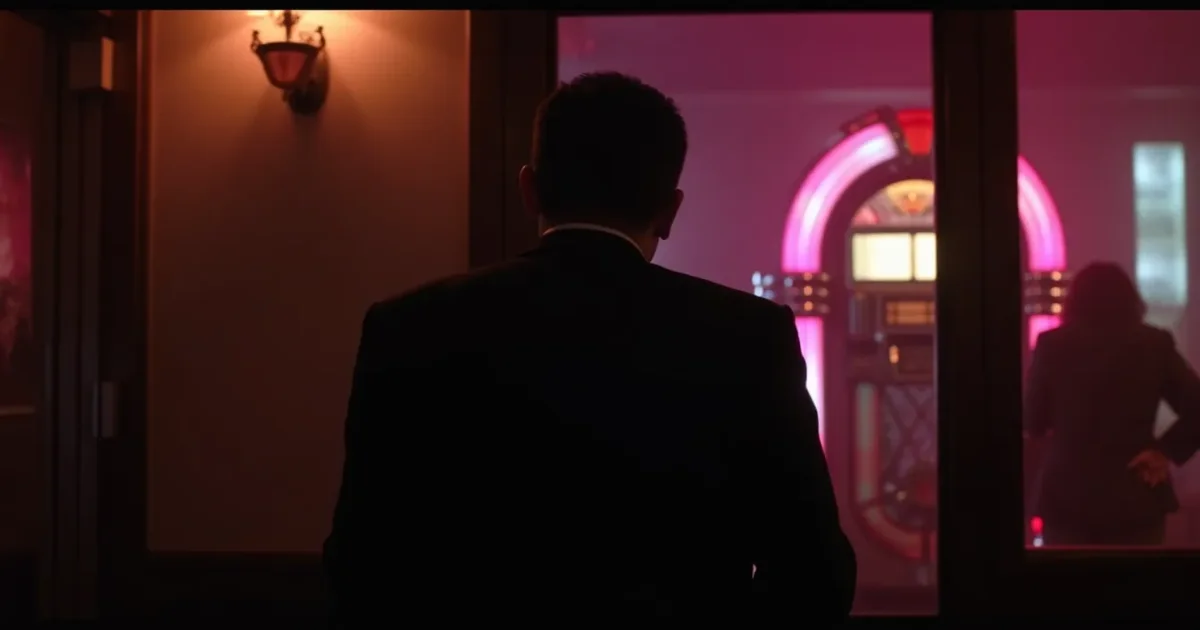
Everything changed on 10 June 2007. That evening HBO aired the final episode of The Sopranos. In the last three minutes Tony Soprano sits in a diner with his family. A jukebox plays. Tony browses tracks and selects “Don't Stop Believin'”. The song starts. A suspicious man enters. The door chimes. Meadow parallel-parks. Cut to black. End of series.
12 million viewers watched that episode live. On Tuesday 12 June “Don't Stop Believin'” entered iTunes top-10 - 26 years after release. By 2009 the song was the biggest-selling rock track of all time on digital platforms (3 million paid US downloads). By 2024 - 4.7 billion Spotify streams.
Glee, Rock Band, and a second life
In 2009 the show Glee used “Don't Stop Believin'” as the closing song of season one - a new arrangement by the McKinley High choir. That version hit #4 Billboard Hot 100, 28 years after the original.
In 2008 the video game Rock Band put “Don't Stop Believin'” in as a flagship track. That spiked popularity among teens of the 2010s. In 2019 TikTok audiences used it in “hope in hard times” memes - 6 months added another 800 million Spotify streams.
Total financial impact of the Sopranos finale for Journey: according to a 2019 Billboard estimate, “Don't Stop Believin'” royalties delivered each of the three co-writers (Perry, Cain, Schon) more than $50 million since 2007.
Why the song works across wildly different audiences
In 1981 “Don't Stop Believin'” was a male rock ballad about hope. In 2007 it was a song about the fragility of happiness (Tony Soprano listens to it 30 seconds before a likely death). In 2009 a Glee high-school choir sings it as an outsiders' anthem. In 2020 TikTok plays it over COVID-lockdown memes.
One quality ties them together: the object of belief is unspecified. “Don't stop believing” - in what? The song doesn't say. That leaves a hole the listener fills with their own dream.
Perry in 2017, after 25 years of silence (he left Journey in 1998 over health), released a solo album and told Rolling Stone: “The song is not about me. It's about whoever is listening. Every time someone sings it at karaoke - it becomes their biography”.
What to listen to next
For the “album-rock” aesthetic of 1981, cue up Journey “Don't Stop Believin'” → Foreigner “Waiting for a Girl Like You” (1981) → Bonnie Tyler “Total Eclipse of the Heart” (1983). All three - “long build + big chorus”, different singers, different orchestral densities.
To hear how Jonathan Cain developed the “small town, big dream” theme in subsequent years, try “Lights” (1978, his first Journey hit) and “Faithfully” (1983). Four Cain-led Journey songs 1978-83 form a tight biographical arc: from “small town” to “dream” to “exhaustion”.