
On 2 March 1989 Pepsi-Cola launched a $5 million ad starring Madonna. The song in the ad was her brand-new single “Like a Prayer”. Five days later the song's music video premiered. A week later Pepsi cancelled the contract and pulled the ad from TV. But the single was already running - and ended up #1 on Billboard for three weeks, selling 4 million copies and cementing Madonna as the decade's most controversial pop star.
The $5 million Pepsi contract
In early 1989 Pepsi-Cola was hunting for “the star of the decade” for a major brand campaign. Michael Jackson was already under a $10M Coca-Cola deal (since 1984). Pepsi went with Madonna. The contract: $5 million plus royalties on branded merchandise. Terms: Madonna records an exclusive clip for Pepsi that airs in the ad before her official music video.
The scheme looked good for everyone. Pepsi got the hottest star first. Madonna got $5M and free global TV promotion. The official Mary Lambert video was supposed to air a few days after the Pepsi spot.
There was one miscalculation: nobody at Pepsi watched the official video in advance. They were only shown the “smoothed out” ad version of Madonna dancing with a children's choir. The official video was nothing like it.
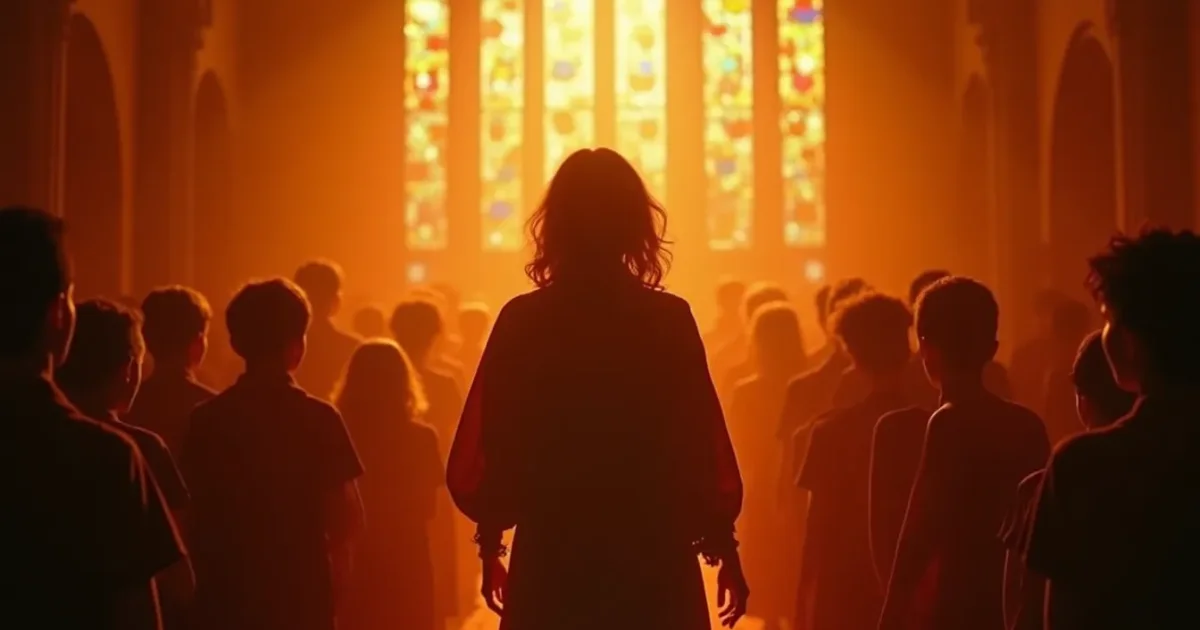
Mary Lambert's video: burning crosses, a kiss with a saint
Director Mary Lambert had been working with Madonna since 1984 (“Like a Virgin”, “Material Girl”). For “Like a Prayer” Lambert proposed fusing two images: a love story in a backwoods Southern town and a vision inside an African-American Baptist church. The video shows:
- A scene where a white man watches white police beat a Black man, but stays silent
- Madonna eventually testifies, identifying the real killer - a white man
- Burning crosses on a lawn (KKK reference)
- Madonna kissing a Black saint (actor Leon Robinson as Saint Martin de Porres) who comes alive off the statue
- Stigmata appearing on Madonna's palms
- A dance in front of the “Andraé Crouch Singers” - an African-American gospel choir brought in to record the backings
The video aired on 3 March 1989. Within a week the Vatican issued a formal statement calling the video “blasphemous”. Italian TV channels refused to air the Pepsi ad. US religious groups threatened a Pepsi boycott. On 11 March Pepsi cancelled the contract - but let Madonna keep all $5 million. Pepsi CEO Roger Enrico later wrote in his memoir: “It was one of the most expensive promotional decisions in advertising history. And one of the most successful for Madonna - she got everything”.
Recording: Smith Studios, Los Angeles, October 1988
Madonna and producer Patrick Leonard cut “Like a Prayer” at Smith Studios in Los Angeles in October 1988. Leonard had worked with Madonna since 1986 (“Live to Tell”, “Who's That Girl”). For “Like a Prayer” they set out to fuse gospel, rock guitars, and pop.
The song opens with a church chorale: a short a cappella fragment from the Andraé Crouch Singers. A one-second silence. Then a fuzz guitar (played by Dann Huff) kicks in with a rock riff, and Madonna enters.
The arrangement is more complex than a standard pop song:
- Church organ (Hammond B3) - on the verse
- Fuzz guitar (Fender Stratocaster + Tube Screamer) - on the chorus
- LinnDrum LM-1 + live congas
- 30-voice choir (Andraé Crouch Singers) - on the final chorus
- Bass - Randy Jackson (the future American Idol judge)
- Key: G minor, modulating to B-flat major on the last chorus
- BPM: 116, length: 5:39 (album), 3:56 (single)
“I wanted to make a song about love that sounds like a prayer. About desire that can't be separated from faith. That for me God and a lover are one thing.”
- Madonna, Rolling Stone, March 1989
Chart history and sales
The single dropped on 3 March 1989 with the video. By 22 April - #1 Billboard Hot 100 for three weeks. UK - #1 three weeks. #1 in 20 countries. The album Like a Prayer (21 March 1989) - #1 in 16 countries, 15 million copies worldwide.
The song got a 1990 Grammy nomination for Best Pop Vocal Performance (lost to Bonnie Raitt). In 2018 Rolling Stone placed it in their top-100 greatest songs of all time.
Why this was a pivot moment for Madonna
Before 1989 Madonna was a “pop provocateur” but within mainstream limits. “Like a Virgin”, “Material Girl”, “Papa Don't Preach” - all provocations inside pop discourse. “Like a Prayer” was a different scale: for the first time it combined three themes inside Madonna that had never been connected in pop before: racial justice, religious provocation, and female sexuality.
After 1989 Madonna turned from “just a pop star” into a cultural operator. Vogue (1990), Justify My Love (1990), and “Papa Don't Preach” 1986 now read in retrospect as the run-up to “Like a Prayer”. In 2008 she told Rolling Stone: “„Like a Prayer" was the moment I realised I could use pop for a serious conversation. Before that I was just singing”.
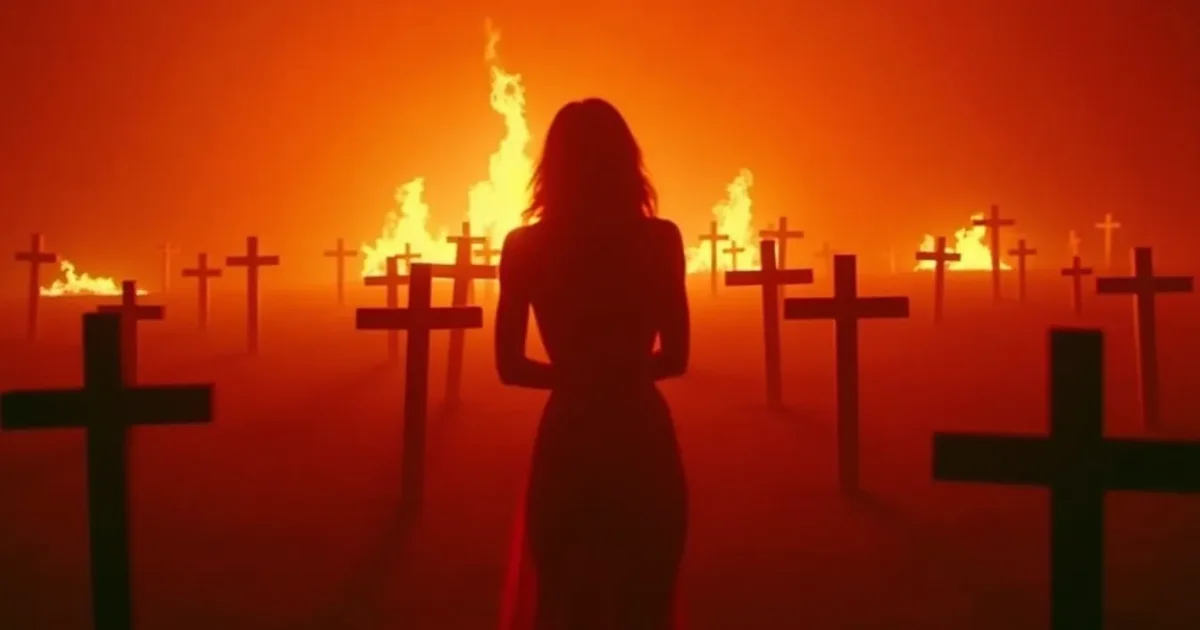
Legacy: “Like a Prayer” as a provocation template
After 1989 many pop artists used the same strategy: the bundle “religion + sexuality + race” in a single video to guarantee conversation. Lady Gaga “Judas” (2011), Beyoncé “Formation” (2016), Billie Eilish “All the Good Girls Go to Hell” (2019) - all of these clips reach back to “Like a Prayer”.
In 2021 Madonna released a remix of “Like a Prayer” with Donna Summer (posthumously) - Summer's vocal was pulled from unreleased 1979 duplicates. It took 30 years from the original release to that version. Madonna wrote on Instagram: “Donna taught me a pop star could be sacred. This song is her legacy as much as mine”.
What to listen to next
For the context of Madonna's 1980s run listen in order: “Like a Virgin” (1984) → “Papa Don't Preach” (1986) → “Like a Prayer” (1989). Three escalating provocations. All three run the same “moral panic as PR” engine.
To hear how Patrick Leonard (producer of “Like a Prayer”) developed gospel-pop elsewhere, try “Who's That Girl” (1987, Madonna), “Live to Tell” (1986, Madonna), and the Division Bell-era Pink Floyd sessions (1994). Same producer sensibility - organ + rock + pop structure.