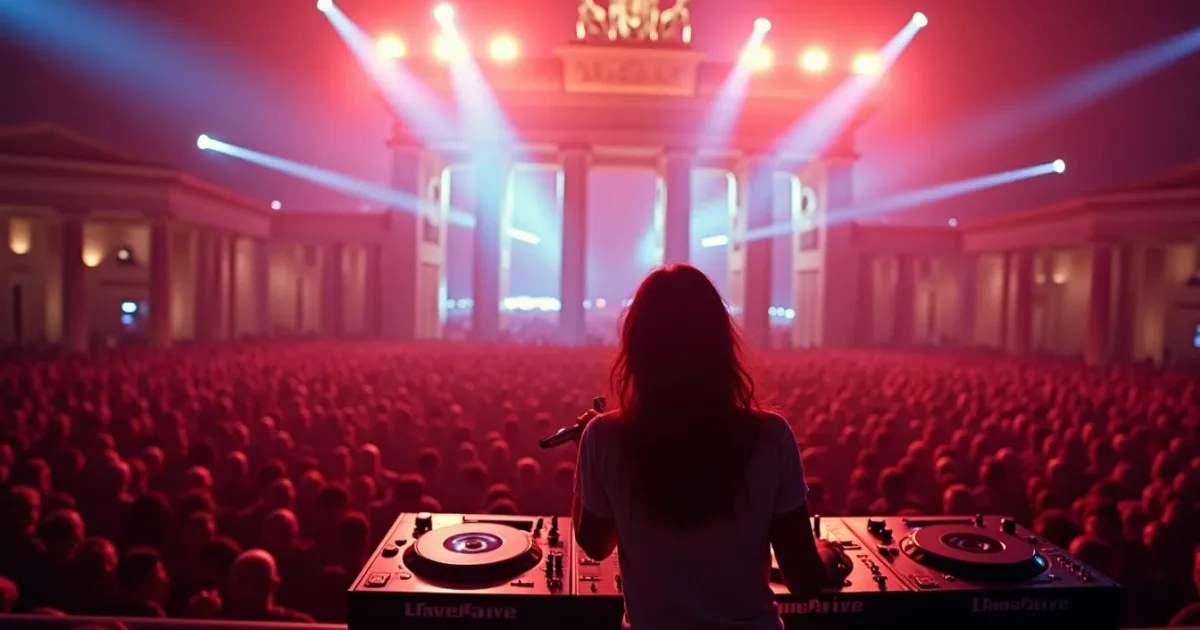
1990. In Frankfurt, producers Benito Benites and John "Virgo" Garrett III release "The Power" under the name Snap! - a track that will hit #1 in the UK, the Netherlands, Spain and Switzerland. This is the birth of Eurodance: rap verse, female chorus, a clear four-to-the-floor beat and 140 BPM. At the same time, in Detroit and Berlin, a very different sound is maturing - techno: long instrumental passages, synthesizer loops, minimal vocals, focus on the club floor rather than the radio. Both genres grew out of house and use drum machines, but they ask different questions. Eurodance asks: "Will you remember the chorus?" Techno asks: "Can you handle seven minutes inside one rhythmic loop?"
Where the two sounds came from
Eurodance formed in the late 1980s in Western Europe, especially Germany. In 1989 DJs Westbam and Dr. Motte founded the illegal Ufo Club in Berlin and launched the Love Parade. While techno parties were built for long trance states, Snap!, Culture Beat and 2 Unlimited took the same machines and turned them into pop singles.
According to AllMusic, Eurodance combines elements of rap, techno and Eurodisco. Female vocals on the chorus, male rap on the verse, melodic synthesizers, a simple bass line and a four-to-the-floor rhythm at 120-150 BPM - that is the formula. Lyrics, notes musicologist Nico Thom, are "characteristically hedonistic": romance, partying, short phrases.
Five audible differences from the first seconds
- Vocals. Eurodance is built around a memorable vocal: female chorus + male rap. In techno vocals are either absent or reduced to short samples ("I feel love," "Work that body").
- Structure. Eurodance is verse-chorus-verse-chorus-break, like a pop song. Techno is linear or cyclic, with development happening through texture change rather than section change.
- BPM. Eurodance is usually 120-150 BPM, often around 140. Techno occupies the same range but feels different because there is no vocal release and the drums are harder.
- Purpose. Eurodance was made for charts and radio. Techno is for clubs and parties; single edits are often just cuts from a long mix.
- Geography. Eurodance - Germany, the Netherlands, Belgium, Italy (Frankfurt, Amsterdam, Milan). Techno - Detroit → Berlin → across Europe, later Berghain and the underground scene.
A short history in dates
1977: Giorgio Moroder releases "I Feel Love" with Donna Summer, proving that dance music can be built entirely on synthesizers. 1981: Afrika Bambaataa and Arthur Baker record "Planet Rock," linking European electro and American hip-hop. 1985: in Detroit, Juan Atkins, Derrick May and Kevin Saunderson form the Belleville Three and lay the foundations of Detroit techno. 1987: Phuture from Chicago release "Acid Tracks," making the TB-303 iconic. 1988: after the fall of the Berlin Wall, Detroit DJs begin migrating to Berlin; Tresor opens its club. 1989: Westbam and Dr. Motte launch the Love Parade. 1990: Snap! release "The Power" and Eurodance enters the charts. 1991: Joey Beltram releases "Energy Flash" on R&S Records, plus "Mentasm," the sound later called the "hoover." 1993: 2 Unlimited "No Limit" and Culture Beat "Mr. Vain" take Eurodance to the peak of commercial success; meanwhile hardcore techno and trance crystallise in Berlin.
This timeline shows that techno is older as a scene, but Eurodance became mass-market faster. By the time Eurodance dominated radio, techno already had an underground infrastructure of clubs, labels and distributors. The two worlds ran in parallel, sometimes meeting on the same dance floors but rarely merging inside a single track.
Technology: same machines, different jobs
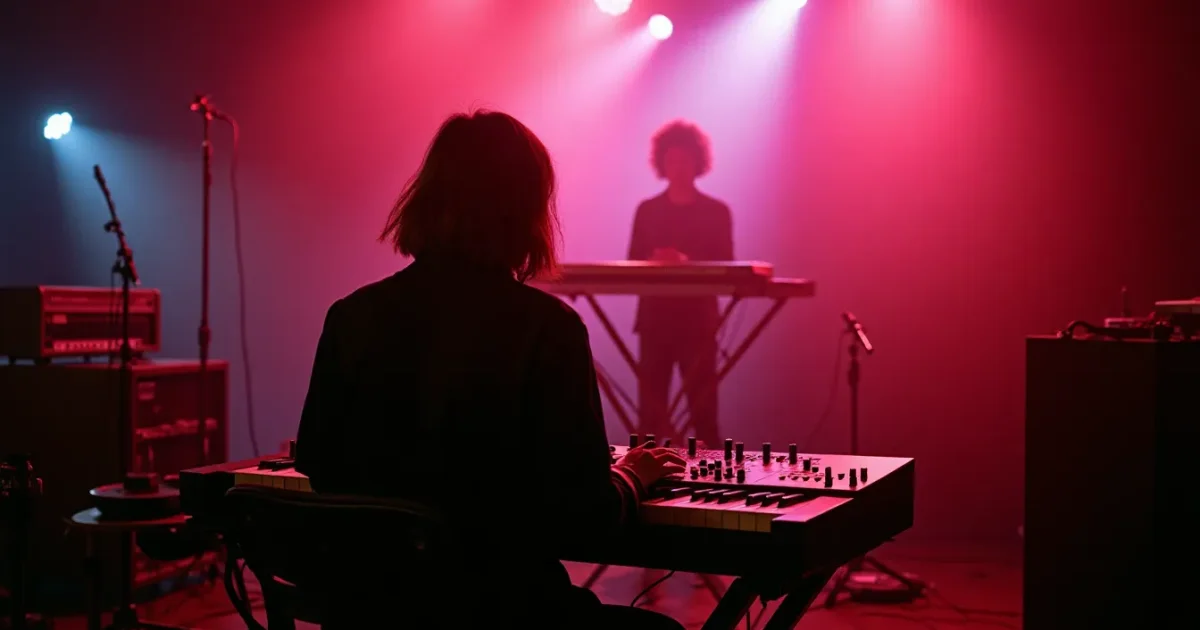
Both genres use the Roland TR-909, TR-808, Akai S900/S950, TB-303. The difference is what the machines are doing. In Eurodance the TR-909 supplies a clear dance rhythm, and the TB-303 may appear as an acid hook in the break. In techno the TB-303 is not decoration but a structural element, while the TR-909 runs with minimal variation so the dancer is not pulled out of the trance.
Eurodance adds a human vocal, often recorded by American or British session singers (for example, Penny Ford in Snap!, Nana in Haddaway, Anita Doth in 2 Unlimited). Techno, by contrast, tries to remove the human voice as "excess" information. Even when techno has a vocal, it is usually processed beyond recognition.
Examples that clear up the confusion
Snap! "The Power" (1990) is classic Eurodance: Turbo B's rap, Penny Ford's chorus, a sample from "King of the Beats," #1 in four countries. 2 Unlimited "No Limit" (1993) is the golden-era Eurodance template: 140 BPM, female vocal, male rap, a meme-worthy hook. Haddaway "What Is Love" (1993) is Eurodance that leans closer to a pop ballad with a dance beat.
On the other side are Joey Beltram "Energy Flash" (1990), Beltram "Mentasm" (1991) with its characteristic hoover sound, and Plastikman "Spastik" (1993). This is techno: no verses, no choruses, just a rhythmic loop and a slow evolution of sound. Play "The Power" and "Energy Flash" back to back and the difference becomes obvious even to a non-specialist.
Subgenres and varieties
Eurodance split into several national schools. German Eurodance - Snap!, Culture Beat, Masterboy - was marked by a crisp beat and "song" structure. Italian Eurodance, or Italo dance - Eiffel 65, Gigi D'Agostino - added melodic synthesizer hooks and sometimes humorous vocals. Dutch Eurodance - 2 Unlimited, Vengaboys - emphasised speed and meme-like choruses. Belgian Eurodance - Technotronic, Lords of Acid - often leaned closer to hip house and new beat.
Techno is not monolithic either. Detroit techno is melodic and futuristic, with cosmic pads. Acid techno is built on the sound of the TB-303. Hardcore techno pushes the tempo to 160-200 BPM with aggressive drums. Minimal techno strips the track down to rhythm and silence. Tech-house is a compromise between techno and house, with a softer groove. Trance grew out of techno but kept melody and emotional peak moments, becoming a bridge to commercial dance music.

Why the genres blur together
Both sounds grew at the same time, in the same clubs and on the same equipment. In 1992 Snap! released "Rhythm Is a Dancer" and Eurodance went mainstream; meanwhile a techno scene was developing in Berlin. Radio played Snap! and Culture Beat; clubs played Paul van Dyk and Westbam. For a listener in 1993 both were "German dance music," and the boundary seemed fuzzy.
Shared roots, different goals
Moreover, Eurodance borrowed techno elements: four-to-the-floor beat, 909, synthesizer riffs. Some borderline tracks - for example, Culture Beat "Mr. Vain" (1993) - sound almost like techno in their instrumental versions, but the chorus and rap push them back into Eurodance. Conversely, some 1992-1993 techno tracks with vocal samples could be mistaken for Eurodance by radio listeners. The line is not always sharp, but the direction is clear: Eurodance moves toward the song, techno moves toward trance.
How to tell them apart in practice
Play a track and ask three questions. First: is there a rap verse and a female-vocal chorus? If yes, it is Eurodance. Second: if you remove the vocal, does a memorable song remain? For Eurodance yes; for techno no. Third: does an interesting section last more than two minutes without changing section? If yes, it is probably techno.
Another clue is sleeves and videos. Eurodance videos of the 1990s: bright colours, aerobics, chroma key, dancers. Techno visuals: minimalism, strobes, industrial interiors, sometimes no video at all. Eurodance single sleeves often feature a photo of the vocalist; techno record sleeves favour abstract graphics or equipment shots. If the sleeve displays the artist's name in large type, it is probably Eurodance; if it is a black square with a catalogue number, it is definitely techno.
What to listen to next
For Eurodance start with the transition from disco to Eurodance, then 1992 as the year the genre took shape and the general guide to Italo disco and Eurodance. For techno it helps to know the Roland TB-303 and TR-909 story - TR-808 as the heart of the genre and TR-909.
Eurodance and techno today
In the 2000s Eurodance evolved into EDM and became more commercial: Scooter, Cascada and later David Guetta used the same chorus-plus-beat formula but scaled it up to arena shows. Techno, by contrast, stayed underground, although it gained mass forms - Berghain became a global brand, and festivals such as Time Warp and Awakenings draw tens of thousands. In the 2020s both genres live on in retro playlists and in production: many modern Italo Disco and synth-pop tracks use the TR-909 and TB-303, mixing song and trance.
For Disco Magic & valex77 this boundary matters: Eurodance-style covers and originals need a bright chorus and clear structure, while techno elements can only be added as a textural layer. If you make a 1990s-style track but forget the vocal line, you end up with trance rather than Eurodance.
Modern DAWs and plugins make it easy to reproduce both sounds: Arturia V Collection provides the TB-303, TR-909 and Prophet-5; Roland Cloud emulates the 808/909; Xfer Records Serum is convenient for hoover sweeps and acid riffs. But technology is only half the job; understanding the cultural function matters more. Eurodance speaks to a mass listener through melody, while techno speaks to a club community through rhythm.
In short: Eurodance and techno are two branches of the same tree. Eurodance kept the song; techno abandoned it. Remember that and any 1990s track will immediately fall into place.