

In May 1982 Duran Duran released “Hungry Like the Wolf” from the album Rio. In the UK it reached #5; in the US it peaked at #3 Billboard Hot 100 in January 1983. But the charts aren't the point. “Hungry Like the Wolf” is the first MTV success story in America for a British band. The clip, shot in the jungles of Sri Lanka for $35,000, was a pop-video revolution and proved to American media executives that European “new wave” bands could sell millions of albums in the US.
Recording: AIR Studios, London, January 1982
“Hungry Like the Wolf” was cut at AIR Studios in London (the same studio where “Rio” was simultaneously being made). Producer - Colin Thurston, who had worked with David Bowie on Heroes (1977). Thurston specialised in “spatial” sound - each instrument occupying its own distinct position in the stereo field.
The song was written collectively: Simon Le Bon (lyric, vocals), Nick Rhodes (keys, melody), John Taylor (bass line), Andy Taylor (guitar), Roger Taylor (drums). In a 1982 Smash Hits interview Simon Le Bon explained the title: “I read „Little Red Riding Hood" (the Brothers Grimm) as a child. The wolf from that story was for me a symbol of male aggression and sexuality. „Hungry like the wolf" is about hunting, about pursuit”.
The lyric is deliberately ambiguous: “I'm on the hunt, I'm after you” could be a romantic chase or a predatory one. Le Bon: “I wanted to write a song about a man chasing a woman through a city. It's scary and sexual at the same time”.
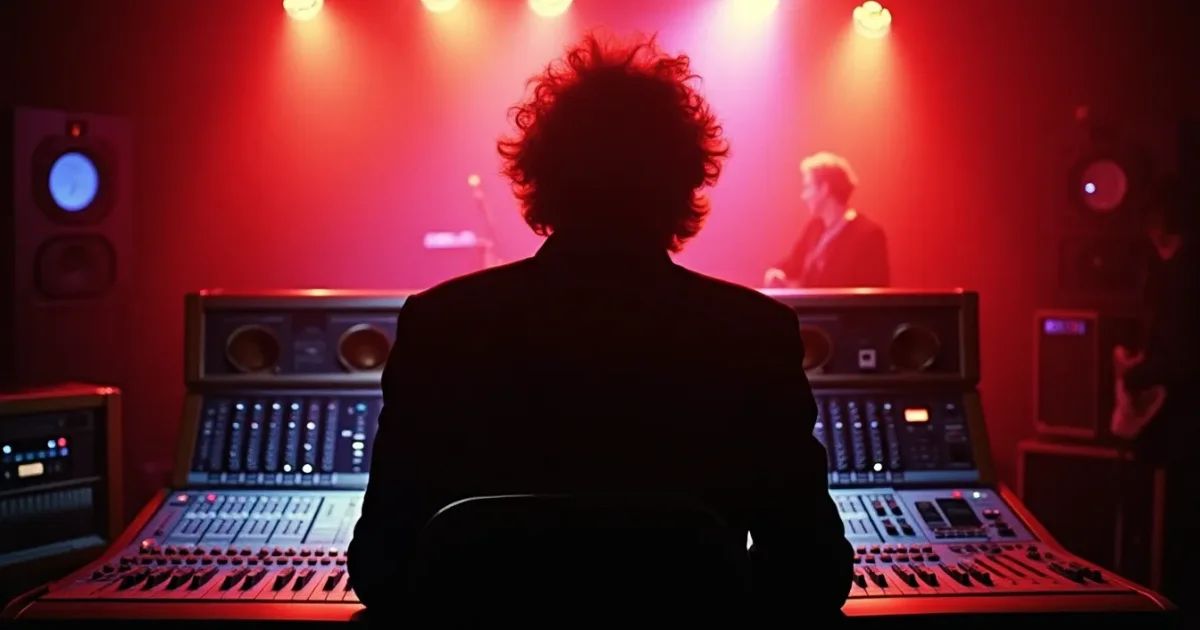
Sound anatomy
The key instrumental moment is John Taylor's bass line. On “Hungry Like the Wolf” (as on “Rio”) Taylor plays a melodic part in the upper register. It's not the typical “low-end” bass, but a line competing in melody with the vocal. The style is drawn from Bernard Edwards of Chic.
The delicate synth theme is Nick Rhodes on a Roland Jupiter-8. The “strings 1” preset with a light chorus effect. That theme bridges verse and chorus and gives the song a “romantic” tint even when the lyric turns aggressive.
Andy Taylor's guitar plays a sharp two-note riff on a stripped Gibson Les Paul through a Marshall JMP-1. It's a high-energy sound that contrasts with the melodic bass and soft synth.
One of the most recognisable moments is the female “whisper” on the intro. That's Simon Le Bon - he recorded a whisper and pitched it +3 semitones through an Eventide H949 Harmonizer to make it sound like a woman's voice.
- Key: B-flat major, modulating to D-flat major on the bridge
- BPM: 126
- Length: 3:41 (single), 3:55 (album)
- Album: Rio (10 May 1982, EMI)
- US sales: 1 million singles (Platinum)
- Worldwide: over 4 million
The Sri Lanka video: MTV's first big experiment
The “Hungry Like the Wolf” clip was directed by Russell Mulcahy (future director of Highlander, 1986). He was the same director behind the “Rio” clip. After “Rio”'s Antigua success Mulcahy proposed something more ambitious: shoot in the jungle.
They chose Sri Lanka. Budget - $35,000, four days of filming in May 1982 in the jungles around Pinnawala (known for its elephant sanctuary). Plot - Simon Le Bon searches for a woman in the jungle, meets a tribe, pushes through obstacles, finally finds her. An unofficial nod to Raiders of the Lost Ark (1981) with Harrison Ford.
The clip contains real elements that astonished 1982 audiences:
- Le Bon drinks from a puddle (actual jungle water)
- The band crosses a river with crocodiles (controlled shoot, but the crocodiles are real)
- Elephants in one scene - real, from the Pinnawala sanctuary
- Tribespeople - not actors, local villagers (paid $200 each, then the equivalent of six months' local wages)
“Mulcahy understood before we did: a clip is not a „song advertisement" but a standalone work of art. We shot „Hungry Like the Wolf" the way you shoot a film. MTV got a 3-minute adventure film they could play 10 times a day.”
- Simon Le Bon, Creem, 1983
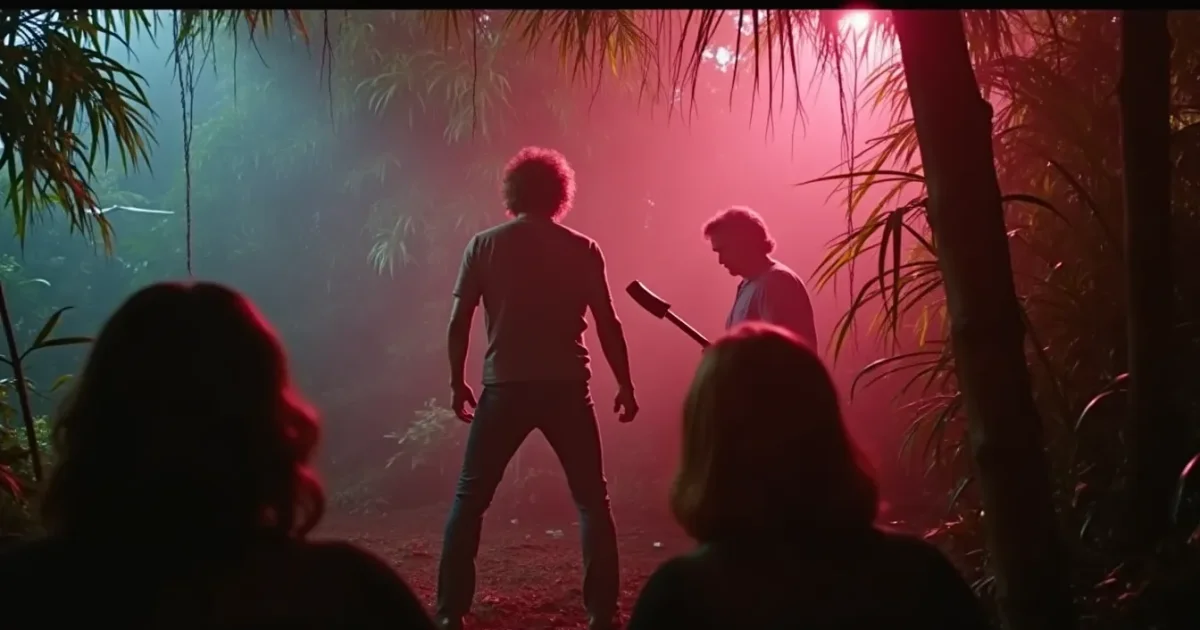
Chart history and MTV heavy rotation
The single dropped on 4 May 1982 in the UK - #5 UK Singles Chart. In the US it initially stalled: the June 1982 release peaked at only #80. Duran Duran were about to write off the American market.
Everything changed when MTV put the clip into heavy rotation in December 1982. By January 1983 the song climbed to #3 Billboard Hot 100 - eight months after release. It was the first time in American pop history that an MTV clip pulled a song out of failure and back into the top-5.
The effect on the industry was revolutionary. After it, British bands started mass-producing ambitious clips for American MTV: Eurythmics “Sweet Dreams” (1983), a-ha “Take On Me” (1985), Dire Straits “Money for Nothing” (1985). All of these follow Mulcahy's formula - plot, ambition, production value.
Grammy and legacy
“Hungry Like the Wolf” won the 1983 Grammy for Best Music Video, Short Form. It was the first Grammy awarded to a clip by a foreign director.
In 2011 Rolling Stone placed “Hungry Like the Wolf” at #465 on their 500 Greatest Songs of All Time. By 2024 the track had accumulated 500M+ Spotify streams.
The song has been cited in hundreds of films and TV shows. The most notable: Donnie Darko (2001), Zoolander (2001), Moneyball (2011), and Stranger Things season 3 (2019).
What to listen to next
For Duran Duran 1982-83 context: “Rio” (1982) → “Hungry Like the Wolf” (1982) → “Is There Something I Should Know?” (1983). Three songs from the same window, each with a visually ambitious clip. Duran Duran opened the door for British “new wave” to American success via MTV.
For the “clip as narrative film” parallel, listen to and watch a-ha's “Take On Me” (1985). Two clips, each of which became an 80s visual icon. “Hungry Like the Wolf” - through real jungles; “Take On Me” - through animation. Different techniques, one idea: a clip should be a film, not a commercial.