
March 1983, Rome: Paul Mazzolini, performing as Gazebo, releases the single “I Like Chopin” on Baby Records. The track becomes a continental phenomenon almost instantly: #1 in Germany for 6 consecutive weeks, #1 in the Netherlands, Switzerland, Austria, Belgium, Spain, South America, #1 Oricon in Japan. Total global sales by end of 1984: 8 million copies. The UK barely noticed the track; the US didn't release it at all. Continental Europe, however, got what would later be called the italo-disco canon: piano intro, Jupiter-8 string pad, LinnDrum clap, and melancholic vocals with an Italian accent. Pierluigi Giombini had already sketched that formula a month earlier on “Dolce Vita” by Ryan Paris. With “I Like Chopin”, it became the template.
Who Gazebo is
Paul Mazzolini was born on 18 February 1960 in Beirut into the family of Italian diplomat Gioacchino Mazzolini and American jazz singer Sue Quinn. He spent his first ten years moving between world capitals: Beirut, Brussels, Paris, Berlin, New York - his father relocated with each new diplomatic posting. In 1972 the family settled in Rome.
Mazzolini spoke English natively (from his mother), Italian as a second language. From 16 he played guitar and keyboards in Roman clubs. In 1978 he met composer Pierluigi Giombini at the club Easy Going. For four years they discussed the idea of “made-in-Italy English-language pop” until in 1982 Giombini brought a demo of “Masterpiece” - the first Gazebo single.
A detail: the stage name “Gazebo” came about by accident. In a November 1981 meeting with producer Babi Yamasaki, Mazzolini noticed a garden gazebo (Italian gazebo = “pavilion”) outside the window and said: “That'll do.” No conceptual weight was attached at first.
“Masterpiece” as a first run
Gazebo's first single - “Masterpiece” - came out in autumn 1982. It was a test of the Giombini formula: piano, Jupiter-8, English vocal, melancholy. Italian sales: #12 FIMI, German: #7. Good results, but not a breakthrough. Giombini and Mazzolini understood: they had to write simpler, more melancholic.
For the second single Giombini wrote a melody with a specific nod to Chopin - Prelude Op. 28 No. 7 in A major. Harmonically it's 16 bars of a simple chord move Am-Dm-G-C, but the melodic line of the vocal does echo the Chopin prelude. The title “I Like Chopin” was deliberately banal: Giombini wanted the name to register instantly.
Tracking at Mondial Sound
Recording ran January-February 1983 at Rome's Mondial Sound studio - the same room where Giombini cut “Dolce Vita” with Ryan Paris. Single budget: 32 million lire (about US$21,000 in 1983). Tracking took 9 days.
- Yamaha CP-80 - electric piano on the intro and verse, the signature “glassy” tone
- Roland Jupiter-8 - the chorus string pad with signature PWM
- Oberheim OB-Xa - octave bass
- LinnDrum LM-2 - rhythm, BPM 110 (slower than “Dolce Vita”)
- Yamaha DX7 - surface ornamentation (pre-production prototype lent by Yamaha for testing; the DX7 would ship commercially only in May 1983)
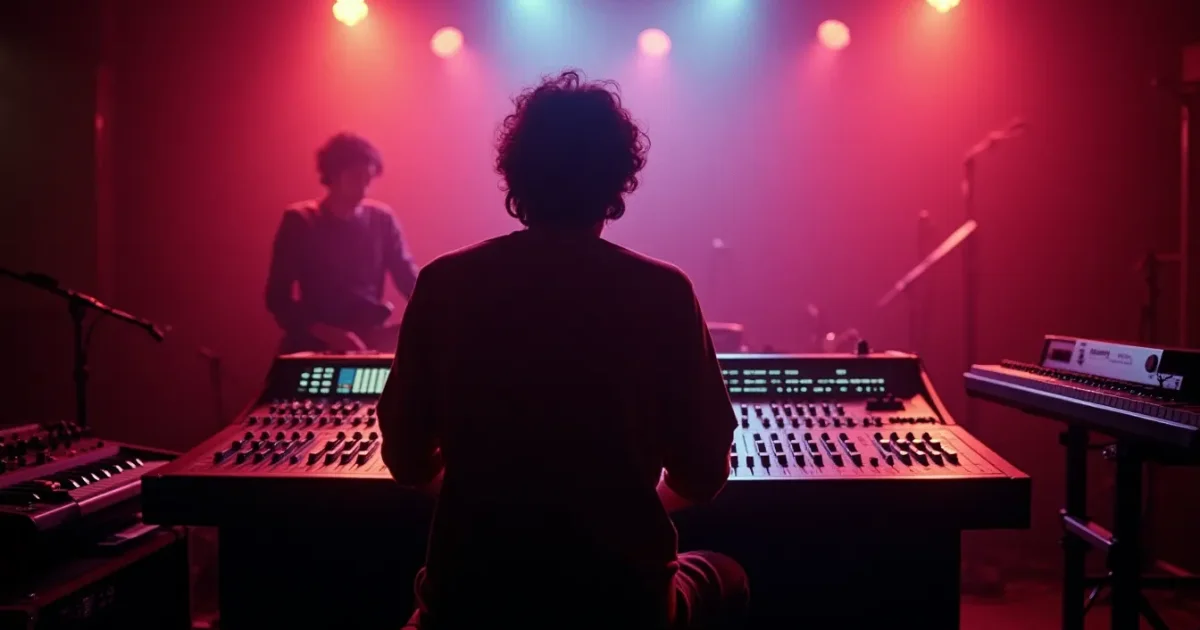
- Neve 8078 32-channel console - Mondial Sound's main desk
Mazzolini tracked his own vocals - no backing singers. The English lyric he wrote in 20 minutes during lunch break: standing at the studio window looking out on a Roman street, he came up with “Do you remember when we were living in Paris?” and wrote the rest around it.
How “I Like Chopin” took the continent
The single came out on 20 March 1983 in Italy. First week - #5 FIMI; by end of April - #1. In May Baby Records licensed the record to Germany via Metronome. The German press was unresponsive until radio host Thomas Gottschalk on Bayern 3 put the track into heavy evening rotation on 14 May 1983. A week later it was at #20 German; three weeks in, #1. In total it held German #1 for six consecutive weeks (15 June - 27 July 1983).
Then the chain reaction: #1 in the Netherlands (4 weeks), Belgium (3 weeks), Austria (5 weeks), Switzerland (4 weeks). By the end of summer - #1 Spain, #4 France. The Japanese run is particularly striking: in December 1983 the track took #1 on the Oricon International chart and held there for 12 consecutive weeks. Japan responded to its melodic character and “non-oriental” orientalism.
“I didn't understand why Germans loved this track so much. I kept asking German journalists - they didn't know either. Some said "nostalgia for Chopin, classical music is universal". Others said "it sounds like the end of a relationship". For me it was just a hit”, - Paul Mazzolini in Musikexpress, 1985.
The numbers
- Germany: #1, six weeks (June-July 1983); 3× gold
- Netherlands: #1, four weeks; 2× gold
- Austria: #1, five weeks; platinum
- Switzerland: #1, four weeks; gold
- Belgium: #1, three weeks
- Italy: #5 FIMI; gold
- Spain: #1, four weeks
- Japan: #1 Oricon, 12 weeks
- UK: did not enter the top 100
- US: not released
- Total sales by end 1984: 8 million copies
The album Gazebo (1983) sold 3.5 million copies, almost entirely on this one single's back.
Why Chopin?
In May 1983 musicologist Karl-Heinz Köhler at the Rhine University analysed the melodic structure of “I Like Chopin” and published a short note in Musikwissenschaft: “The first eight bars of the Gazebo vocal melody echo the second theme of Chopin's Prelude Op. 28 No. 7 almost exactly, transposed from A major to A minor”. Köhler asked whether this was coincidence or deliberate quotation.
Chopin's heirs (the Warsaw-based Fundacja Fryderyka Chopina) considered legal action in 1985 but declined: Chopin's melody had been public domain since 1899, and direct borrowing was not provable. Giombini in a 2010 interview admitted: “The Chopin prelude was in my head for weeks. I didn't copy it consciously, but it was sitting in my subconscious.”
Gazebo's career after
Mazzolini and Giombini tried to repeat the success:
- “Lunatic” (September 1983) - #2 Germany, #5 Italy
- “Love in Your Eyes” (1984) - #14 Germany
- “Telephone Mama” (1984) - #18 Germany
- “Troppo Italiano” (1987) - did not enter the top 50
In 1989 Mazzolini and Giombini fell out over royalty shares and stopped working together. Gazebo continued solo without Giombini, releasing 14 albums, but none matched 1983. By 2024 he lives in Rome and still plays nostalgia festivals. Giombini works as a film soundtrack composer for Italian cinema.
Place in the italo-disco canon
“I Like Chopin” is the moment italo-disco got a recognisable signature melodicism. Before 1983 italo-disco was mostly an export of the Moroder Munich Sound recipe - sequenced arpeggios, synthetic bass. Giombini added lyricism: piano arpeggio verse, melancholic major chorus, English lyric with Italian accent. This formula - melanconia italiana - became the foundation of the genre for the next five years.
Related: “Dolce Vita” Ryan Paris, “Self Control” Raf and Laura Branigan, “Major Tom” Peter Schilling. In 2021 the British group Indiana released a remake of “I Like Chopin” that hit the top 40 of the German dance chart. By 2024 Spotify streams of the original - over 240 million. A 2023 TikTok revival of 80s italo-disco brought the track back to attention: the #ilikechopin hashtag hit 45 million views in three months. “I Like Chopin” travelled from an Italian radio hit of 1983 to 2020s meme-nostalgia without changing a single note.