
In June 1984 the 30-year-old Cyndi Lauper released the second single from She's So Unusual. If the first single - “Girls Just Want to Have Fun” - was an ironic feminist manifesto, “Time After Time” was its direct opposite: a quiet love ballad. And it became the first #1 Billboard Hot 100 of Lauper's career. The song held the top for two weeks (June 1984) and remains one of the most-covered songs in history - more than 500 cover versions, including Miles Davis (1985, a jazz instrumental), Eva Cassidy (2000), and Quietdrive (2007).
How Cyndi Lauper and Rob Hyman wrote the song in half a day
“Time After Time” was written by Cyndi Lauper and Rob Hyman - keyboardist of The Hooters, the band that backed Lauper on the previous single “Girls Just Want to Have Fun”. They wrote it in half a day at The Record Plant studio in New York in October 1983.
Rob Hyman told Songfacts in 2004: “I arrived at the studio in the morning. We had four hours before producer Rick Chertoff would join us. Cyndi was sad - she had just split from Dave Wolff (her manager at the time). I sat at the Yamaha CP-80 and started playing a minor-major sequence. Cyndi picked it up immediately: „If you're lost you can look and you will find me". She was crying as she sang”.
The title and concept came from the 1979 film “Time After Time” (directed by Nicholas Meyer, about H. G. Wells chasing Jack the Ripper through time). Lauper had spotted the title in TV Guide the day before the session and decided to use it: “I loved how „time after time" sounded. It's about time coming back around, and you keep thinking about the same thing”.
“I didn't want to write another ironic song. „Girls Just Want to Have Fun" was about my outer surface. „Time After Time" is about my inner self. I wanted to leave something serious for people who would understand.”
- Cyndi Lauper, Rolling Stone, 1984
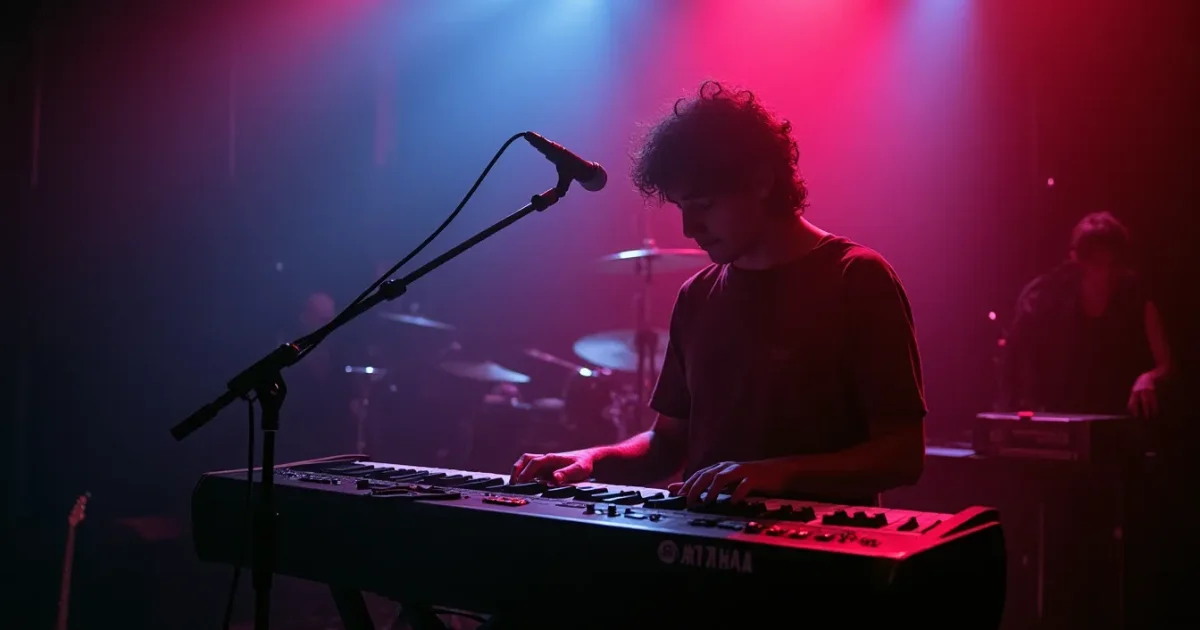
Recording: The Record Plant, New York, November 1983
Recording took place at The Record Plant in New York in November 1983. Producer - Rick Chertoff. The session ran four days.
The main instrumental move is the Yamaha CP-70 electric piano, playing a simple pattern in the upper register. The pattern never changes through the song. It's a move from Steven Sondheim musical theatre - “hold one chord under the song so the vocalist stays at the centre”.
Other players:
- Eric Bazilian (The Hooters) - mandolin and 12-string acoustic guitar
- Rob Hyman - keys (CP-70, Yamaha DX7 pad)
- Anton Fig - drums (live, Tama kit)
- Neil Jason - bass (Fender Jazz Bass, very low in the mix)
- Cyndi Lauper - lead and backing vocals
Lauper's vocal was cut in one take. Chertoff insisted: “her emotion is in the first take. The second will be worse because by then she'll be thinking about how to sing, not what to sing”.
Sound anatomy
- Key: F minor, moving to A-flat major on the chorus
- BPM: 80 - one of the slowest 1984 pop songs
- Length: 3:58 (single), 4:01 (album)
- Album: She's So Unusual (October 1983, Portrait Records)
- US sales: 2 million singles (Platinum)
- Worldwide: over 5 million
- Album: 6 million US copies, 16 million worldwide
Chart history
The single came out on 27 April 1984. By early June - #1 Billboard Hot 100. Held two weeks. UK #3. #1 in Canada. #5 Billboard Adult Contemporary (stayed there 12 weeks).
It was Lauper's first #1. “Girls Just Want to Have Fun” had peaked at #2 (blocked by Van Halen's “Jump”). “Time After Time” finally moved Lauper from “interesting singer” to “serious pop star”.
At the 1985 Grammys the song was nominated in two categories: Song of the Year and Record of the Year. It lost both (to Tina Turner's “What's Love Got to Do with It”). But Lauper took home the Grammy for Best Pop Vocal Performance Female.
The video: a railway and a mother
The “Time After Time” clip was directed by Edd Griles - the same director who shot “Girls Just Want to Have Fun”. Concept: Lauper breaks up with her boyfriend at a railway station and leaves for a new city. In the scenes, Lauper's mother - Catrine Dominique - plays herself. It creates an unusual emotional register: the viewer sees Cyndi's actual mother opposite her in a dramatic scene.
Video budget: $40,000. Filmed over two days at a railway station in Sayville, Long Island. A surprising detail: the real train Lauper leaves on is a 1984 Amtrak - an EMD F40PH. Today that engine is a memorial at the New York Railway Museum.
MTV put the video in heavy rotation for six months in 1984. It helped the song stay on the charts for nearly a year.
Miles Davis, 1985: the first of 500 covers
In March 1985 Miles Davis, the legendary jazz trumpeter, released the album You're Under Arrest. The album included an instrumental cover of “Time After Time” - 3:37 of Davis on trumpet over a minimal rhythm section.
What caught Davis was the melodic simplicity. In a 1986 interview he said: “„Time After Time" is the cleanest melody I've heard in 10 years. It's like a 1930s jazz standard. I had to play it”.
After the Davis version “Time After Time” became a jazz standard. It was recorded by Cassandra Wilson (1990), Cyndi Lauper and Tony Bennett (duet, 2014), Joshua Bell (violinist, 2010). By 2024 over 500 official cover versions are documented, making it one of the most-covered pop songs ever.
Evening programmes and funeral services
“Time After Time” is one of the few 80s pop songs played at funerals. Per British Wedding and Funeral Association 2019 data, “Time After Time” sits in the top-20 most-played UK funeral songs. It is also used at death anniversaries, on hospital radio, and in televised farewells.
The reason is the line “if you fall I will catch you, I'll be waiting. Time after time”. Universal support - applicable to both a breakup and a farewell to a loved one.
In a 2016 Guardian interview Lauper said: “I never wrote this song for funerals. But I realised that's how it's used. When people tell me „this song played at my mother's funeral", I cry. This is my most important song. More important than „Girls Just Want to Have Fun"”.
What to listen to next
For 1984's “soft ballad” context: Cyndi Lauper “Time After Time” → Foreigner “I Want to Know What Love Is” (1984) → Chicago “Hard to Say I'm Sorry” (1982). Three chart-topping ballads - all slow, all with an emotional vocal at the centre.
For Lauper's career arc: “Girls Just Want to Have Fun” (1983) → “Time After Time” (1984) → “True Colors” (1986). Three different Cyndis - ironic, vulnerable, empathetic. All three hit top-5 Billboard. All three were written by different people (Robert Hazard, Rob Hyman, Billy Steinberg). Lauper is a rare solo artist who can work in three different registers without losing her voice.