
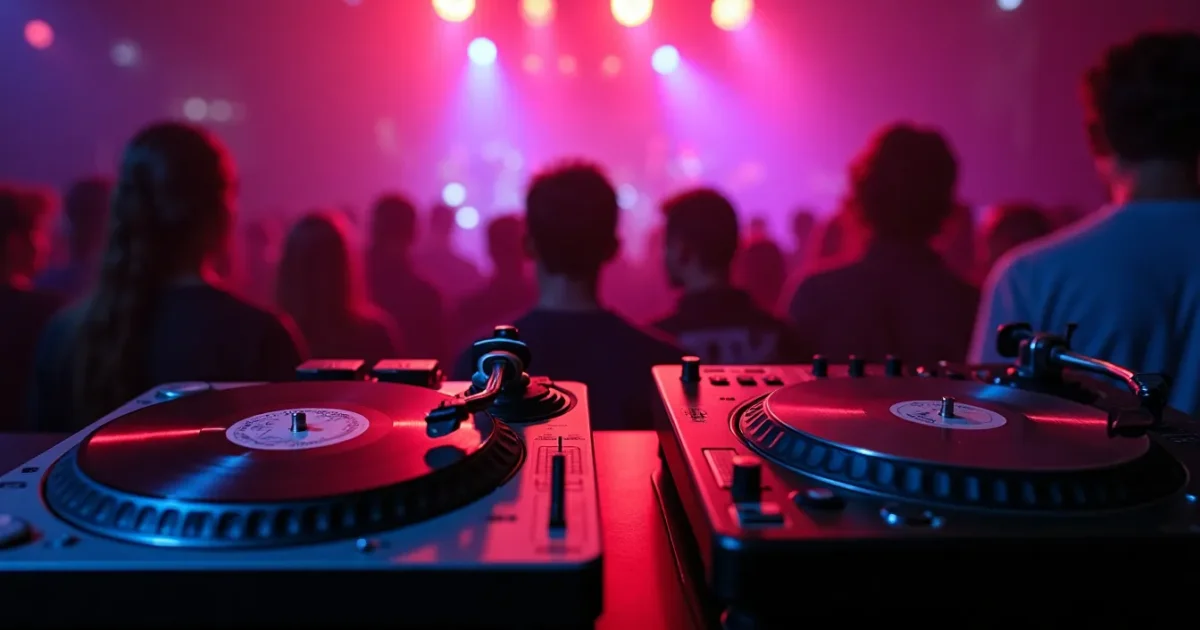
In May 1995 seven of the ten slots in the Italian singles chart were held by eurodance. The disco of the 90s and the 2000s is not the turning of the calendar year 2000 but a shift you can hear on a track in twenty seconds: a different tempo, a different kick, a different carrier in the DJ's bag. The line does not run along the year - it runs along production and equipment, and it runs roughly between 1997 and 2002. We break down the audible markers by which a track gets dated by ear - without nostalgia and without the word "iconic".
Where the line between the 90s and 2000s actually runs
The calendar year 2000 changed nothing in the studio. The turn came earlier: in late August and early September 1995, "Scatman's World" by John Scatman held number one in the Eurochart Hot 100 for three weeks - and it was the last major hit of the original eurodance sound. After it, the genre that in its lifetime called itself by the generic word "dance" or "techno" (the term "eurodance" settled in retroactively, from the late 90s) began to sag. By the end of the decade eurodance had either turned into progressive house or slid into happy hardcore, and by the 2000s the European industry as a whole swung toward dance-pop, nu-disco, electro-house and R'n'B. So the line is not a number on a cover - it is a change of sonic palette, and it can be heard.
The 90s sound: four-on-the-floor and the Korg M1
Eurodance has firm audible markers. Tempo - from 110 to 150 BPM, rhythm - "four-on-the-floor", a kick on every beat. The vocal formula is a male recitative in verses and a female chorus; two voices singing at once is uncharacteristic. Behind many hits stood "shadow" vocalists whose names never reached the cover: Nana Hedin, Giovanna Bersola (Jenny B), Sandra Chambers, Annerley Gordon (Ann Lee) - they recorded the choruses while other faces went on stage.
The main timbral marker of the 90s is the piano stab on a Korg M1. The reference for that sound was Black Box's "Ride On Time", released in July 1989: house piano on an M1 preset and a sample of Loleatta Holloway's vocal. By the end of the year it was the UK's best-selling single. Technotronic's "Pump Up the Jam" (September 1989) and Snap!'s "The Power" (1990) completed the hip-house formula that then spread across the dancefloor of the whole decade. Hear an M1 piano and a four-on-the-floor kick on a track - it is almost certainly the 90s.
A big part of the formula is the "project for a face": the studio assembled the track, put a striking pair on the cover, and the real voice of the chorus stayed in the shadow. That is why so many 90s eurodance hits sound equally "tidy" under completely different performers on the poster - the same session vocalists and the same producers made them. By the 2000s this model did not vanish but stopped being the norm: a solo artist with their own voice became more profitable, and auto-tune let an imperfect vocal be brought to release without a shadow singer.
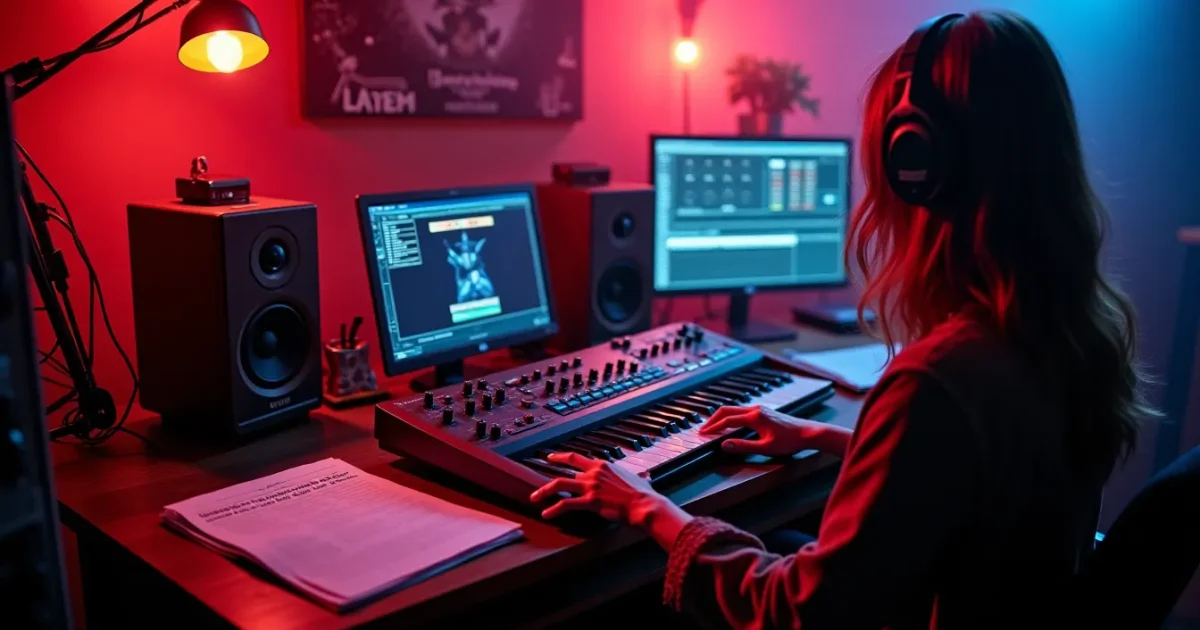
Audible markers by which a track is dated
If you break "music 90 2000" down into audible cues, you get a short checklist. Not every point holds at once, but three or four coincide - and the decade is decided:
- Tempo and kick. 90s: 120-140 BPM, four-on-the-floor on every beat. 2000s: dance-pop more often 120-128, but the kick is softer and denser; electro-house pulls accents off the downbeat; the R'n'B dancefloor sits around 90-100 BPM.
- Bass. 90s: an eighth-note or arpeggiated synth bass following the kick. 2000s: a longer, "talky" electro bass, often with sidechain compression - the bass "breathes" under the kick.
- Vocals. 90s: a rap verse + a female chorus, the recitative often in broken English. 2000s: solo vocals, auto-tune as a deliberate device (the peak of the fashion - after 1998), fewer "projects with a face and someone else's voice".
- Structure. A 90s eurodance single holds the chorus by the 30th second. A 2000s dance-pop track lengthens the intro and the build-up, the drop is pushed further back.
- Mastering loudness. The 90s keep dynamic range; the 2000s are the peak of the "loudness war", the track cranked into a wall of sound. More on this - in the breakdown of eurodance versus techno, where tempo and rhythm section are sorted onto shelves.
Detail: "eurodance" as a term is a retro label. In 1992-1996, at the genre's peak, the word Eurodance almost never appeared on release covers: producers and labels wrote "dance", "club music" or "techno". The name stuck later - in compilations and shop catalogues.
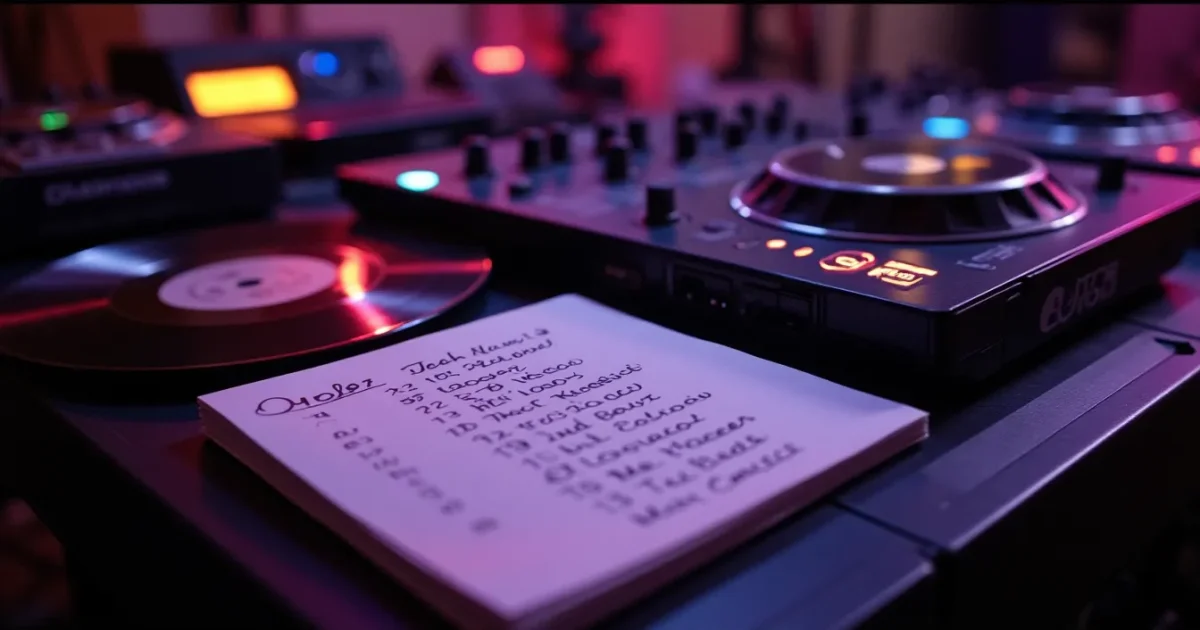
Carriers: where the track lay for the DJ
The second coordinate of the line is the carrier. In the 90s the DJ's working tool was the vinyl turntable; the standard was the Technics SL-1200MK2, released in the summer of 1979 and sold in more than 3 million units. Moving to CD was held back by the absence of a convenient DJ CD player: the world's first CDJ - the Pioneer CDJ-500 - only appeared in 1994, was top-loading and did not yet give "vinyl" control. The break came in 2001, when Pioneer released the CDJ-1000 with Vinyl Mode: a touch-sensitive platter let you brake and scratch a track like vinyl, plus cue points appeared. It was the CDJ-1000 that became the standard for clubs worldwide and moved the dancefloor from vinyl to CD.
In parallel the home carrier changed too. The MP3 format - MPEG-1 Audio Layer III - was defined in 1991 and published in 1993 as ISO/IEC 11172-3:1993; it was developed by the Fraunhofer Society under Karlheinz Brandenburg. The test recording while the format was being built was the a cappella "Tom's Diner" by Suzanne Vega from the album "Solitude Standing" (1987) - for which Vega was later dubbed "the Mother of the MP3". The first portable MP3 player, the Diamond Rio, came out in 1998, the Apple iPod in 2001. By 2001 the DJ's bag held not only vinyl but a burned CD-R, and by the mid-2000s a flash drive. So the "disco of the 2000s" technically begins at exactly the moment the track stopped being tied to a record.
Rotation: where the track lived outside the club
The third coordinate of the line is radio. A 90s dance track lived on the dancefloor and on cassette, and reached the air through disco programmes and charts; by the 2000s it had its own federal frequency. "Radio Record" - a Russian federal station of dance and contemporary popular music with its broadcast centre in Saint Petersburg - has been on air since 1995, format Dance CHR and EDM. Its signature feature is a continuous mix of tracks in one tempo: that is, the station built its broadcast as a DJ set from the start, not as a set of loose singles. It is, in essence, a radio incarnation of the same "music without stops" that played on the dancefloor - only in headphones.
By the 2000s dance rotation had become a separate infrastructure, and new stations appeared - for example, "Radio Monte-Carlo" went on air on 14 February 2000. As a result the "disco of the 2000s" partly moved off the dancefloor and into the air: a track that used to be caught in a club or on a "Танцевальный Рай" cassette now played in daytime rotation, and the 90/2000 line by ear partly coincides with the line between "a track is hunted down on the dancefloor" and "a track is caught on the radio".
The 2000s: dance-pop, electro-house and R'n'B
At the turn of the decades the dancefloor did not die - it switched genre register. Eurodance gave way to dance-pop with a solo vocal, electro-house with long build-ups and dance R'n'B. The remix stayed a mandatory release format: 2000s radio rotation often demanded not the album version but a club mix, and an artist reached the dancefloor precisely through the remix version. That, by the way, is why the Disco Magic catalogue has so many "disco-mix" versions of 2000s tracks - a release without a dance version simply did not get into club rotation.
If you want to train dating by ear, take two profiles. The 90s profile: tempo 130-140, four-on-the-floor on every beat, an eighth-note synth bass, a rap verse, a female chorus with echo, an M1 piano in the break - the sound "lies" flat, without "breathing". The 2000s profile: the same tempo, but the bass moves off-beat and "pumps" under the kick (sidechain compression: the kick pushes the bass down and it recovers on the beat), the vocal is solo, often with auto-tune, the intro is longer, the drop pushed back. The same BPM, but by ear these are two different eras - precisely because "disco 90 2000" is split not by tempo but by rhythm section and master.
At the event level the line was also marked by the nostalgia industry: the "Disco 80s" international festival of Avtoradio ran for the first time on 29 November 2002 at the Luzhniki sports palace and drew about 10,000 spectators, and in its best years 20-30 thousand. That large-scale nostalgia festivals for the 80s and 90s started exactly in 2002 is an indirect sign: by then the 90s were already perceived as a finished era with their own sound that could be put on one stage. For the international scene, see the 2000s Eurodance overview.
What to listen to as the line, in the end
If you need one sound on which the line is audible, it is the move from Black Box's "Ride On Time" (July 1989, Korg M1, four-on-the-floor) to 2002 electro-house: the same tempo, but the bass already "breathes" under sidechain, the vocal is solo, and the DJ plays the track not from vinyl but from a CDJ-1000. Add the third coordinate - where the track lived outside the club: in 1995 you caught it on Radio Record inside a continuous mix, and by 2000 it already sat in the daytime rotation of ordinary stations. Between "Ride On Time" and 2002 electro-house lie thirteen years and a change of three carriers: vinyl, CD-R, flash drive. The calendar year 2000 has nothing to do with it: the line passed where the format in the DJ's bag changed, where the track's rhythm section changed, and where the radio's broadcast format changed.